Flat pack container manufacturers can serve very different markets. Some focus on commercial steel storage, while others build modular offices, accommodation, camps, or broader prefabricated buildings. We help buyers compare the right manufacturers by looking beyond the name to product fit, specifications, logistics, assembly support, and repeat-order capability.
Several manufacturers operate in the flat pack container market, including Flatbox Solutions, Prefabex, APEC Modular, Greevel, and K-HOME.
The important distinction is that these product ranges are not interchangeable.
For procurement and operations teams, the right shortlist starts with one question:
What do we actually need the container to do?
Who Manufactures Flat Pack Containers?
Flatbox Solutions
We manufacture modular flat-pack storage units, multi-compartment units, kiosks, offices, and accessories for commercial and multi-site buyers across the United States, Canada, and Puerto Rico.
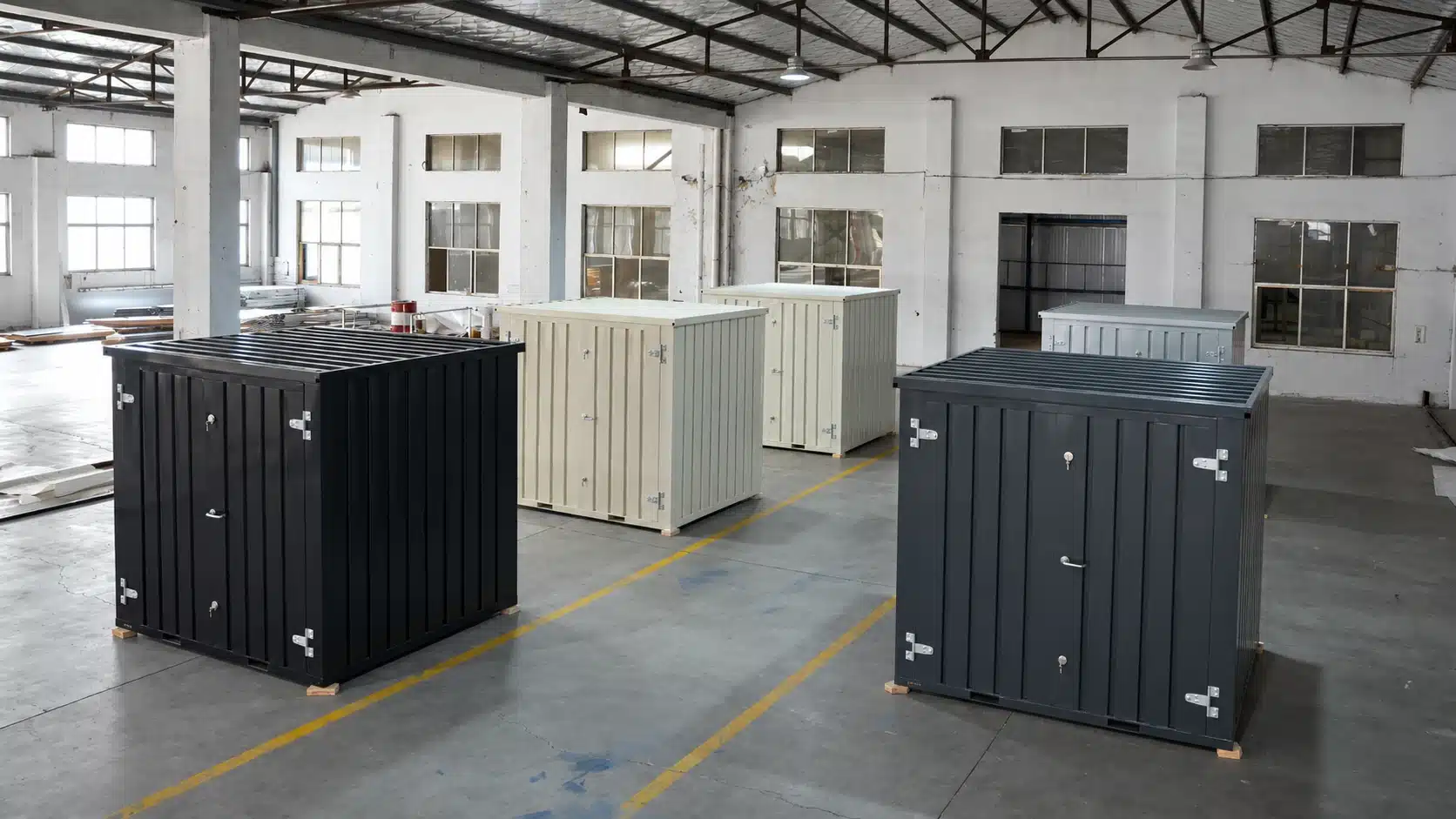
Our standard storage range includes 3.5-foot, 5-foot, 7-foot, 10-foot, 13-foot, 16-foot, and 19-foot lengths. We can also configure storage around options such as locks, flooring, shelving, pipe racks, insulation, anti-condensation treatment, door positioning, and linking kits.
We focus on standardized sizes and repeatable configurations so we can help buyers establish a storage specification that works at one location and can be used again across future sites.
For multi-location programs, we can also organize pricing and rollout planning around unit type, size mix, accessories, regional requirements, and repeatable standards.
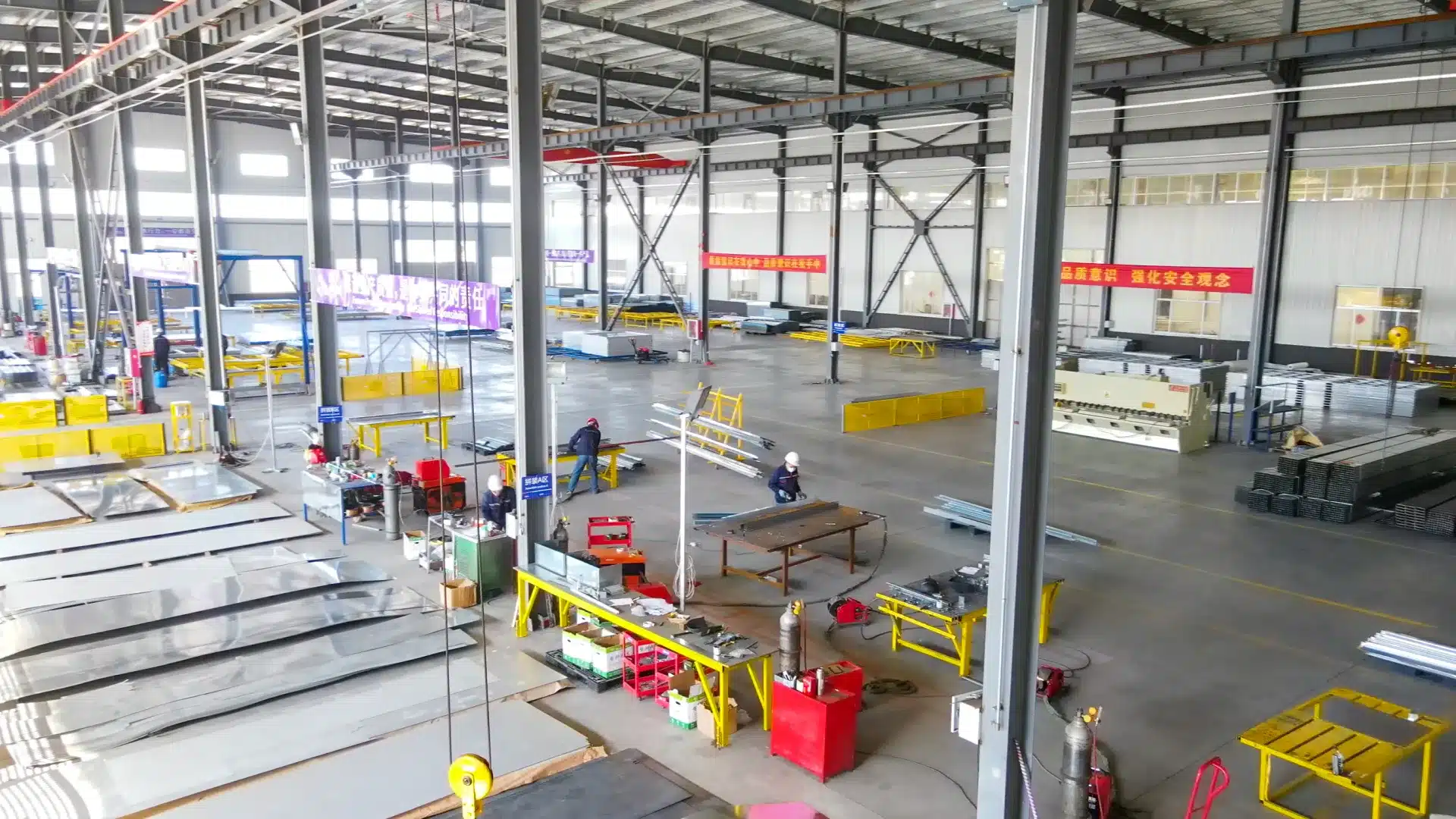
Other Flat Pack Container Manufacturers Buyers May Encounter
Prefabex offers purpose-built flat-pack storage containers alongside broader modular systems for offices, accommodation, sanitary facilities, camps, and other project uses.
APEC Modular focuses on flat-pack modular building systems supported by engineering, factory production, assembly, and project-management capabilities. Applications include offices, housing, accommodation, and larger modular developments.
Greevel focuses on portable and relocatable storage products, including flat-pack storage containers, self-storage systems, and customized storage solutions.
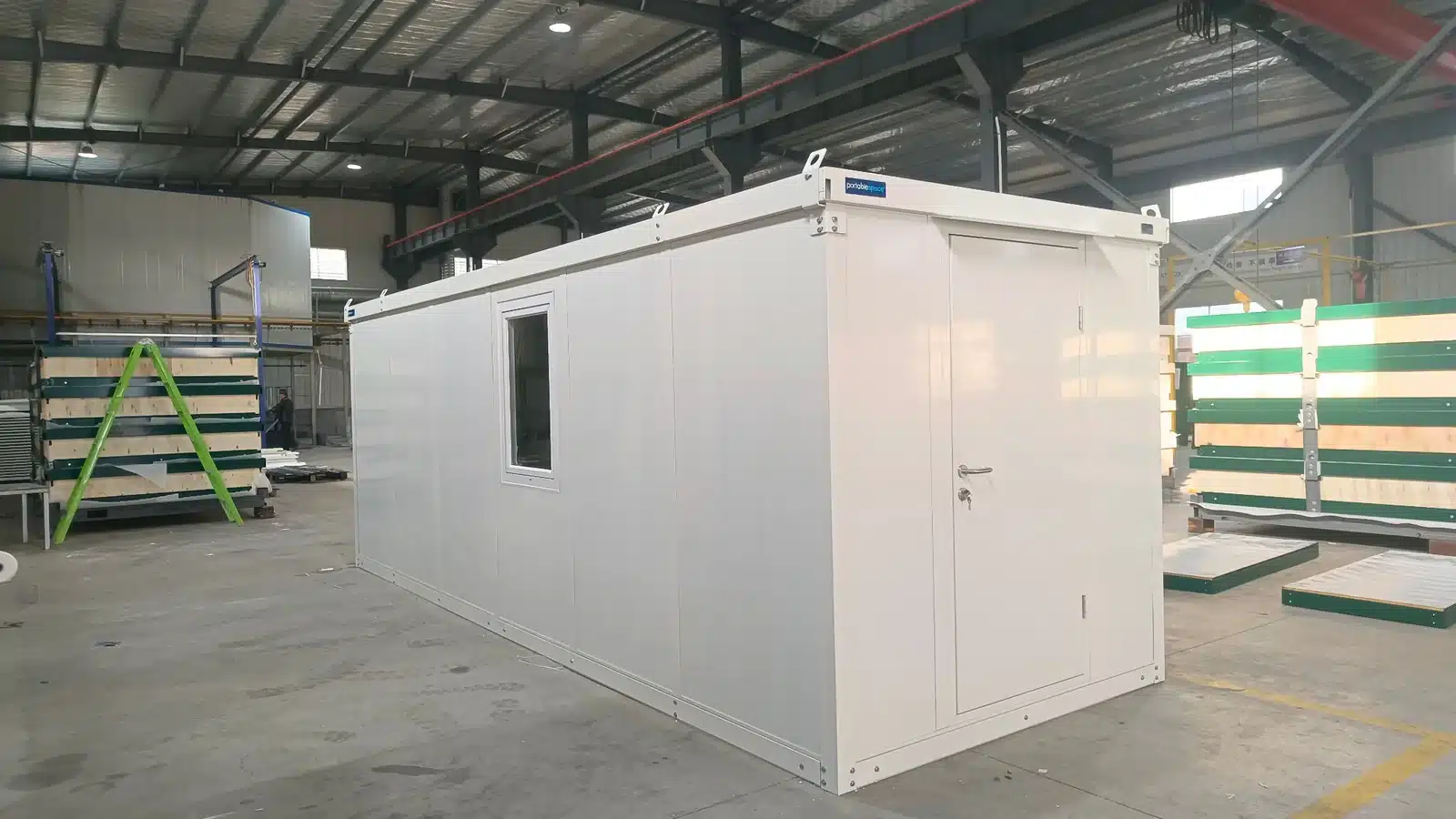
K-HOME focuses on modular container buildings and flat-pack container-house systems for offices, accommodation, camps, classrooms, temporary housing, and related applications.
These examples show why searching for flat pack container manufacturers can become confusing quickly.
A manufacturer can have extensive flat-pack capabilities and still specialize in a product category that does not fit our storage requirement.
Start With the Product Type We Actually Need
Before we compare manufacturers, we should define the application.
If we need secure storage for tools, equipment, inventory, PPE, materials, or site operations, we should compare manufacturers that can clearly explain:
sizes, steel construction, flooring, access, locks, coatings, accessories, handling features, and assembly requirements.
If we need accommodation or a modular building, the comparison changes. We may need to evaluate room layouts, insulation systems, electrical and plumbing services, HVAC, foundations, structural requirements, and installation scope.
That distinction helps us avoid comparing suppliers that solve fundamentally different problems under the same flat pack container label.
How Should We Compare Flat Pack Container Manufacturers?
Once we are comparing the right type of manufacturer, we can evaluate each supplier using the same core questions.
First, we should understand how the unit is built.
That includes steel construction, wall and roof systems, corrosion protection, flooring, doors, locks, connections, and intended use.
Next, we should look at standardization.
Clear sizes and defined options make it easier to compare products today and order the same configuration later. For multi-site procurement, that consistency can reduce the need to redesign the storage package for every location.
Assembly matters as well.
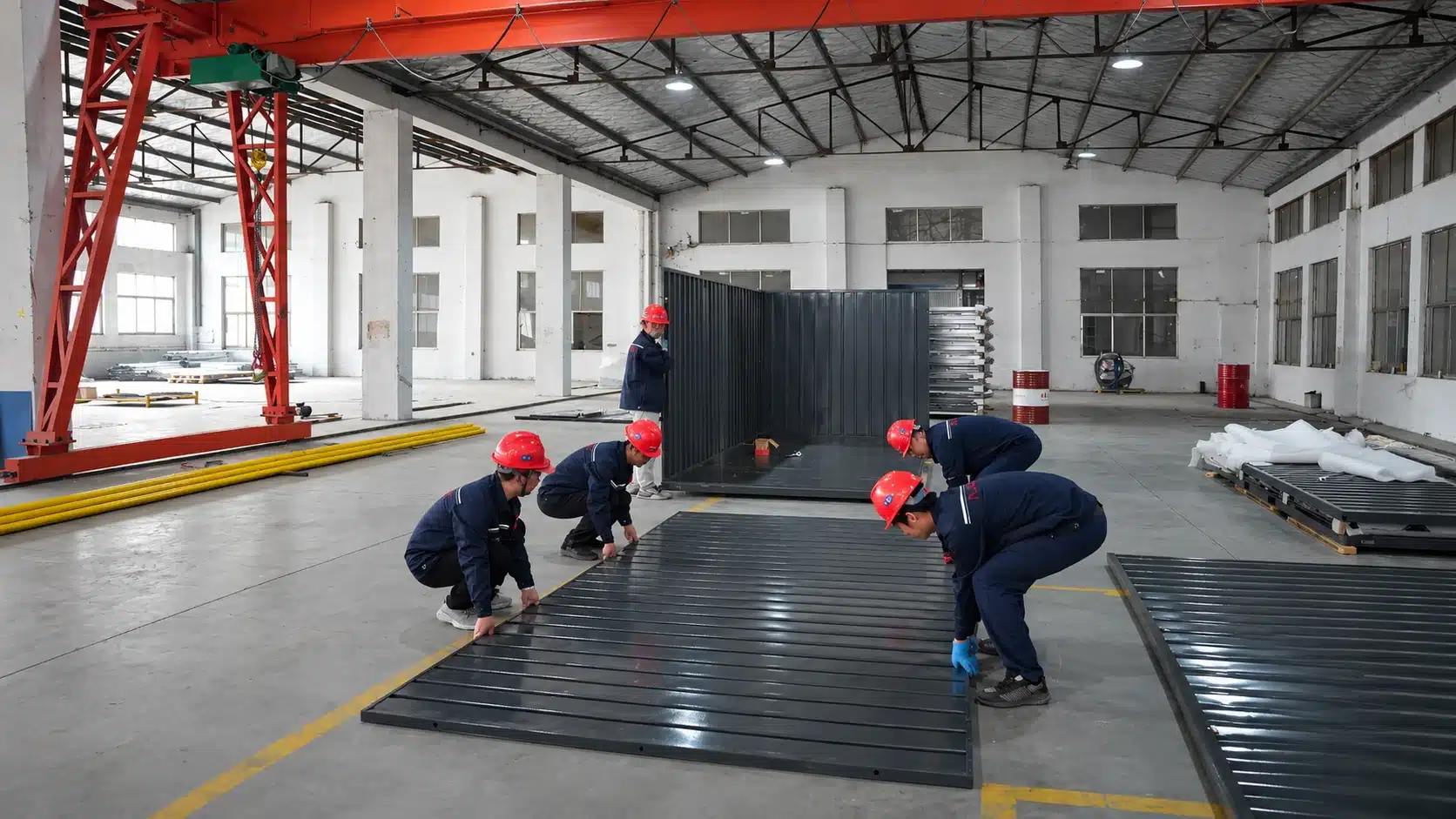
Flat-pack transportation means part of the deployment takes place at the destination, so we should understand the supplied hardware, instructions, handling requirements, labor needs, and site preparation before the order arrives.
We should also compare documentation, warranty terms, delivery support, communication, and the process for future orders.
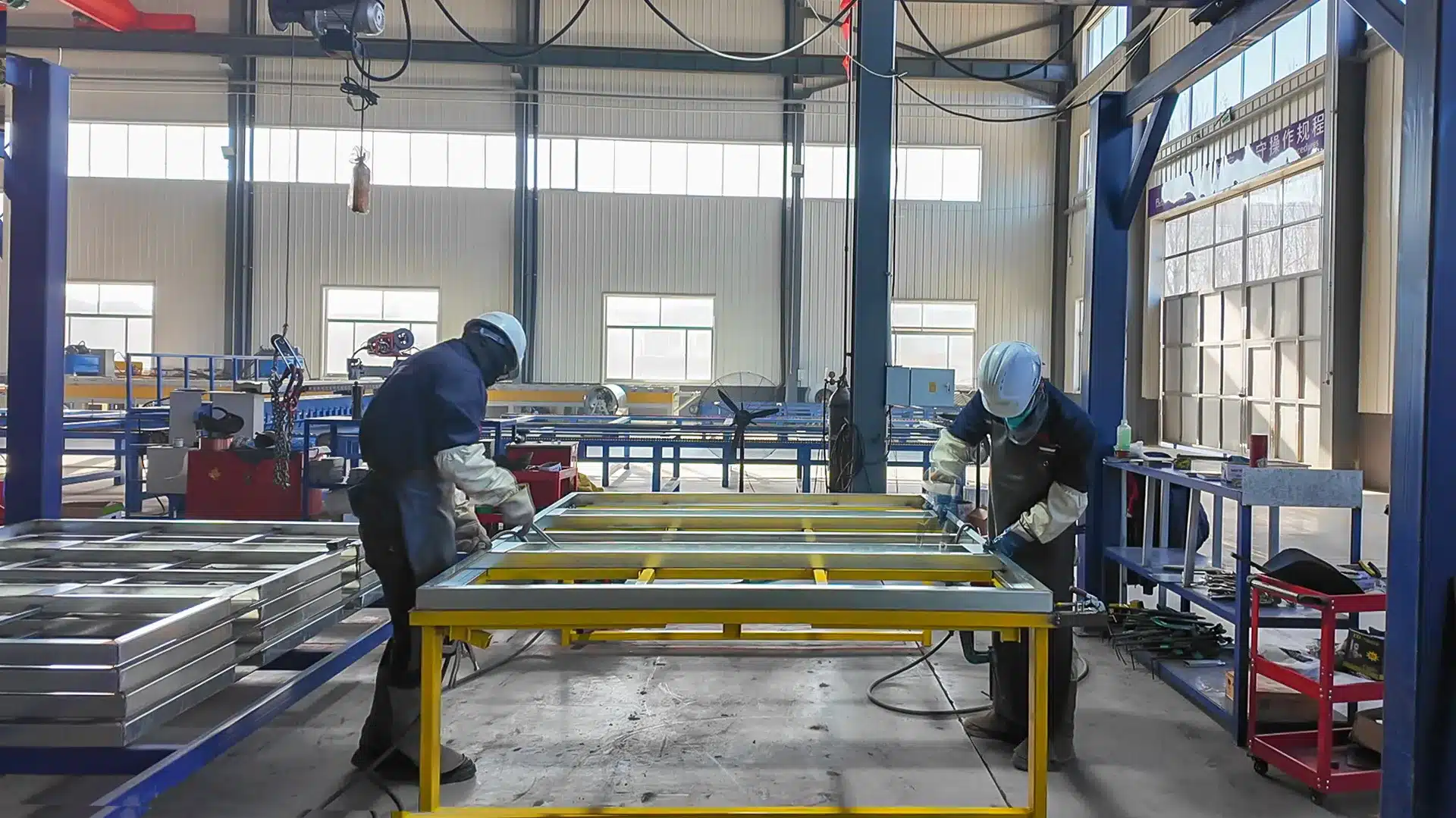
Why the Lowest Unit Price May Not Be the Lowest Deployed Cost
Price matters, but a manufacturer comparison becomes more useful when we consider the complete requirement.
The unit price is only one part of deployment.
Options, accessories, freight, unloading, assembly, site preparation, handling equipment, and support can all affect the finished cost.
Repeat orders matter too.
A highly customized first order can become harder to reproduce if every later site needs a new design, accessory package, approval process, and quote.
We prefer to define the complete configuration early.
For larger programs, we can organize the requirement around unit size, quantity, lock standard, flooring, accessories, delivery destinations, number of sites, application, and target deployment timing.
That gives us a clearer basis for pricing and a cleaner path to repeat orders.
Can the Manufacturer Support Our Delivery Market?
Manufacturing capability only helps if the product can be delivered and deployed where we need it.
For projects across the United States, Canada, and Puerto Rico, we should confirm delivery coverage, shipment planning, receiving requirements, unloading, site access, and responsibilities after arrival.
We support commercial buyers across all three markets and can plan around individual locations or coordinated multi-site programs.
We prefer project-specific build and delivery planning rather than a universal timing promise.
Quantity, configuration, destination, routing, and site readiness can all affect the final schedule.
What Support Should We Expect After Delivery?
Flat-pack units require destination assembly, so the transition from shipment to usable storage deserves attention before we place an order.
We provide hardware kits along with manual and video assembly guidance for our storage units.
We also recommend confirming the placement area, delivery access, handling equipment, final configuration, and intended use before deployment.
When we compare manufacturers, we should know exactly:
what arrives, what is included, how assembly is handled, what equipment may be required, and what support is available after delivery.
Clear expectations before shipment can prevent avoidable problems when the unit reaches the site.
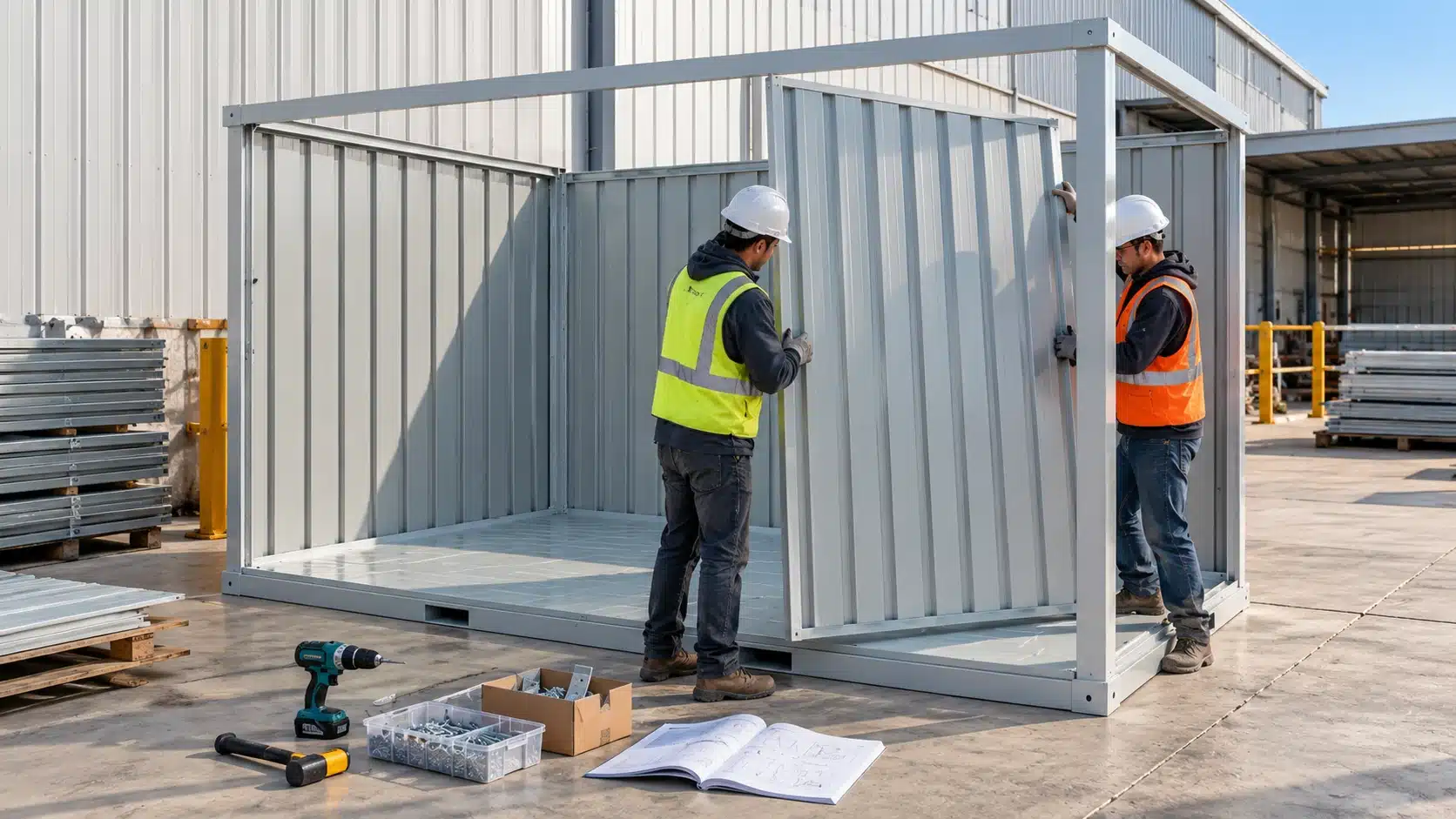
Can We Order the Same Configuration Again?
For multi-site buyers, repeatability can matter more than unlimited customization.
Once we know which size, door arrangement, lock, flooring, shelving, finish, and accessory package works, we should be able to use that specification as the starting point for another location.
We design our storage range around that type of repeat deployment.
We can establish core specifications, organize multi-site pricing, and coordinate purchasing by region or location without starting from zero each time. Our current multi-site process is specifically designed around repeatable SKUs, program standards, and regional rollout planning.
What Should We Ask Before Choosing a Manufacturer?
A useful manufacturer conversation starts with the operating requirement rather than a request for the lowest price.
We should be ready to define:
- Intended application
- Required size and capacity
- Quantity
- Delivery destination
- Security requirements
- Flooring and accessories
- Site and receiving conditions
- Target deployment timing
- Whether the configuration will be required again
In return, we should expect clear information about product specifications, included components, available options, delivery planning, assembly responsibilities, warranty coverage, and support.
That gives us a more accurate manufacturer comparison and reduces the chance of discovering important differences after the order is already underway.
Choosing the Right Flat Pack Container Manufacturer
There are several manufacturers of flat pack containers, but the right choice depends on what we are buying and how we plan to use it.
If our requirement is commercial storage, we should compare storage-focused products rather than assume every modular container manufacturer offers an equivalent solution.
If we need standardized steel storage, multiple sizes, configurable accessories, compact flat-pack transportation, assembly guidance, and a repeatable approach for future sites, we can help build the specification around those requirements.
We start with the application, then define the size and options, plan delivery and assembly, and create a configuration that can be repeated when the next location is ready.