

When Every Site Orders a Different Kit, Multi-Site Storage Gets Hard to Control
A clear container BOM and standardized SKUs help procurement and operations teams reduce spec drift, simplify reordering, and support multi-site storage standardization.
4-6 wk Build
4-6 wk Ship
7 Sizes
US · CA · PR
Multi-site storage programs usually begin with a straightforward objective: get the right unit to the right location, keep the process organized, and make future deployments easier to repeat. The trouble starts when each location begins following a slightly different version of the same plan. One site uses a different size. Another asks for a different door layout. A third adds a new accessory package. A regional team changes a finish, lock, or flooring option to solve a local issue. None of those decisions seems significant on its own. Together, they turn a rollout into a growing list of exceptions
That is where control starts to break down.
Read More
For procurement teams, inconsistency creates quoting delays, purchasing confusion, and cost drift. For facilities and operations teams, it makes delivery, setup, maintenance, and future expansion harder to manage. Instead of running one repeatable program, the business ends up managing multiple versions of the same deployment. That is exactly what Flatbox is built to prevent.
Standardized SKUs are not about restricting practical choices. They are about creating a cleaner operating model for organizations that need storage, kiosks, and office units to function as a system across locations. When the core unit mix, options, and accessories are defined once, the rollout becomes easier to forecast, easier to approve, and easier to repeat. A strong container BOM is what gives that structure real operational value.
Why Standardization Matters More as Programs Expand
Single-site purchases can tolerate more variation. Multi-site programs usually cannot.
The more locations involved, the more important consistency becomes. Teams need a shared understanding of what gets ordered, what arrives on site, and how each deployment should work. Without that, every new location introduces another round of interpretation.
That problem appears quickly. Procurement has trouble comparing quotes because each site is configured differently. Operations spends more time coordinating delivery details that should already be settled. Site teams work around differences that were never meant to become permanent. Over time, the rollout becomes harder to manage than it needs to be.
Read More
A standardized SKU strategy reduces that friction by creating a stable core. Instead of treating every order like a separate project, the organization works from a repeatable set of units, options, and accessories that can be deployed more confidently across the United States, Canada, and Puerto Rico.
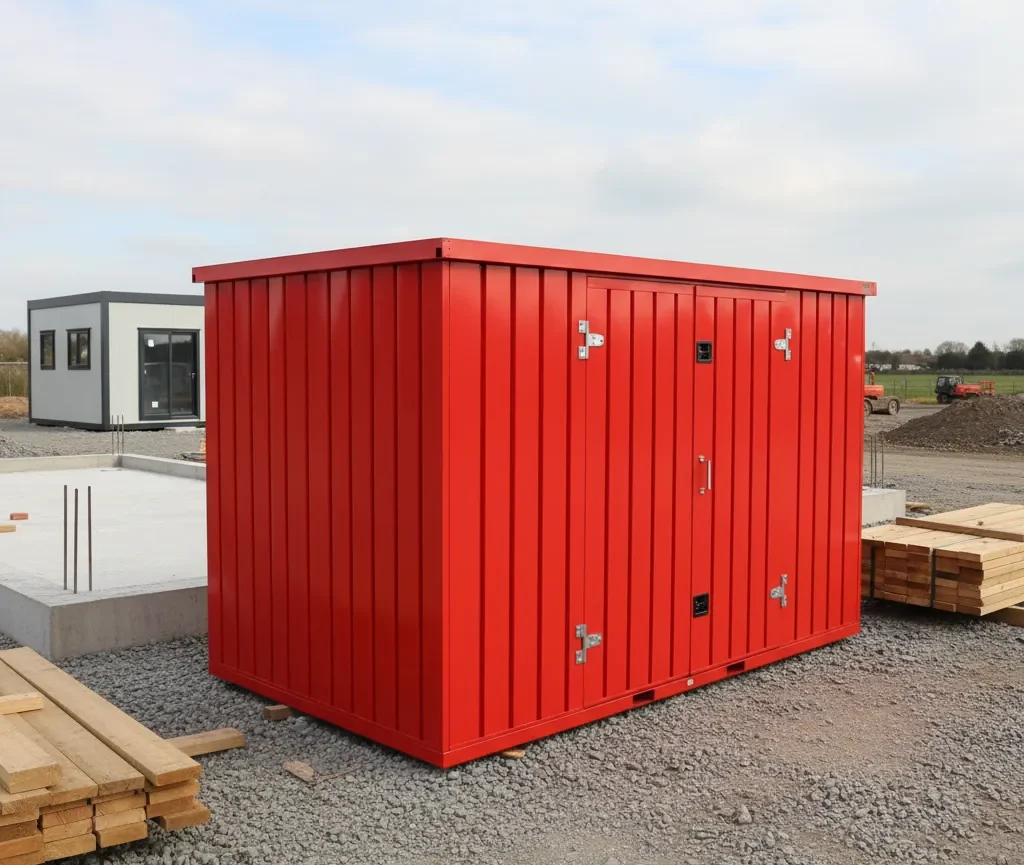
What a Container BOM Actually Solves
A container BOM is more than a product list.
It defines what belongs in the rollout.
That includes unit sizes, configuration choices, accessories, add-ons, and site quantities. Once those decisions are organized into a single structure, teams have a stronger reference point for planning, pricing, internal alignment, and reordering.
That matters because most rollout problems do not come from one major failure. They come from repeated small deviations.
A different accessory package here
A different layout there. A different assumption between one team and another.
A clear BOM reduces that ambiguity.
It gives procurement a more stable basis for comparison. It gives operations a more predictable deployment model. It gives leadership better visibility into how the program is being standardized across sites.
The Real Cost of Spec Drift
Spec drift rarely starts as a major problem. It builds through reasonable decisions made in isolation.
A local request gets approved to keep a project moving. A regional team solves a site issue with a slightly different unit. An accessory package changes to suit one location’s preference. Each decision may solve an immediate need, but the long-term result is a program that becomes harder to price, harder to track, and harder to repeat.
That is why standardization matters as an operating discipline, not just a catalog preference. When organizations define a repeatable unit mix early, cost control improves. Procurement can compare like with like. Freight planning becomes more manageable. Forecasting gets cleaner because teams are no longer working against a moving target.
Reorders become less disruptive because the same core spec can be used again without reopening the process.
Flatbox is designed around that principle. The product line supports a controlled set of repeatable configurations so organizations can maintain consistency without turning every new location into a custom build.
Why Pricing Works Better After the Kit Is Defined
One of the most common sources of friction in multi-site programs is the assumption that pricing should come first. In practice, pricing becomes more useful when the kit is already defined. If the unit sizes, options, and accessories continue changing from one conversation to the next, the quote moves with them. That makes vendor comparisons harder, forecasting less reliable, and total program cost more difficult to manage across locations. A defined container BOM brings discipline to that process.
It helps teams establish the unit mix before pricing is finalized, which reduces revisions and creates a stronger foundation for consistent quoting. Procurement gains clarity. Operations gain predictability. Leadership gains a more reliable framework for expansion.
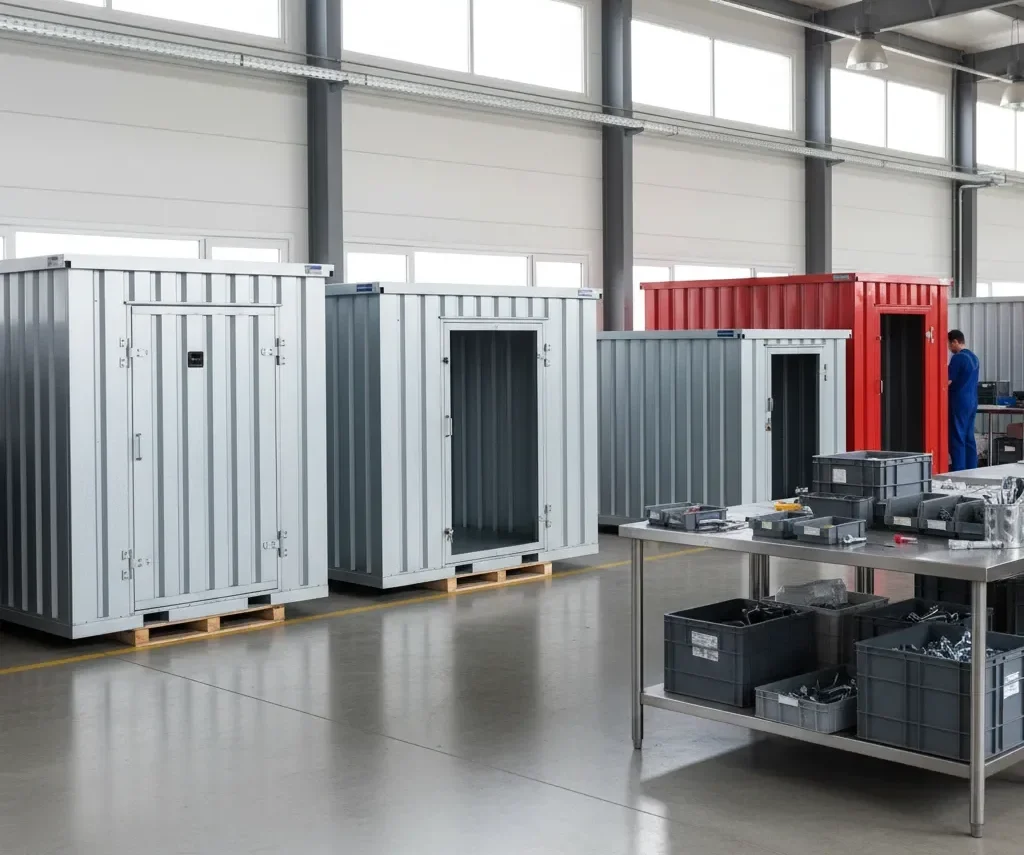
That is one reason Flatbox separates the work of defining the rollout from the work of pricing it. The goal is not only to generate a quote. It is to create a stronger deployment structure first, then price it with fewer unknowns.
Why Standardized SKUs Help Teams Move Faster
Multi-site rollouts rarely depend on one stakeholder.
Procurement, facilities, operations, specifiers, project leads, and regional teams often influence the decision. When the underlying spec keeps changing, each stakeholder spends more time reviewing, clarifying, and approving details that should already be settled.
Standardized SKUs shorten that cycle.
A known set of unit types, dimensions, and accessory choices gives teams a common reference point. Procurement can review spend against a stable standard. Operations can prepare around a repeatable deployment model. Site teams know what is arriving. Internal approvals move faster because fewer decisions need to be revisited every time a new location is added.
That level of clarity becomes even more valuable when several sites are moving at once.
How Flatbox Supports Multi Site Storage Standardization
Flatbox is built for organizations that need a system, not a one-off answer.
The product line includes standardized storage units in repeatable lengths, along with multi-compartment units, kiosk formats, office units, and accessories that can be selected in a more controlled way. The objective is to keep the core program consistent while still allowing practical choices where the site requires them.
That approach makes it easier to build a rollout model that holds up across locations.
Storage units can follow a known size strategy. Accessory packages can be selected with more discipline. Kiosk and office deployments can align with the same broader operating logic. Teams can work from a cleaner program spec instead of piecing together decisions site by site.
For organizations focused on standardized SKUs for multi site rollouts, that matters because scale does not come from adding more complexity. It comes from reducing unnecessary variation while preserving useful control.
Standardization Still Leaves Room for Practical Flexibility
A standardized rollout does not require every location to be identical.
It requires a stable core.
The strongest multi-site programs define the essential elements first: which unit types belong in the rollout, which accessory packages are standard, which options are part of the program, and where limited variation is appropriate. That balance protects consistency without making the system too rigid to work in the field.
In practice, that means fewer exceptions, clearer approvals, and stronger long-term support.
It also helps preserve organizational knowledge. Instead of relying on scattered email threads or regional memory, the rollout lives in a format that can be referenced, reordered, and expanded more easily.
Why This Works Across Regions
Regional growth adds complexity even when the business model is strong.
Different teams may interpret needs differently. Delivery conditions may vary. Stakeholders may request local adjustments. Over time, those pressures can make a multi-site program feel less like a system and more like a sequence of unrelated jobs.
That is why Flatbox emphasizes standardization across service areas.
With a clearer container BOM and a controlled SKU strategy, organizations can maintain stronger consistency across the United States, Canada, and Puerto Rico while still accounting for practical deployment realities. The result is a cleaner path from planning to delivery and a stronger foundation for repeatable growth.