

Rapid-Deploy Prefab Offices for Emergency Response & Field Operations
Deploy prefab office units and modular field offices that help emergency teams establish command, coordination, and support functions quickly—without improvised setups. Designed for fast deployment, durable performance, and repeatable rollout across sites.
4-6 wk Build
4-6 wk Ship
7 Sizes
US · CA · PR
Deploy functional workspace for coordination, administration, and field support without waiting on a traditional build. When emergency operations need office space, the timeline is rarely flexible. Teams may be responding to an activation, supporting recovery efforts, staging preparedness programs, or setting up a field coordination point where existing workspace is limited or unavailable. In those moments, waiting on conventional construction is rarely practical. The need is not simply more space. The need is office space that can be deployed quickly, work effectively from day one, and stay repeatable when another site, another activation, or another region needs the same setup.
Read More
Flat Box helps emergency management teams and NGOs create a more reliable approach to temporary and field-ready office deployment. Standardized, rapidly deployable office units support cleaner planning, more consistent rollout, and better operational control across multiple sites.
For agencies, municipalities, response teams, and nonprofit field operations, office space should support coordination, not become another source of delay.
Deploy Field Offices Faster When Timing Is Critical
One of the biggest challenges in emergency response and field operations is timing. Teams often need workspace before permanent facilities are ready, before support sites are fully built out, or before existing infrastructure can handle increased demand.
Prefab offices provide a practical solution—delivering functional workspace when and where it’s needed most.
A faster deployment gives teams immediate space for:
- Planning and coordination
- Documentation and reporting
- Communications and command
- Logistics and field support
Instead of waiting through long construction cycles, teams can move directly from site need to operational readiness.
Read More
That is especially valuable when:
- a response site needs immediate coordination space
- a municipality needs temporary administrative support during disruption
- an NGO needs field-office capacity for regional programs
- a preparedness program needs repeatable office support across locations
- an operations team needs a faster path to usable workspace
The sooner teams have a functional office, the sooner the broader operation can run with more structure and control.
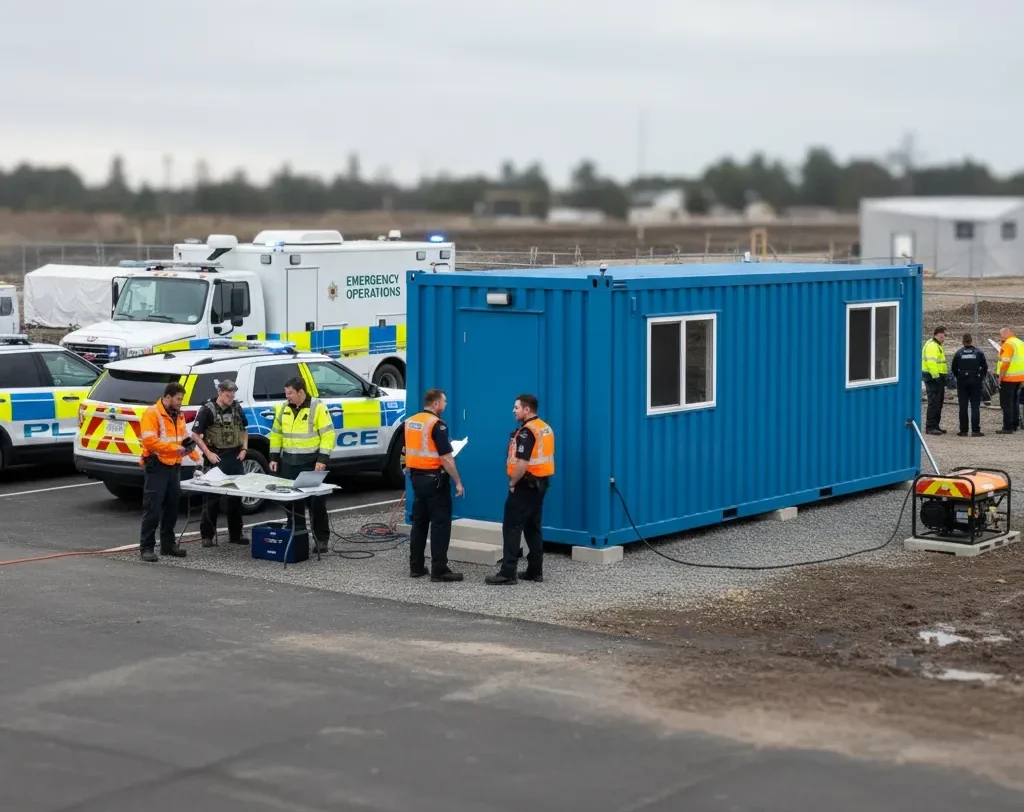
Temporary Offices Still Need to Perform Like Real Workspaces
Speed matters—but functionality matters just as much
Emergency operations break down in spaces that feel improvised, cramped, or difficult to use. Teams still need room for coordination, reporting, logistics planning, scheduling, and daily communication.
A temporary office isn’t temporary work—it supports mission-critical activity.
The most effective prefab offices are designed for real operating conditions, not just basic enclosure.
Flatbox helps teams deploy workspaces that support:
- Clear workflows and communication
- Practical layouts for daily use
- A more professional, functional environment in the field
That can include space for:
incident coordination
administration and documentation
logistics planning
communications support
staff check-in and workflow management
temporary operational oversight near the point of response
A better office setup reduces friction inside the operation. Teams spend less time working around the space and more time using it effectively.
Modular Offices Should Simplify Deployment—Not Slow It Down
A temporary office should reduce logistics—not create more of it.
Traditional site-built approaches slow teams down
They introduce more planning, more coordination, and more variables to manage. Even when justified, they are rarely the right fit for operations that need speed, mobility, or repeatable deployment across locations.
Temporary modular offices provide a faster, more controlled way to add workspace—without putting teams through extended construction timelines.
Standardization makes deployment scalable
Modular offices support temporary or semi-permanent needs while adapting to changing conditions.
Flatbox strengthens that advantage with a standardized system. Once a layout works, it can be repeated across sites with:
- Less quoting friction
- No re-specifying
- Faster coordination
- More predictable outcomes
The real value isn’t just faster deployment—it’s the ability to reuse the same proven setup again and again with confidence.
Built for Field Coordination and Emergency Readiness
Emergency deployments rarely happen under ideal conditions, but the operational needs are often the same: teams need a dependable place to coordinate people, materials, schedules, and reporting.
That workspace needs to support administrative and field functions without pulling resources too far from the active site. It should work in staging yards, beside support facilities, near recovery operations, or across regional footprints that may shift over time.
Flatbox prefab office units are a practical fit because they support structured deployment, repeatable setup, and field-ready workspace in changing conditions. That gives teams a more reliable way to stand up operations without improvising critical office space.
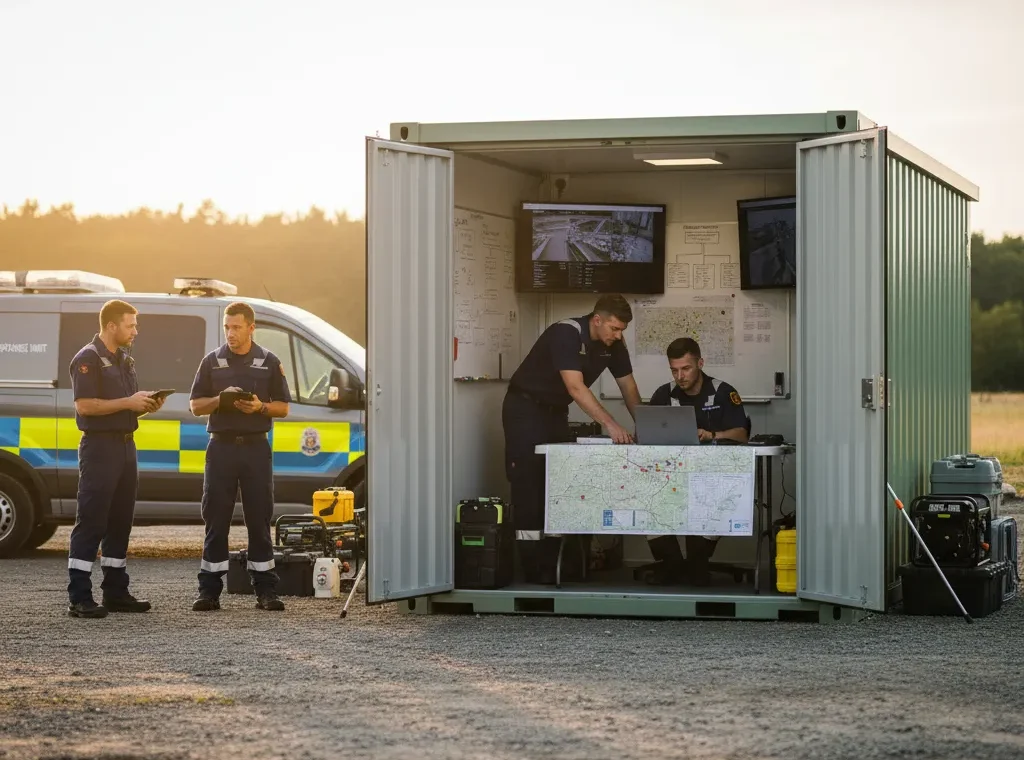
Supports Field Operations Such As:
- Emergency program administration
- Field-office coordination
- Logistics and supply oversight
- Reporting and documentation
- Regional preparedness support
- Temporary office functions near active operations
When office space is easier to place and easier to standardize, teams can stay focused on response, continuity, and service delivery.
Repeatable Office Deployment Across Multiple Sites
A single urgent office need often becomes a recurring pattern.
One region may need temporary support space this year. Another may need the same thing next season. A municipality may need a consistent office format across several sites. An NGO may need a dependable field-office model that works in more than one service area.
That is where repeatability becomes a practical advantage.
Flatbox supports a more scalable office model through standardized unit families, consistent options, and a rollout structure that is easier to manage over time. Once an organization has a format that works, future deployment becomes easier to scope, easier to approve, and easier to coordinate.
That matters for:
- emergency management agencies
- public-sector procurement teams
- NGOs with regional field programs
- municipal operations
- preparedness networks with multiple sites
- organizations planning for future activations as well as current ones
A repeatable system reduces decision fatigue, simplifies procurement, and makes expansion easier to manage under pressure.
Less Site Disruption and Cleaner Logistics
Emergency and field operations already have enough moving parts. Office deployment should not add unnecessary strain to the site.
A stronger solution simplifies transport, limits setup friction, and gives the organization a more predictable path from office need to operational use. That is one reason the Flat Box model fits this category so well. It is built around reducing logistical friction, supporting faster deployment, and creating more consistency across sites.
That is especially useful when the goal is to:
- avoid a drawn-out build process
- reduce site disruption
- coordinate deployment more cleanly
- standardize office planning across regions
- improve the handoff between operations and procurement
Why Emergency Teams and NGOs Choose Flatbox
Emergency teams and NGOs are usually not looking for a complex custom-build process. They need something more practical.
They need:
- office space that can be deployed quickly
- workspace that supports real coordination and administrative needs
- a model that can be repeated across sites
- cleaner logistics and rollout planning
- a more dependable path from need to deployment
Flat Box supports that need with:
- standardized office units for multi-site use
- practical options for layout and configuration
- weather-resistant steel construction
- secure, field-ready design
- a flat-pack delivery model that supports more efficient transport
- service coverage across the United States, Canada, and Puerto Rico
- a rollout process designed for repeat deployment
That combination makes Flat Box a strong fit for organizations that need office space to perform under pressure, not simply occupy a footprint.
Prefab Offices That Support Readiness and Continuity
The strongest prefab office strategy is the one that helps the operation move faster without creating new complications.
That usually means:
rapid deployment when timing matters
functional workspace for field coordination and administration
practical support for temporary modular office buildings
repeatable planning for each prefab office building
less site disruption and cleaner logistics
a standardized model that supports future rollout
Flatbox helps organizations create that kind of structure. Office deployment becomes easier to plan, easier to repeat, and easier to align with the realities of emergency response and field operations.