

Industrial Storage for Remote Oil, Gas, and Mining Sites
Deploy standardized industrial storage units for remote operations, field equipment, maintenance materials, and support inventory—built for faster rollout, cleaner site organization, and repeatable deployment across active job sites.
4-6 wk Build
4-6 wk Ship
7 Sizes
US · CA · PR
Remote industrial sites do not give teams much margin for error. Storage has to work in rough conditions, under heavy use, and often far from the kind of support that makes problems easy to solve. When tools, replacement parts, safety gear, and worksite materials are left exposed or stored in setups that are hard to access, the result is more than inconvenience. It creates delays, more wear, more unnecessary movement, and more pressure on already demanding operations.
Read More
Large industrial storage containers should do more than provide enclosed space. They should protect what matters, support faster daily work, and create a storage standard that can be repeated across camps, yards, extraction sites, and support areas without turning every deployment into a separate project.
Flatbox helps field operations teams create a more structured approach to remote-site storage and workspace. Standardized units support cleaner planning, stronger protection, and easier rollout across multiple locations.
Rugged Storage Built for Remote Industrial Conditions
Remote sites put constant pressure on storage systems.
Equipment is handled daily. Weather conditions shift. Ground conditions vary. Access is frequent and often unstructured. Storage that works in controlled environments can quickly become unreliable in the field.
Durability is not optional—it is operational.
Flatbox provides standardized steel storage units built for repeatable performance in demanding conditions. With durable construction, secure locking, and consistent sizing, teams can deploy storage that holds up under daily use without becoming another operational issue.
Read More
For oil, gas, and mining operations, that kind of durability supports uptime. When teams know their tools, site materials, and high-use supplies are protected in a dependable structure, they spend less time improvising and more time working.
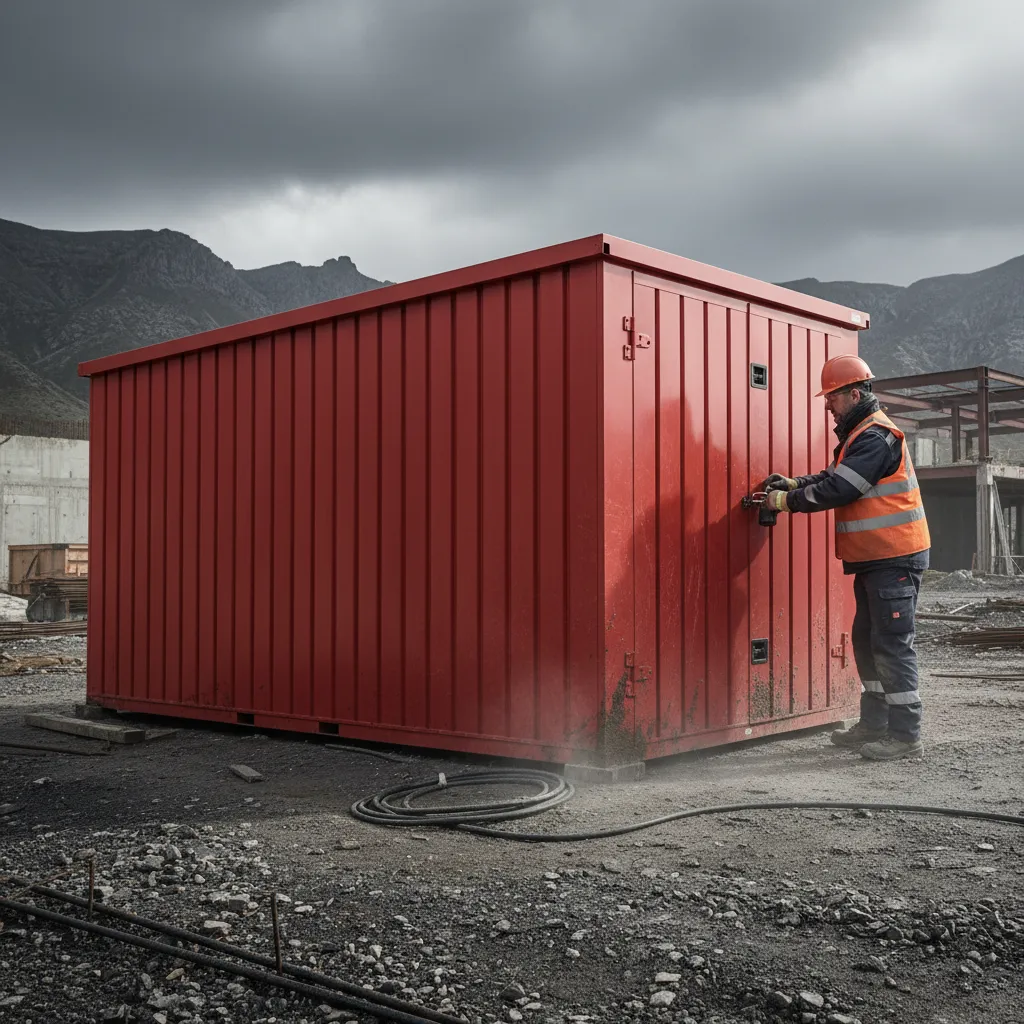
Environmental Exposure Creates Preventable Risk
Exposure is one of the fastest ways
to create storage problems at active field sites. Rain, moisture, temperature swings, dust, and general outdoor wear all affect how well tools, PPE, replacement parts, and support materials hold up over time. When those items are stored in weak or poorly sealed conditions, the cost shows up in damaged inventory, harder access, more replacements, and less confidence in the storage system as a whole.
A stronger storage setup helps crews trust that what they need will still be in usable condition when the job calls for it. It reduces unnecessary damage to site-critical items and supports better readiness when operations are already under pressure.
Flatbox gives organizations a more practical way to create that protection through standardized, field-ready storage units and configuration options that improve site fit
Depending on the use case, teams can plan around:
- side or end door placement for safer access
- reinforced locking systems for asset protection
- insulation for temperature-sensitive materials
- anti-condensation protection to reduce moisture damage
- heavy-duty flooring for high-use environments
- linked units for larger operational footprints
Because while site conditions vary, the need for dependable protection does not.
Better Storage Improves Daily Site Efficiency
Disorganized storage does not just create risk—it slows everything down.
On active sites, lost time is often a storage problem
Crews lose time not because equipment is unavailable, but because storage is disorganized, poorly placed, or harder to work from than it should be. Parts get buried. PPE gets mixed with general supplies. High-use tools take longer to retrieve. Materials that should be ready for the next task end up slowed down by the storage setup itself.
That kind of friction adds cost quietly. It affects daily rhythm, crew movement, and site efficiency in ways that compound over time.
Build a storage standard around what crews actually use
Flatbox helps teams create a more functional storage system for:
- tools and jobsite equipment
- replacement parts and spares
- PPE and safety supplies
- maintenance materials
- project-use inventory
- support items that need secure, repeatable storage
The advantage is not simply more space. It is a better-structured storage setup that supports faster retrieval, cleaner organization, and less wasted motion across the site.
Portable Storage Needs Structure to Scale Across Sites
Portability alone does not solve operational challenges.
Teams often look for portable storage to support active sites, temporary programs, remote operations, or future expansion. But mobility without structure can introduce new inefficiencies—especially when each deployment requires new decisions, new layouts, and new coordination.
The real value comes from portability that is repeatable and standardized.
A storage system that moves easily between sites becomes far more effective when it is also consistent, durable, and simple to plan around. That allows teams to deploy faster, reduce variability, and avoid reworking the same decisions across locations.
Flatbox supports that model with standardized storage units designed for repeat deployment. Once a configuration works, it can be reused, scaled, and rolled out across additional sites with less friction and more confidence.
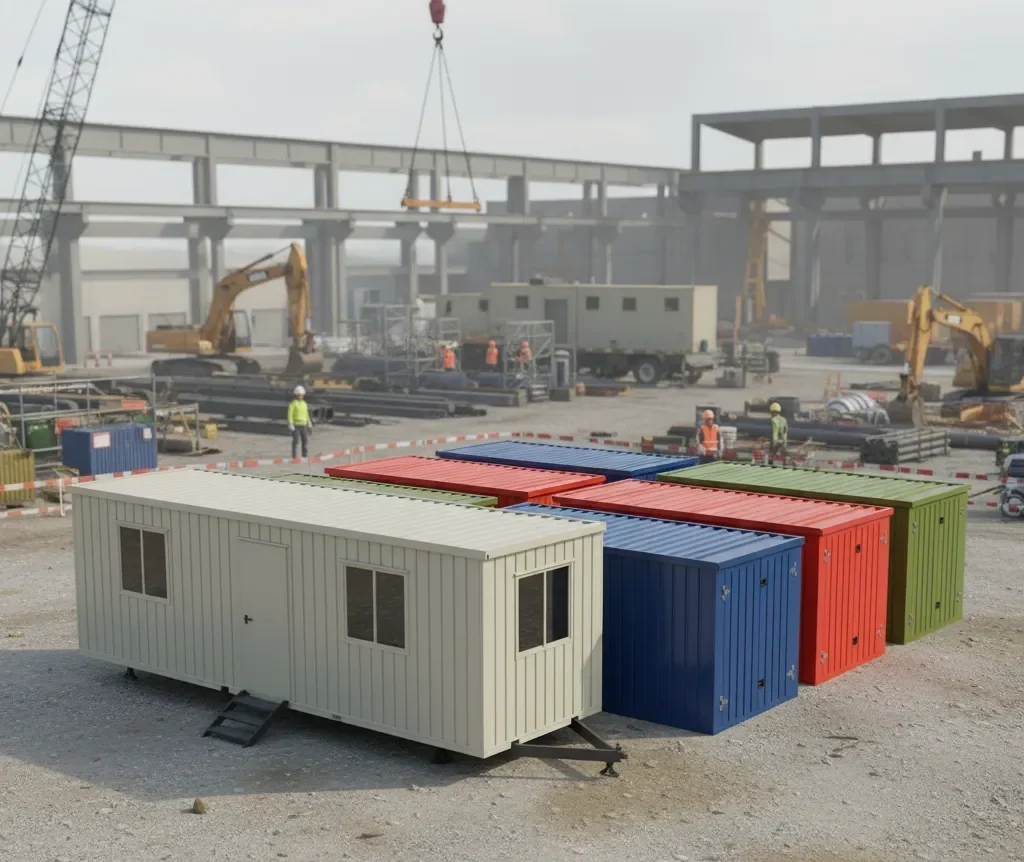
Built for Teams Managing Multiple Active Sites
This approach matters most for operators managing:
- multiple active extraction sites
- rotating or short-term remote programs
- maintenance and service yards
- staging and mobilization locations
- camp and field support infrastructure
- regional operations that require consistent, repeatable setups
When storage is standardized, teams spend less time re-planning and more time executing.
The most effective portable storage systems are not just easy to move—they are easy to deploy again, configure again, and rely on across every site they support.
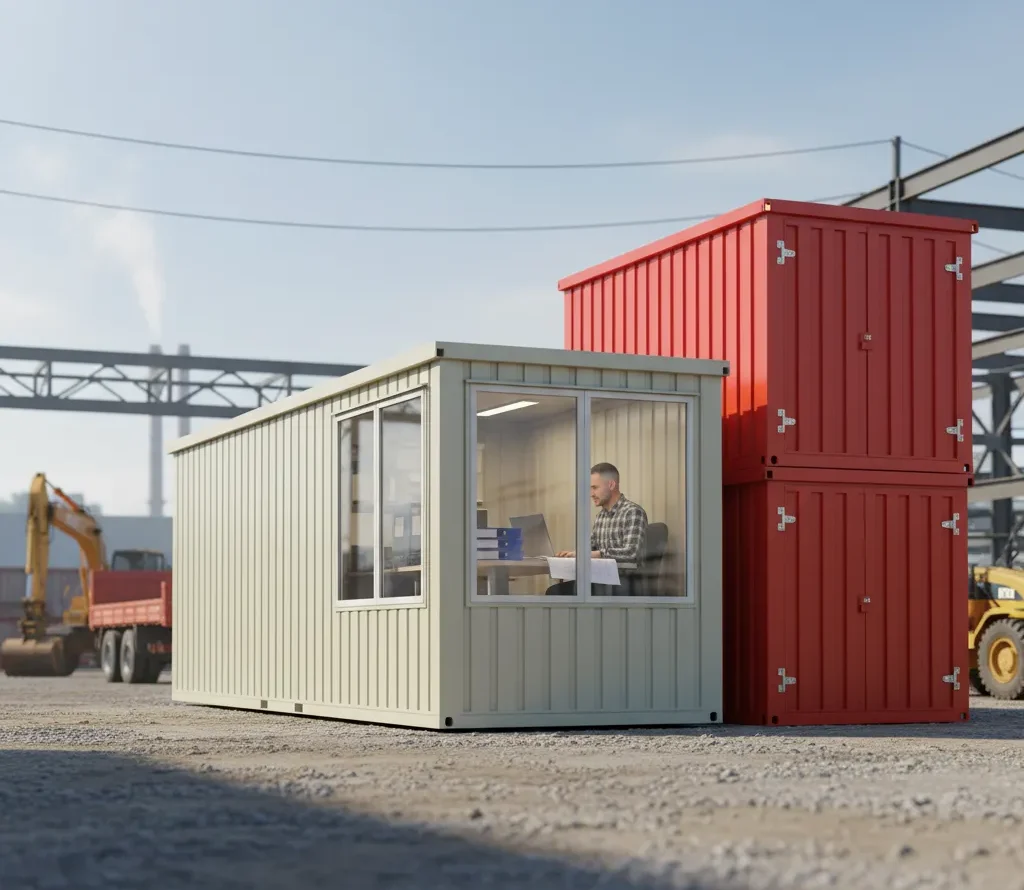
Mobile Office Trailers Solve Only Part of the Site-Support Need
Remote-site operations rarely need storage alone.
They also need nearby workspace for supervisors, site coordination, logistics planning, paperwork, safety administration, and day-to-day operational oversight. That is why mobile office trailers appear so often in this market. Teams need office support close to the point of work, not somewhere disconnected from the realities of the site.
The challenge is that office space and storage are often treated as separate decisions when they should support each other.
Flatbox gives operators a cleaner way to think about that relationship. Storage units can support tools, parts, and PPE while office-oriented configurations support on-site administration and coordination. Together, they create a more complete site-support package for environments where both protection and oversight need to stay close to the work.
That can support:
supervisor space
logistics coordination
safety documentation
crew check-in and administration
project oversight
field planning near the active site
Repeatable Site Standards Reduce Friction Over Time
One of the biggest hidden costs in remote-site infrastructure is inconsistency.
A setup that works at one location often becomes difficult to repeat at the next. Different unit types, different delivery models, different layouts, and different support systems create more complexity than they solve. Procurement gets slower. Expansion becomes harder. Site teams moving between locations end up dealing with a different setup every time.
Flatbox supports a cleaner model.
Instead of reinventing site support for each yard, camp, or extraction location, organizations can standardize around a working format and repeat it across multiple sites. That helps reduce decision fatigue, simplify procurement, and create better consistency as operations expand.
That matters for:
- oilfield support programs
- mining camps
- drilling support yards
- regional maintenance networks
- procurement teams managing several sites
- operators planning future activations as well as current ones
A repeatable site standard is not just easier to buy. It is easier to manage.
Why Oil, Gas, and Mining Teams Choose Flatbox
Operations in this vertical are usually solving for protection, readiness, and deployment speed at the same time.
They need:
- storage that can handle harsh remote conditions
- stronger protection for tools, parts, PPE, and supplies
- practical support through portable storage containers for sale
- nearby field-office functionality connected to the mobile office trailers need
- a system that is easier to repeat across multiple locations
- a cleaner logistics model for rollout and future expansion
Flatbox supports that need with:
- standardized storage units for multi-site use
- office-oriented configurations for field coordination
- durable steel construction
- secure locking and practical configuration options
- weather-ready performance for exposed conditions
- a rollout model built for cleaner transport and repeat deployment
- service coverage across the United States, Canada, and Puerto Rico
That combination makes Flatbox a strong fit for organizations that need site infrastructure to work under pressure, not just occupy space.
Large Industrial Storage Containers That Support the Whole Site
The strongest large industrial storage containers are the ones that help the broader operation move faster and work more cleanly.
That usually means:
dependable performance at tough remote sites
stronger protection for tools, parts, PPE, and materials
practical support through portable storage containers for sale
nearby coordination space tied to the mobile office trailers use case
repeatable deployment across camps, yards, and extraction locations
a cleaner path from site need to rollout-ready infrastructure
Flatbox helps oil, gas, and mining operations create that kind of structure. Storage becomes easier to protect, easier to organize, and easier to repeat as more locations come online.