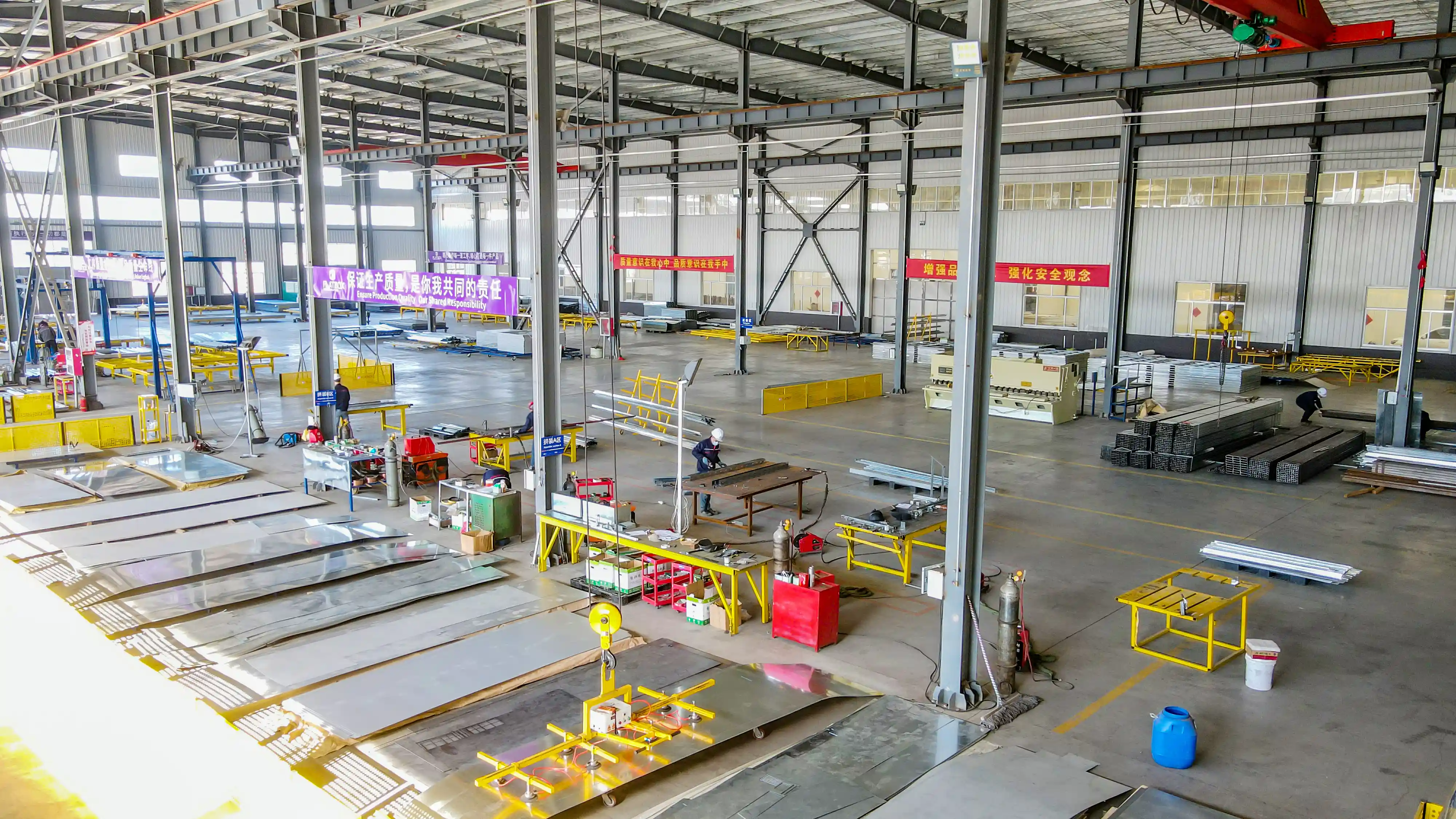
A flatpack container is a modular steel container system designed to travel in a compact, disassembled format and be assembled at or near its destination. We use the flat-pack format to make storage easier to plan around transportation, site access, configuration, and repeat deployment.
A flatpack container is not simply a conventional shipping container taken apart for transport.
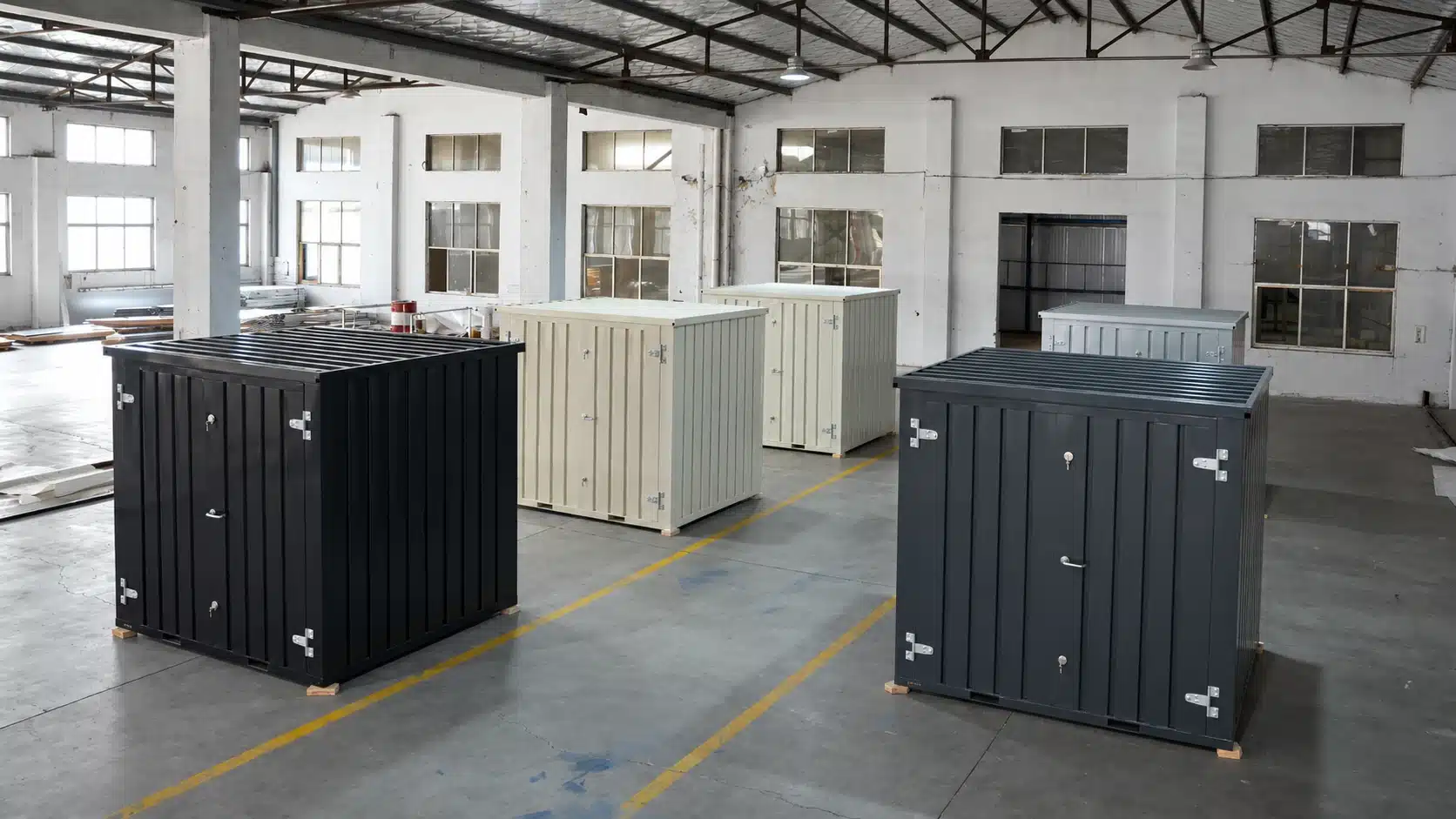
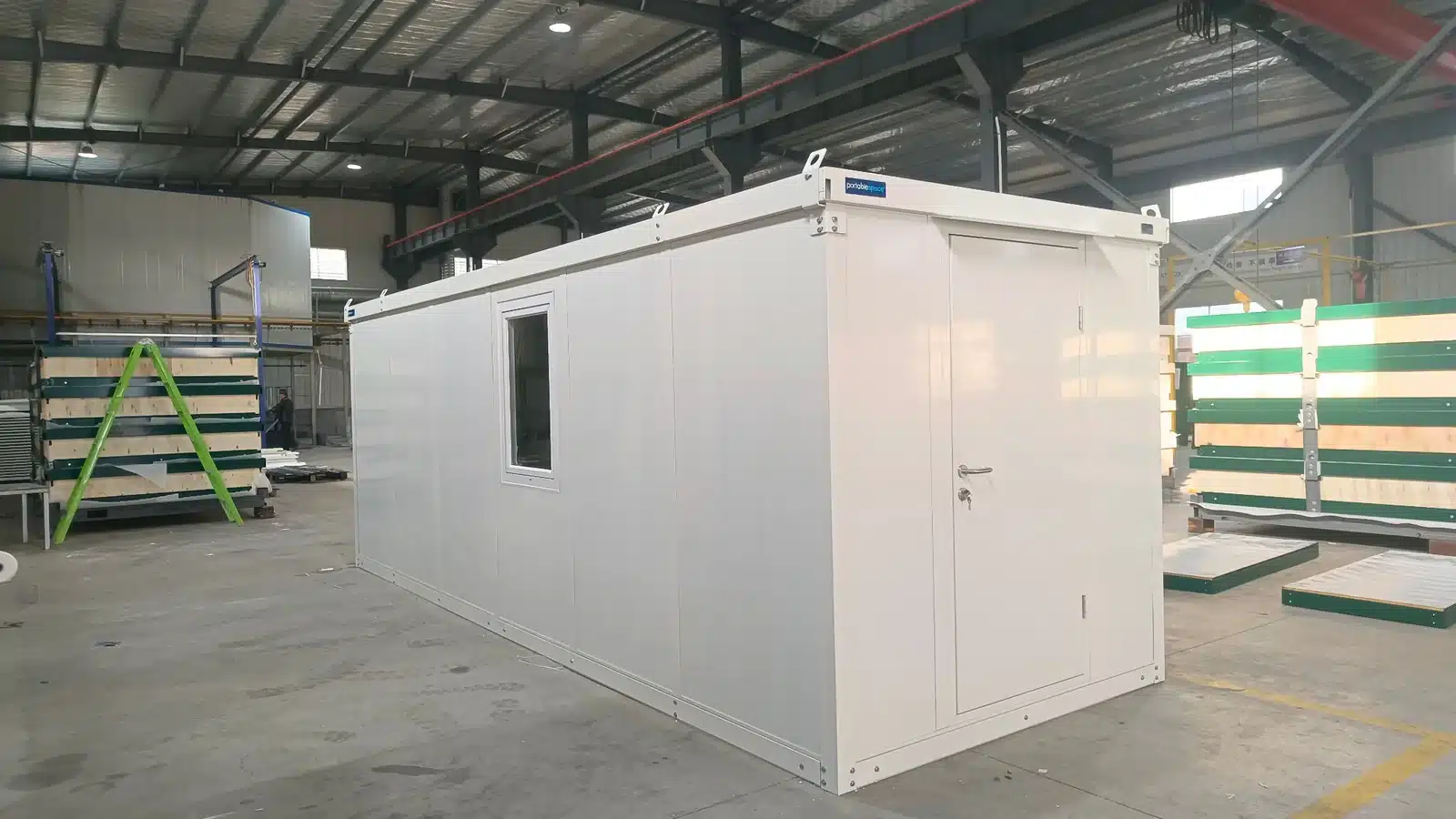
We design our flat-pack storage units as purpose-built systems. The panels, frame components, floor, roof, doors, and hardware are supplied as a coordinated package, then assembled into a complete storage unit at the point of use.
That difference matters because “flatpack” describes how the unit is transported and deployed. It does not automatically tell us how secure, durable, weather-ready, or suitable the finished unit will be. Those qualities depend on the construction, coatings, floor system, locks, assembly, accessories, site conditions, and intended use.
Our storage units combine compact transport, standardized steel construction, multiple sizes, configurable options, and documented assembly guidance for commercial use across the United States, Canada, and Puerto Rico.
What Does “Flatpack” Mean?
The concept is straightforward: instead of moving every storage unit as a fully assembled three-dimensional enclosure, we can transport the main components in a compact format and assemble the unit after delivery.
That can be useful when transportation space matters, when a site has limited access, when multiple units are needed, or when we want to standardize storage across several locations.
For commercial use, the value is not simply that the unit arrives flat. The value comes from connecting transportation, assembly, configuration, and repeatability into one storage system.
Flatpack Container vs. Shipping Container: What Is the Difference?
A conventional shipping container is built primarily to move cargo through freight networks as a fully assembled welded structure. It generally arrives at the site already formed and needs placement rather than structural assembly.
Our flatpack containers are different by design.
We ship the system in a compact format, then assemble it at the destination. That can create more flexibility when we are planning multiple units, working around constrained access, or trying to avoid moving the full assembled volume before the unit is needed.
Neither format is automatically the right choice for every application.
If we specifically need ISO freight-container characteristics, a conventional shipping container may be the better fit. If we need secure commercial storage with compact transport, standardized sizing, configurable options, and repeatable deployment, our flat-pack format gives us another approach to consider.
The right comparison is the complete operating requirement: what we need to store, where the unit will go, how it will be handled, how often the requirement may repeat, and what level of configuration we need.
Are Flatpack Containers Secure and Durable?
Compact transportation does not have to mean compromised storage.
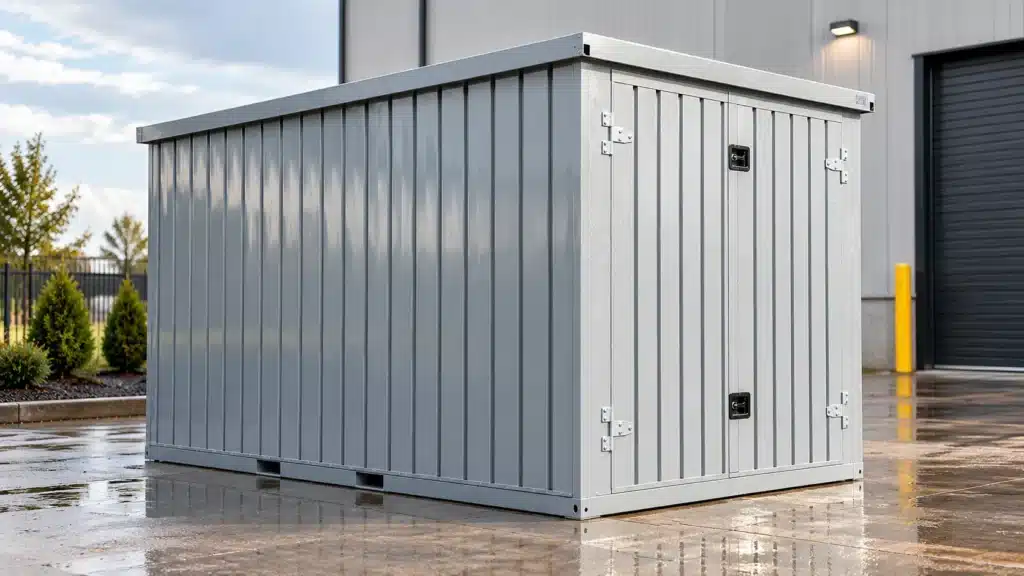
We build our storage units with galvanized or galvalume steel panels, corrugated profiles, and powder-coated finishes for corrosion resistance.
Depending on the configuration, we can also provide secure lock options, flooring choices, insulation, anti-condensation treatment, shelving, pipe racks, linking kits, and other accessories.
That gives us a practical way to match the storage setup to the work.
The most useful durability question is not:
“Is flatpack durable?”
It is:
“What specification do we need for the environment, contents, security level, and operating conditions?”
Flatpack describes the deployment format. Finished performance depends on the specification, assembly, site conditions, and intended use.
How Is a Flatpack Container Assembled?
Assembly is part of the deployment plan, not an afterthought.
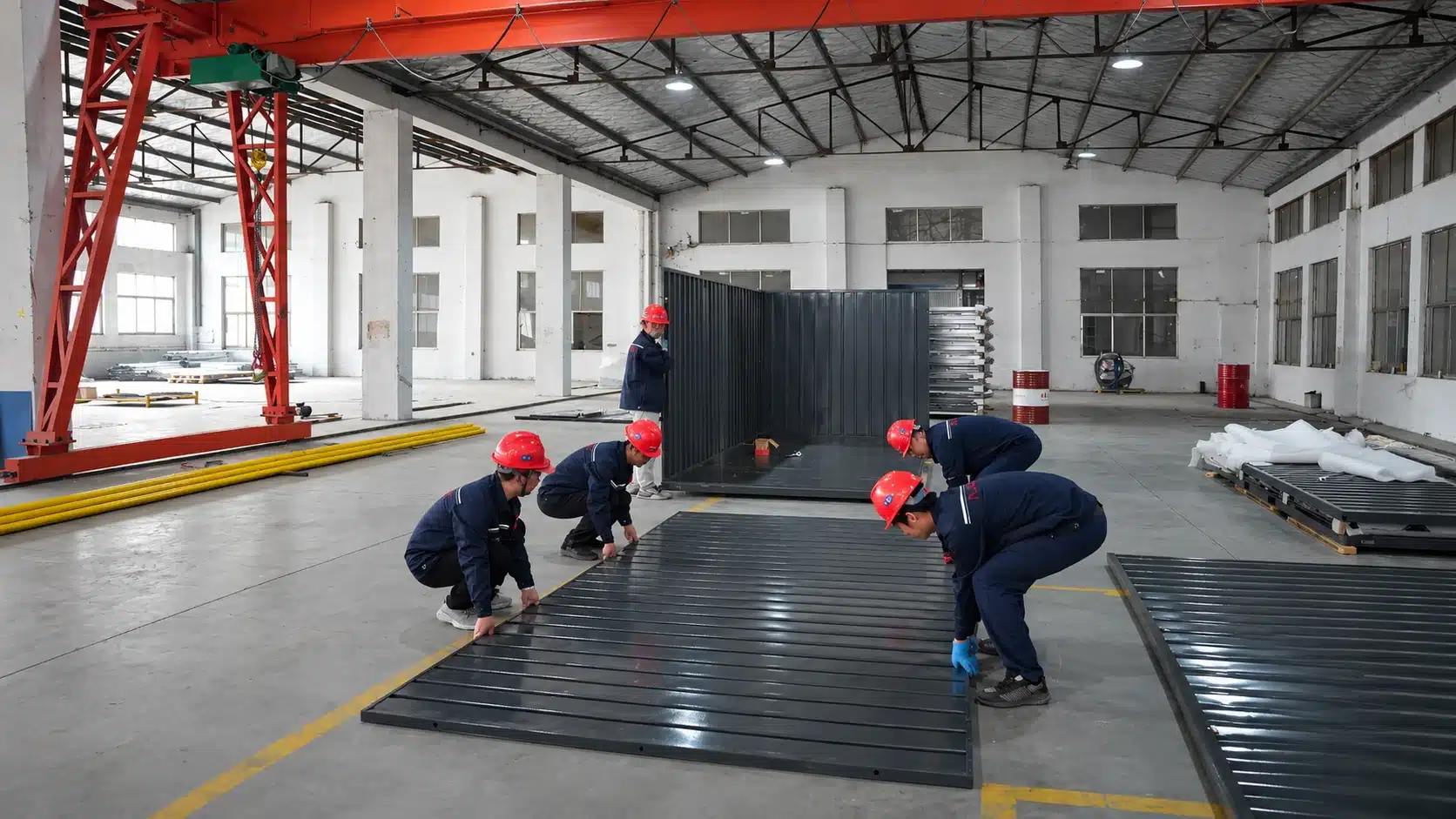
We begin by confirming the unit size, site access, intended placement area, handling requirements, and final configuration. Once the shipment arrives, the components are unloaded, positioned, and assembled using the supplied hardware and guidance.
Our storage units include a hardware kit, and we provide manual and video assembly guidance to support the process.
The exact labor, equipment, and setup requirements can vary by unit size, configuration, and site conditions. We do not treat one assembly time or one crew size as a universal promise.
A clear deployment plan should account for:
delivery → unloading → assembly → placement → inspection → configuration → use
That gives us a more complete view of deployment before the unit reaches the site.
What Sizes Do Our Flatpack Storage Containers Come In?
We offer standard storage units in 3.5-foot, 5-foot, 7-foot, 10-foot, 13-foot, 16-foot, and 19-foot lengths.
That range gives us more flexibility than forcing every storage requirement into one footprint.
A smaller unit can work well when we need secure storage close to a work area without using unnecessary site space. Larger units can support more tools, materials, equipment, parts, PPE, shelving, or other operational inventory.
We also offer multi-compartment configurations when separate crews, departments, tenants, or storage categories need independent access within one footprint.
Once we choose the size, we can refine the setup with available door positions, lock options, flooring, shelving, pipe racks, insulation, anti-condensation treatment, linking kits, and other accessories.
What Are Flatpack Containers Used For?
We use the flat-pack format across a wide range of commercial storage applications.
Our storage units can support construction sites, industrial operations, warehouses, equipment dealers, retail locations, property teams, self-storage operations, agriculture, utilities, infrastructure, public-sector facilities, and other environments where secure storage needs to stay close to the work.
The common requirement is straightforward:
We need storage that can be planned, delivered, assembled, organized, and repeated without turning every location into a custom project.
When Does a Flatpack Container Make Sense?
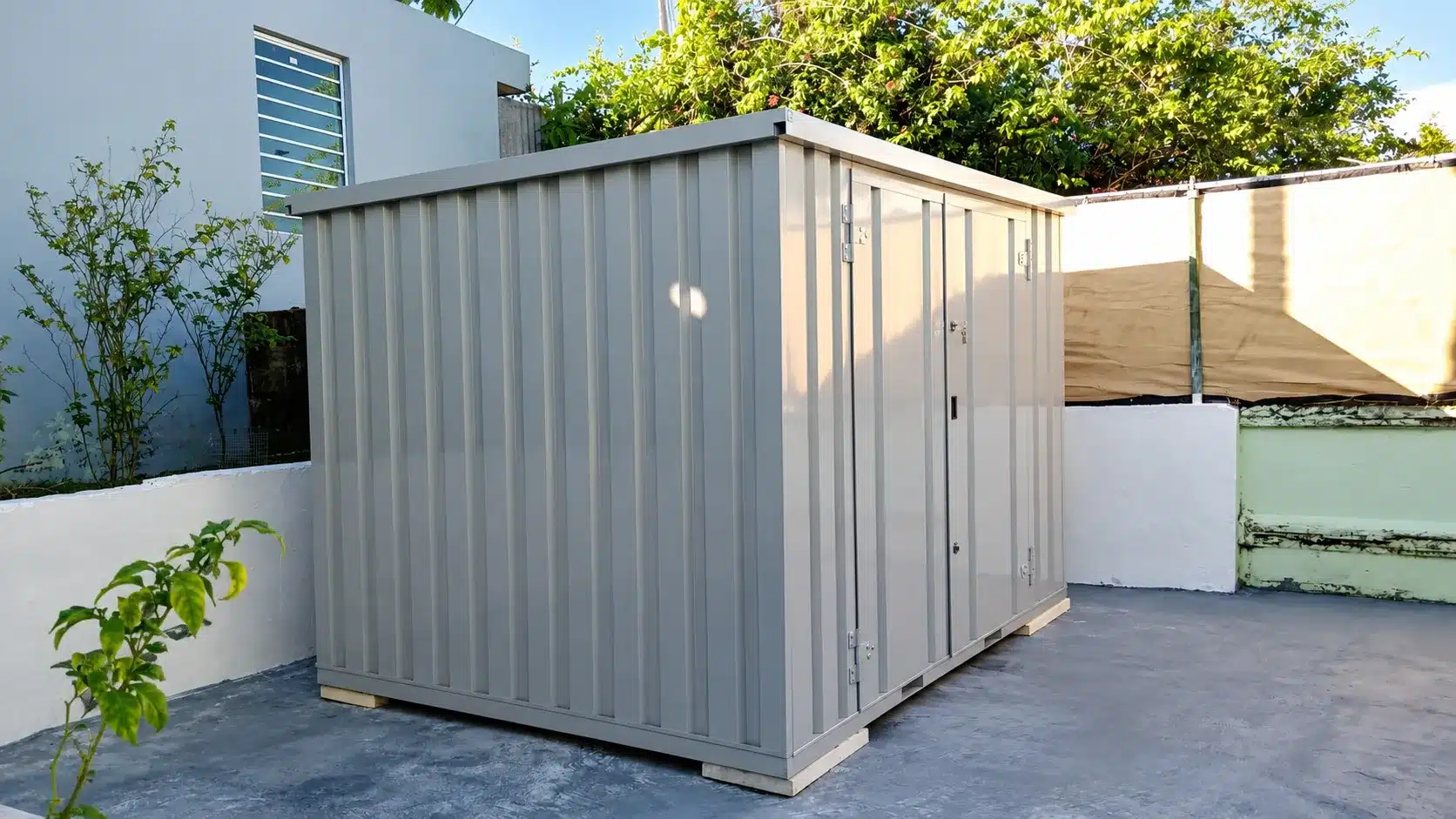
Our flat-pack storage system can be a strong fit when transportation efficiency, site access, repeatability, or multi-unit deployment matters.
It can make sense when we need several units at one site, want to standardize storage across multiple locations, need flexibility in how units are positioned, or expect the same storage requirement to return on future projects.
It may not be the right format for every use.
If we specifically need an ISO cargo container, a flat-pack storage unit is not a substitute for that requirement. If the project calls for highly bespoke architecture, a standardized storage system may also be less appropriate than a custom-built solution.
We prefer to define the operating requirement first, then match the product to it.
Why Standardization Matters Across Multiple Sites
A successful storage setup becomes more valuable when we can repeat it.
Once we know the right size, door arrangement, locks, flooring, shelving, and accessories, we can use that specification as a starting point for the next location.
That can simplify ordering, deployment planning, internal approval, and future expansion.
We sell our units for owned deployment rather than rental, which makes the format especially relevant when the storage requirement is recurring, long-term, or part of a broader multi-site program.
For procurement and operations teams, the advantage is consistency. We can work from known sizes and repeatable configurations instead of rethinking the storage requirement at every location.
Is a Flatpack Container Right for Our Operation?
The best way to decide is to look beyond the word “flatpack” and focus on what the storage system needs to accomplish.
We should consider capacity, site access, security, floor requirements, organization, weather exposure, assembly planning, handling equipment, delivery conditions, and whether the same setup may be needed again.
If we want secure steel storage in a standardized format that can be transported compactly, assembled at the destination, configured around the operation, and repeated across future sites, our flat-pack system gives us a clear option to evaluate.