

Farm Equipment Storage That Protects Equipment From Weather and Wear
Improve farm equipment storage with bulk storage containers and fertilizer containers designed for better protection, cleaner organization, and easier rollout across ag sites.
4-6 wk Build
4-6 wk Ship
7 Sizes
US · CA · PR
Keep tools, machines, and supplies better protected with durable storage designed for cleaner organization, safer input handling, and easier deployment across ag sites. Agricultural operations do not lose time only in the field. A surprising amount of friction starts in the yard. Equipment sits exposed to rain and seasonal weather. Tools and parts become harder to find. Supplies end up stored wherever there is room instead of where they are easiest to access. Bulk materials and fertilizer need more control than a temporary setup can provide. What should be a simple support function turns into wasted movement, slower prep, and more wear on the things the operation depends on.
Read More
Farm equipment storage should do more than provide enclosure. It should protect valuable assets, support faster daily work, and create a storage standard that can hold up across farms, co-op yards, supply points, and regional operations. Flatbox helps agriculture and co-op teams create a more structured approach to storage. Instead of solving each site with a different shed, building, or improvised enclosure, organizations can work from standardized units that support cleaner planning, stronger protection, and easier rollout across multiple locations.
Weather Protection Supports Equipment Readiness
Farm yards and co-op sites put storage under real pressure. Equipment, tools, inputs, and support materials may sit through heat, rain, humidity, blowing dust, and seasonal change. Over time, exposure shortens useful life, increases maintenance demands, and makes readiness less predictable. Once exposure becomes normal, downtime and replacement costs tend to follow.
That makes protection the first job. Flatbox supports that need with standardized steel storage units designed for weather-resistant performance, repeatable sizing, and practical deployment. The system includes secure locking, configurable access, and upgrades such as insulation, anti-condensation protection, flooring options, and linking kits that help match the storage format to the realities of the site.
Read More
Those options matter because agricultural storage is rarely static. One location may need protected space for service equipment. Another may need a compact tool-and-supply unit. Another may need linked storage to support a larger yard footprint.
Better protection does more than preserve assets. It helps the operation stay ready when equipment and supplies are needed most.
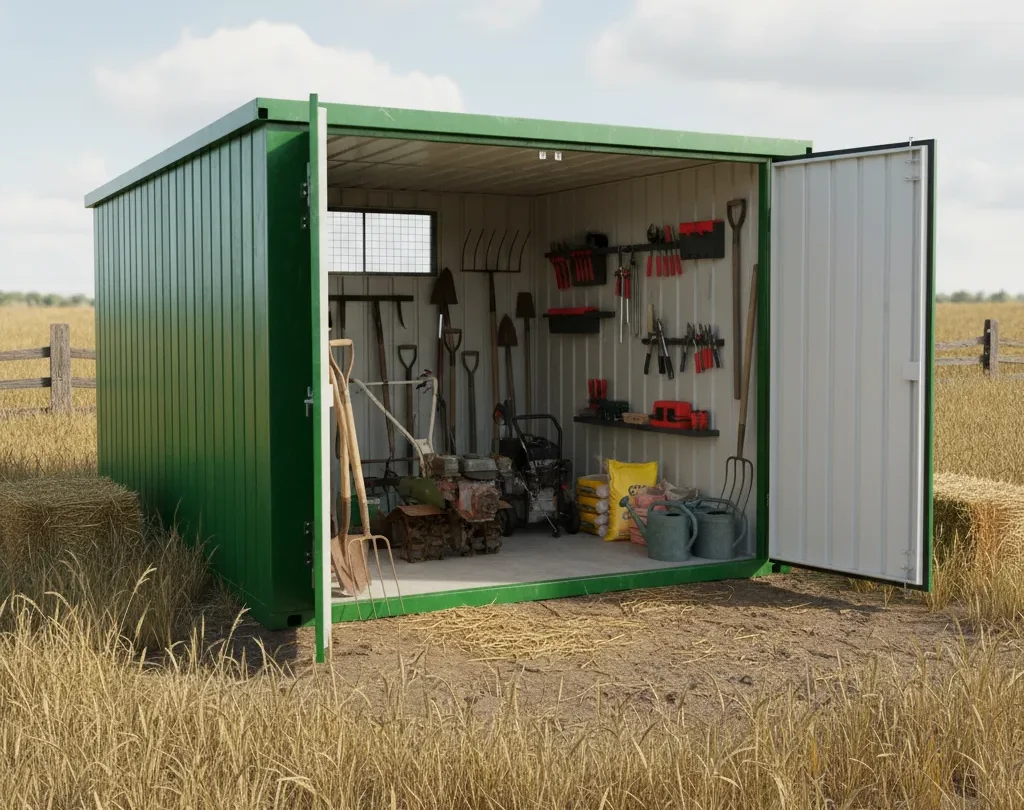
Organized Storage Makes Daily Work Easier
A yard can have enough space and still work poorly
That usually happens when storage is disorganized, awkward to access, or scattered across too many improvised locations. Teams spend more time walking, searching, sorting, and moving items than they should. High-use tools get mixed with lower-priority inventory. Seasonal materials crowd out everyday needs. A task that should take minutes ends up slowing the day down.
A better storage layout reduces that friction.
Flatbox helps create a more functional storage standard for:
- equipment support tools
- maintenance parts and spares
- PPE and safety supplies
- seasonal materials
- yard-use inventory
- high-use support items that need secure, repeatable access
That kind of organization improves more than appearance. It helps crews retrieve what they need faster, reduces unnecessary handling, and makes the storage setup easier to trust. The advantage is not simply more storage. It is better-structured storage that works more naturally with the pace of the operation.
Bulk Storage Containers Add Better Control
Agriculture and co-op operations often manage more than equipment. They also manage volume.
Inputs, packaged materials, support supplies, and yard inventory need storage that supports handling, staging, and better control. That is where bulk storage containers become especially useful. They help operators move beyond a single general-purpose enclosure and toward a more structured storage system that supports the way materials actually move through the site.
In practice, that can support:
- supply staging
- packaged input storage
- overflow materials
- high-turn inventory
- yard organization during seasonal demand
- better control over what is stored where
That matters even more for co-ops and larger agricultural groups managing multiple points of use. A more organized storage system makes it easier to maintain order across locations and easier to repeat a format once it proves itself.
Flatbox supports that need well because the broader platform is built around standardized units and repeatable options rather than one-off layouts that become difficult to duplicate later.
Fertilizer Containers and Cleaner Input Handling
Few agricultural storage categories demand more discipline than fertilizer and related inputs.
Fertilizer products need a closed, secure, weather-ready environment that supports cleaner handling and better control. That makes fertilizer containers an important supporting topic for any agricultural storage strategy built around reliability and organization.
The stronger fit here is not a specialty chemical system. It is a practical, organized storage layer that helps support better input management around broader ag operations.
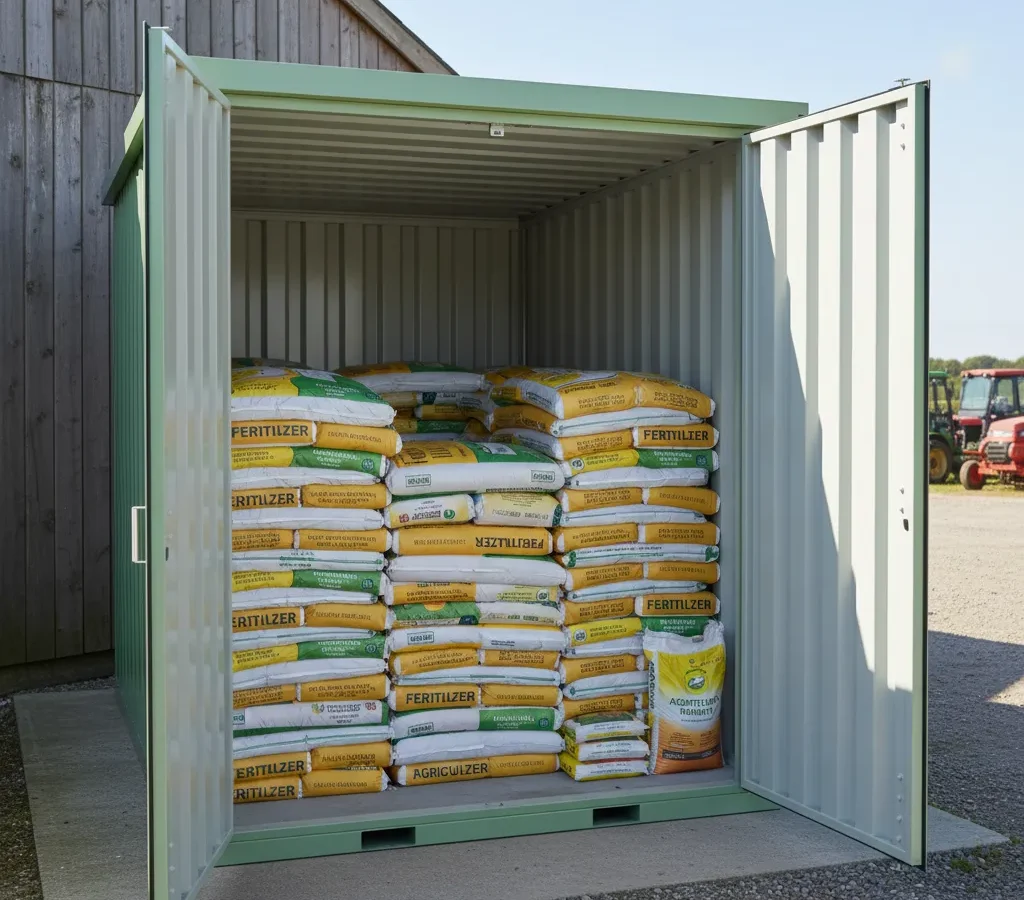
That can include:
- secure storage for packaged fertilizer products
- protected support storage near input-handling areas
- organized layouts for materials and related supplies
- cleaner staging for seasonal input inventory
- better separation between high-use materials and general yard clutter
This kind of control matters because inputs that affect field performance should not be stored as an afterthought. They need a setup that supports cleaner handling, stronger protection, and more confidence in the condition of the product when it is needed.
Storage Should Stay Practical as Operations Grow
A solution that works for one season or one site is only part of the answer.
Agricultural operations change. Equipment mixes evolve. More inventory needs support space. Co-ops add locations or shift yard functions. Seasonal surges create new demands that may become permanent. A storage decision needs to stay practical as the operation grows.
That is where repeatability becomes valuable.
Flatbox gives organizations a storage model that can be used again with less friction. Once a format works, it becomes easier to scope, easier to quote, easier to deliver, and easier to deploy across another farm, depot, or co-op location.
That matters for:
- co-op yard networks
- regional ag suppliers
- farms with multiple operating areas
- input depots
- shared facilities
- procurement teams trying to reduce variation across sites
Why Agriculture and Co-ops Choose Flatbox
Agriculture buyers are usually solving for protection, organization, and growth at the same time.
They need:
- storage that protects equipment and supplies from weather
- cleaner organization for faster daily access
- support for bulk storage containers and input staging
- better control around fertilizer containers
- a system that can be repeated across multiple sites
- a more efficient logistics model for rollout and expansion
Flatbox supports that need with:
- standardized storage units for multi-site use
- durable steel construction
- secure locking and practical configuration options
- weather-resistant design for exposed environments
- options for shelving, access layout, flooring, and linked units
- service coverage across the United States, Canada, and Puerto Rico
Farm Equipment Storage That Supports the Whole Operation
The strongest farm equipment storage strategy is the one that makes the broader operation easier to run.
That usually means:
- stronger protection from weather and exposure
- more organized access to tools, parts, and supplies
- practical support for bulk storage containers
- better control over fertilizer containers
- a storage format that stays easier to repeat across yards and sites
- a cleaner path from storage need to rollout-ready deployment