We help commercial teams match storage capacity, configuration,
security, site footprint, and ownership to the operation so we can add the space we need without paying for capacity we do not.
Running out of storage rarely happens at a convenient time.
Inventory expands. Equipment accumulates. Seasonal stock arrives. A project mobilizes. Maintenance supplies consume valuable working space. Before long, materials that should be organized and protected begin competing with the areas our teams need to operate.
We need more capacity—but that does not necessarily mean we need a larger building.
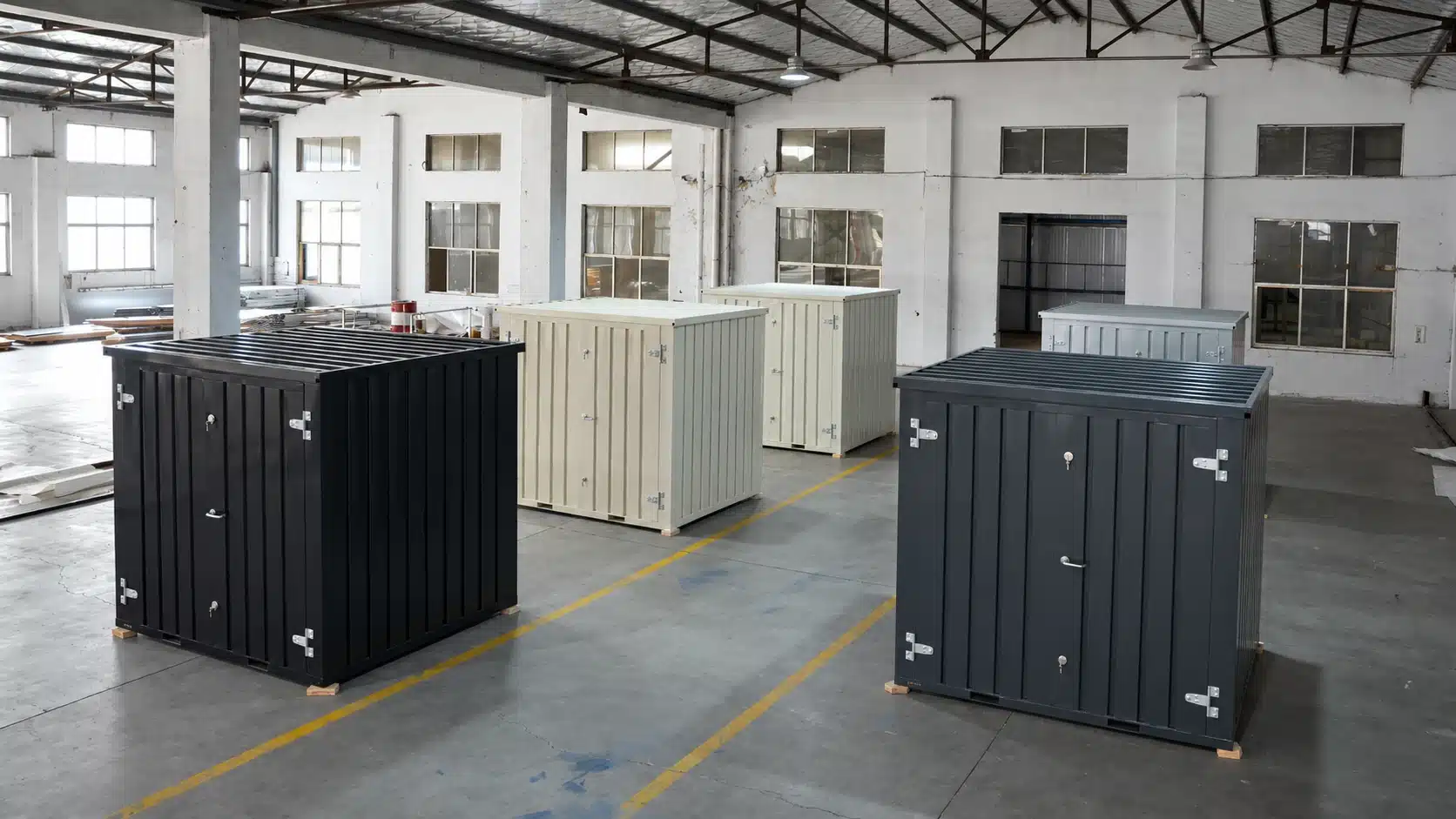
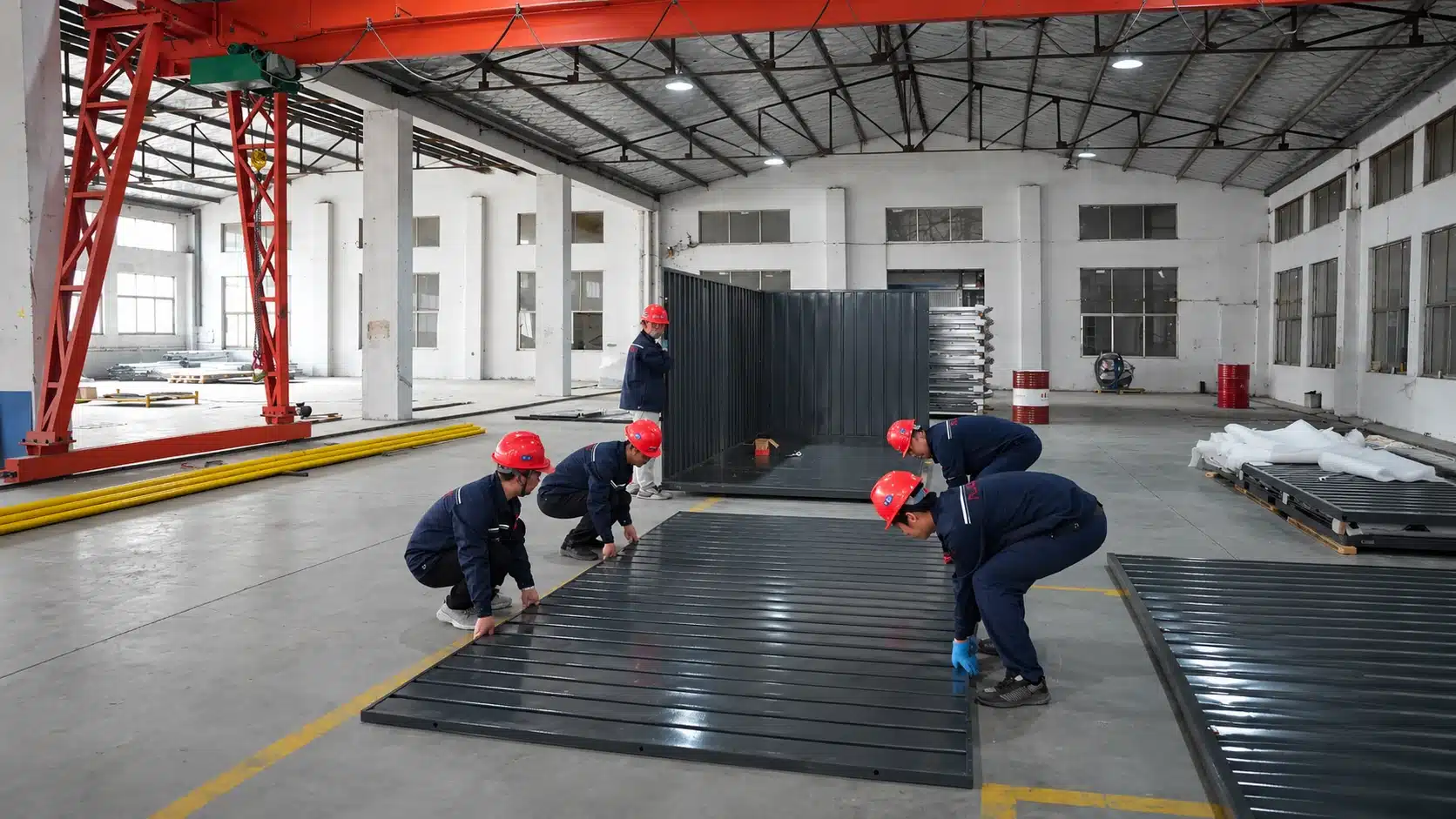
Our commercial storage containers give us a practical way to add secure storage where the operation needs it. With standardized flat-pack configurations, commercial-grade construction, multiple sizes, and options for organization, we can build storage around the requirement instead of defaulting to more space than we need.
We start with a straightforward question:
What do we actually need to store?
From there, we can determine capacity, quantity, placement, organization, and the right configuration for the site.

Start With What We Need to Store
Storage capacity only becomes useful when it matches what is going inside.
Tools have different requirements from packaged inventory. Maintenance supplies need different organization from bulky equipment. Seasonal merchandise may remain stored for months, while frequently used materials need to stay within easy reach.
Before choosing a commercial container, we consider the contents, volume, largest item dimensions, access frequency, and how our teams will move through the space.
If we need frequent access, shelving and organization may be as important as total capacity.
If we are storing large equipment, open floor space and entry access may matter more.
If different teams use the same storage area, separating materials across multiple units may create a cleaner workflow than putting everything into one oversized space.
That gives us a better starting point than choosing dimensions first and trying to make everything fit afterward.
Choose the Right Capacity Without Paying for Empty Space
When storage is tight, buying the largest available unit can feel like the safest decision.
It is not always the most practical one.
Too much capacity can increase cost and consume valuable site space. Too little can leave us dealing with the same storage problem again sooner than expected.
We want enough capacity for today’s requirement with a sensible path for tomorrow.
Our standardized storage-unit range gives us flexibility to approach capacity in different ways. Depending on the application, we may use one larger unit, several smaller units, or a combination that separates inventory, tools, equipment, and supplies.
Multiple standardized units can also help us organize storage by purpose, department, project, or access frequency.
Instead of asking, “What is the biggest container we can put here?” we can ask a more useful question:
What combination gives us the storage capacity we need with the least unnecessary footprint?
Protect What We Store Without Making It Hard to Reach
Commercial storage needs to protect valuable assets.
I also need to work every day.
Our flat-pack storage units use galvanized steel construction, durable powder-coated finishes, and secure locking to create enclosed storage suited to commercial environments.
Those physical characteristics matter when we are protecting inventory, tools, equipment, supplies, and materials from unauthorized access and everyday exposure.
But protection is only part of good storage.
Organization matters too.
A secure unit filled without a plan can quickly become difficult to use. Frequently needed equipment gets buried. Inventory becomes harder to locate. Teams spend time moving one item just to reach another.
We can plan shelving, floor space, access paths, and item grouping around how the unit will actually be used.
That gives us storage containers for businesses that do more than hold materials. They help us keep important assets protected, organized, and accessible to the people who need them.

Make Sure the Storage Fits the Site
A storage unit can have exactly the right internal capacity and still be the wrong fit for the property.
Placement influences how well the storage works from the first day onward.
We need to consider the footprint, access, placement surface, door orientation, surrounding structures, and normal movement around the site.
We also need to think about what cannot be disrupted.
Loading areas still need to function. Vehicles and equipment need room to move. Pedestrian routes need to remain practical. Teams need convenient access to stored materials without creating congestion around other operations.
Our units include forklift pockets that support handling and placement, while the flat-pack format provides a different deployment approach from relying exclusively on conventional preassembled container formats.
Good placement turns additional storage into part of the operation rather than an obstacle beside it.
Keep Storage Close to the Work
Distance can make inexpensive storage surprisingly inefficient.
When inventory, tools, or supplies are stored away from the operation, someone still needs to retrieve them.
That can create additional trips, handling, coordination, and downtime.
Onsite commercial storage containers can keep capacity closer to the people and activities it supports.
For construction operations, that may mean storing tools and materials near the project.
For industrial facilities, it may mean overflow inventory, spare parts, maintenance equipment, or supplies near the workflow.
For property management teams, it can mean giving maintenance staff dedicated storage where they actually work.
Retail operations may need seasonal inventory capacity. Municipal teams may need equipment and supplies. Utilities may need storage near field operations. Agriculture, transportation, education, and other commercial environments can face similar space pressures.
The applications change.
The advantage remains consistent: we can add storage closer to where it provides value.
Compare the Complete Storage Cost
The purchase price of a unit is important, but it does not tell us the complete storage story.
We also need to consider quantity, transportation, site placement, accessories, organization, expected duration, and how often the requirement is likely to return.
Rental can make sense for a short-term need.
If storage is required for a specific project and we do not expect to need it afterward, temporary rental may be appropriate.
Ownership becomes more relevant when storage is recurring, long-term, or needed across multiple locations.
In those situations, we can compare the cost of continuing to rent against owning standardized storage assets that can support ongoing operations.
We also need to consider operational costs.
If offsite storage requires frequent trips and additional handling, the monthly storage price is not the only expense involved. If an oversized unit consumes valuable property space, that footprint also matters.
We prefer to look at the full requirement before making the decision.

Standardize Storage Across Sites, Projects and Facilities
Solving one storage problem is useful.
Making the next one easier can be even more valuable.
When we operate across multiple facilities, properties, projects, or regions, standardized configurations can simplify future purchasing and deployment.
We can establish common storage setups around recurring needs.
One configuration might support maintenance supplies. Another could be used for tools and equipment. A different setup could handle inventory overflow.
Instead of redesigning every requirement from the beginning, we can start with a proven internal standard and adjust for the site where necessary.
That makes it easier to plan quantities, accessories, placement, and purchasing.
Local conditions can still differ. A deployment in Canada may have different environmental considerations from one in the United States or Puerto Rico. Site access, available footprint, and operating conditions can also change.
Standardization gives us consistency without requiring every location to be identical.
Choose Commercial Storage Built Around the Operation
We do not believe the default answer to every storage problem should be one oversized container.
Our flat-pack approach gives us another way to think about commercial storage.
We can match standardized sizes to the requirement, plan multiple units where that improves organization, incorporate shelving where appropriate, and account for how the storage will fit into the site before we commit.
Our galvanized steel construction, powder-coated finish, secure locking, forklift pockets, and commercial storage configurations support durable day-to-day use.
The flat-pack format also allows us to approach transportation, inventory, and deployment differently from conventional fully assembled container models.
For organizations managing repeated storage requirements, those differences become increasingly important.
We are not simply trying to find somewhere to put excess materials.
We are creating storage capacity that can become part of a repeatable operational system.
Add the Space We Need With a Clear Plan
When storage pressure is already affecting the operation, speed matters.
But the fastest storage decision is only valuable if it remains the right decision after the unit arrives.
Before we commit, we want clear answers.
- Do we have the right capacity?
- Are we using our site efficiently?
- Can our teams find and access what they need?
- Are valuable assets properly protected?
- Does the placement work with vehicles, equipment, people, and daily operations?
- Would rental or ownership make more sense?
- Can we repeat the same configuration at another location?
Those questions turn a general search for commercial storage containers into a defined storage requirement.
Whether we need one commercial container for an immediate operational need or standardized storage containers for business across multiple locations, we can build the configuration around what we actually need to store, where we need it, and how our teams need to use it.