Learn how compact shipping, standardized specifications, coordinated deployment, and flexible configurations can simplify storage across locations.
Managing storage across multiple facilities is rarely as simple as repeating the same order.
Every location may have different inventory needs, placement areas, access conditions, security requirements, and deployment schedules. Without a consistent plan, those differences can lead to changing specifications, unpredictable costs, repeated approvals, and storage systems that work differently from one site to the next.
The benefits of flat pack storage units become especially valuable when we approach storage as a coordinated program rather than a series of unrelated purchases.
We provide standardized flat-pack storage units for commercial, institutional, franchise, public-sector, and multi-location operations across the United States, Canada, and Puerto Rico. Our system helps facilities and operations teams plan freight, choose approved configurations, coordinate delivery, and repeat practical storage solutions as their needs grow.
Define your locations, size mix, accessories, site requirements, and rollout schedule.
A More Structured Approach to Multi-Site Storage
A single facility can often adapt its storage plan as needs change. A multi-site operation has to solve the same problem repeatedly while maintaining cost control and consistency.
Without a shared storage standard, common issues can include:
- Different unit sizes ordered for similar uses
- Inconsistent locks, flooring, and shelving
- Freight costs evaluated one location at a time
- Unclear unloading and assembly responsibilities
- Site-access issues discovered after an order ships
- Repeated internal approvals for similar purchases
- Limited visibility into future expansion costs
These problems affect more than procurement. They can influence inventory control, maintenance, site readiness, project timing, and daily operations.
We help bring those decisions into one repeatable framework. Approved sizes, accessory packages, access requirements, and deployment steps can be defined in advance, giving each location a practical solution without starting over.
More Efficient Freight Planning
One of the clearest advantages of flat-pack construction is the shipping format.
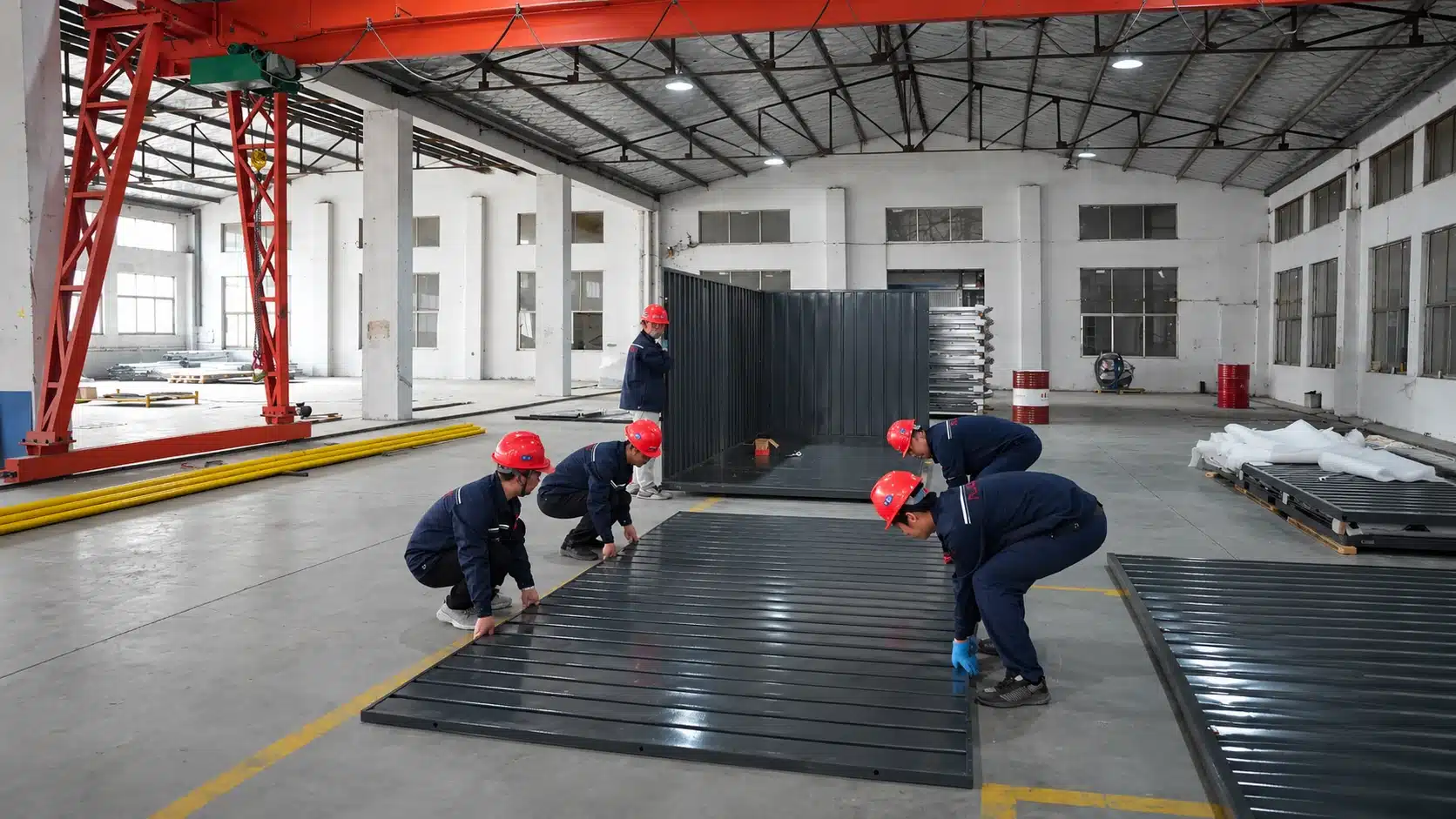
A fully assembled container occupies its complete volume during transportation. Our flat-pack units ship in a compact form and are assembled at the destination. For multi-unit and multi-location orders, this can make freight easier to plan and reduce the transportation pressure associated with moving full-size enclosures individually.
That can be particularly useful for:
- Distribution and warehouse networks
- Construction operations
- Property portfolios
- Franchise locations
- School and healthcare campuses
- Municipal facilities
- Utility and field-service sites
- Industrial operations
The financial result depends on the complete project. Quantity, destination, unloading, assembly, accessories, and site conditions all influence the final cost.
We do not treat freight savings as an automatic outcome for every order. Instead, we help evaluate transportation as part of the wider rollout so unit sizes, markets, quantities, and deployment phases can be considered together.
Share your site count, preferred size mix, selected options, and target deployment schedule.
Standardized Specifications Simplify Purchasing
Multi-site purchasing becomes harder when every location orders a different solution.
One site may select more capacity than it needs. Another may use a different locking system. A third may omit shelving that later becomes necessary. Over time, those differences make budgeting, maintenance, replacement planning, and reordering more difficult.
We offer flat-pack storage units in the following lengths:
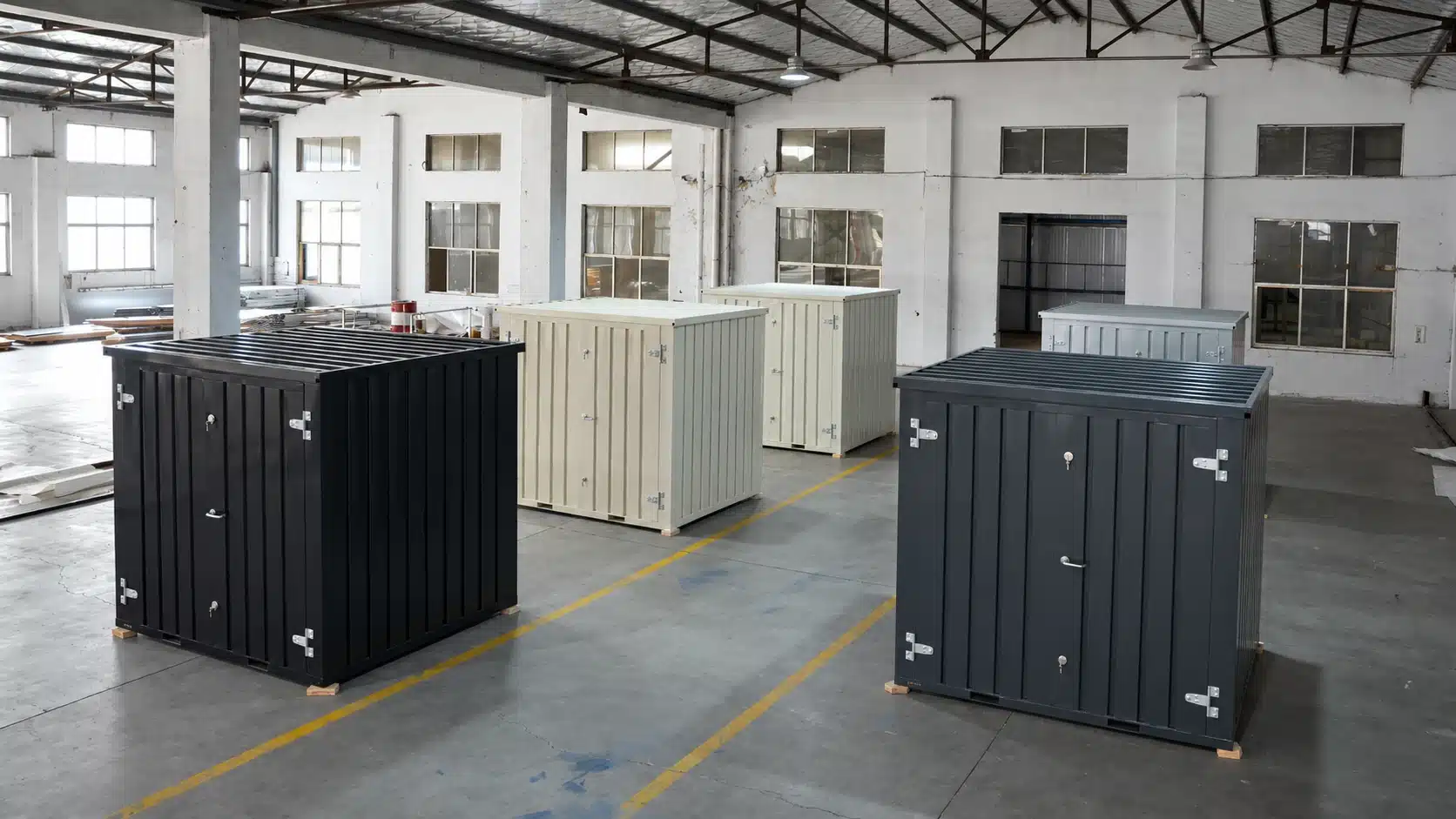
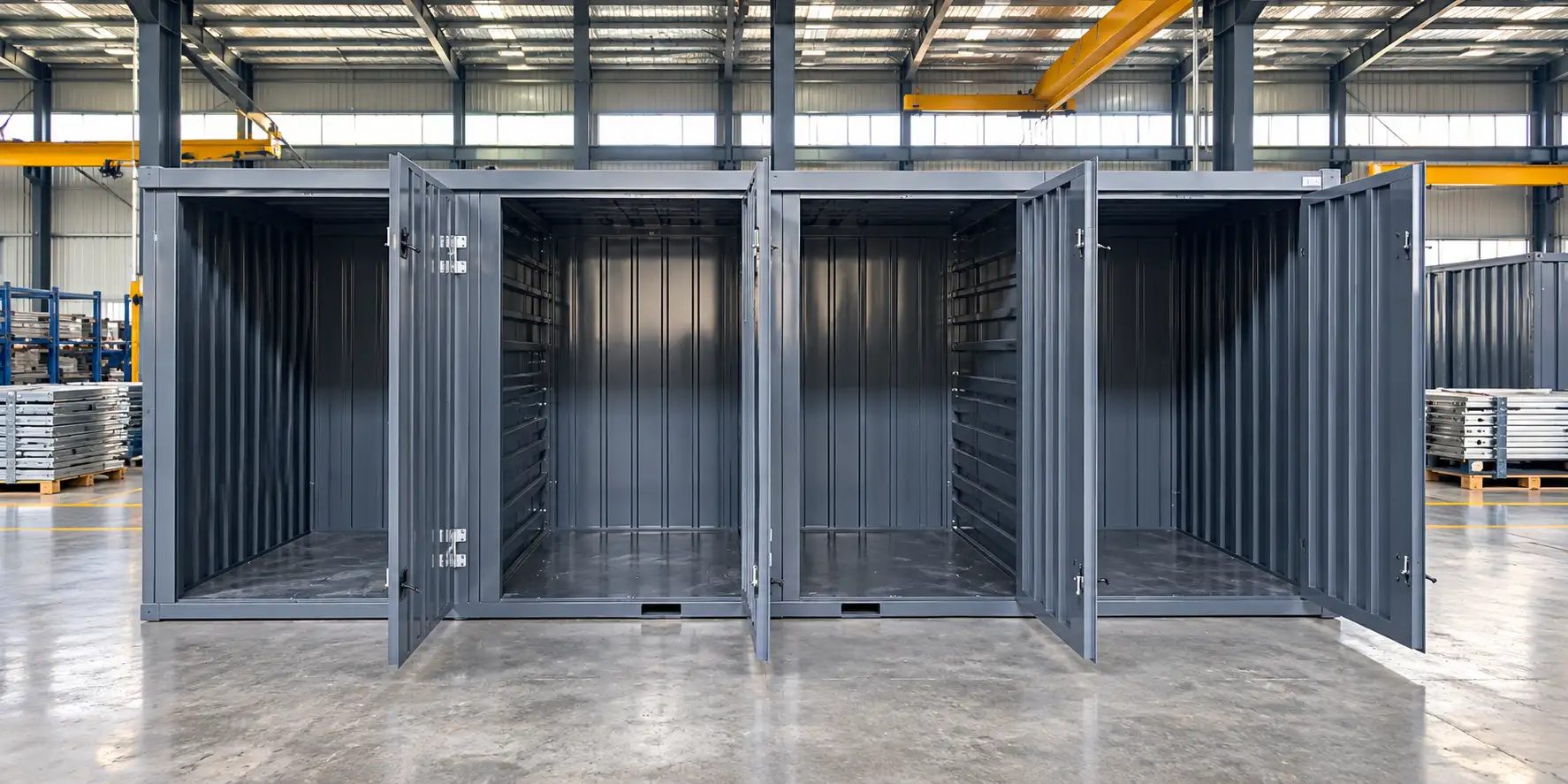
Our broader product system includes multi-compartment layouts, linking kits, flooring upgrades, interior shelving, exterior material racks, locking options, insulation, anti-condensation treatment, flexible door placement, and selected RAL colors.
This range allows us to create a controlled menu of approved configurations.
For example, an organization may establish:
- A compact maintenance unit for smaller properties
- A larger inventory configuration for warehouses
- A multi-compartment unit for separate teams
- A linked layout for facilities expecting future growth
- A standard lock and shelving package across all sites
The goal is not to force every location into an identical unit. We standardize the core specification while allowing planned variations for different operational needs.
Create a repeatable bill of materials for unit sizes, locks, flooring, shelving, racks, and site requirements.
Coordinated Delivery and Site Readiness
Compact shipping can simplify transportation, but a successful rollout still depends on preparation.
Each location should be reviewed for:
- Truck access
- Unloading space
- Forklift availability
- Ground and surface conditions
- Assembly workspace
- Door clearance
- Pedestrian and vehicle movement
- Operating-hour restrictions
- Placement requirements
- Target deployment dates
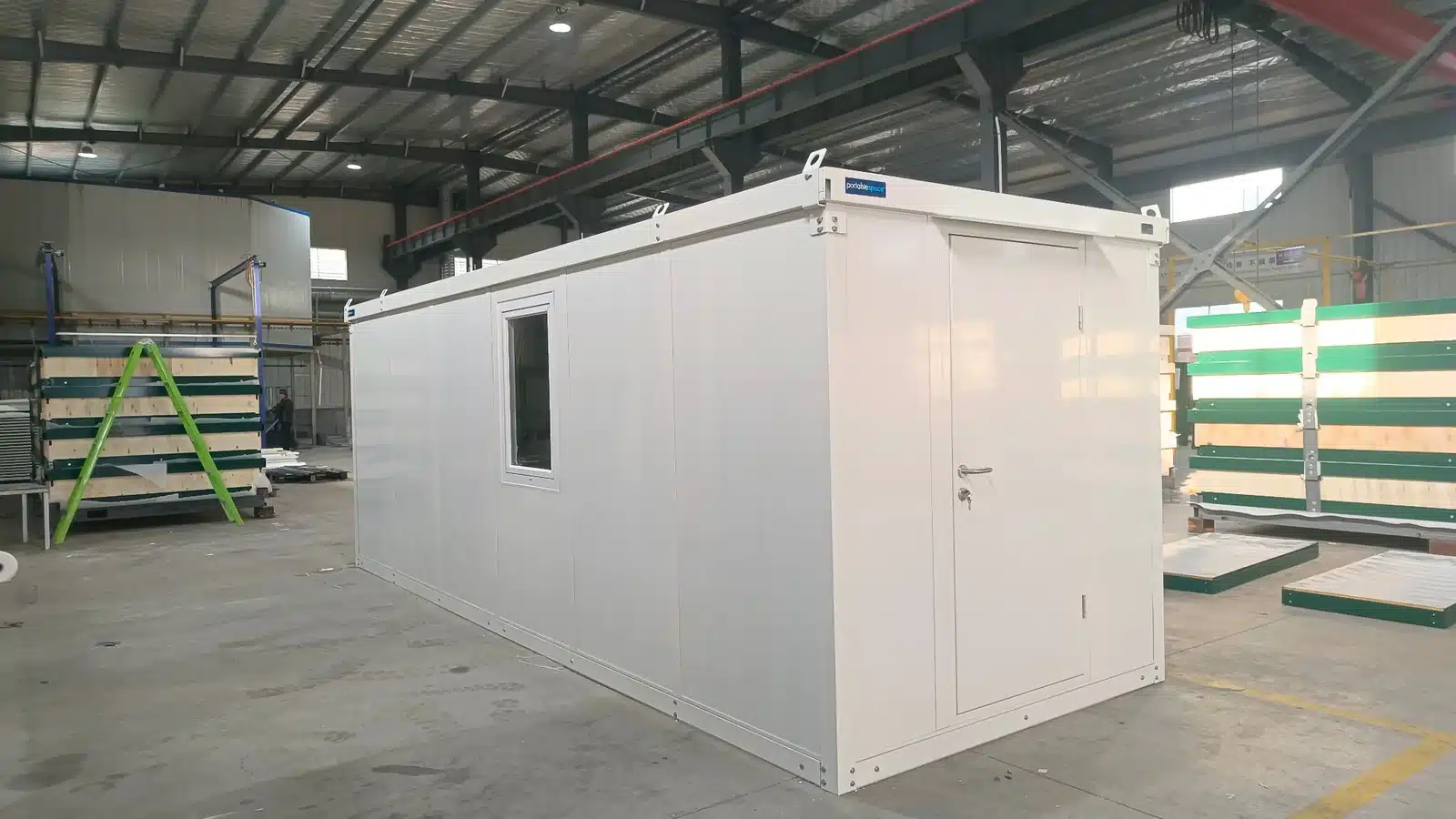
Our units include forklift pockets, assembly hardware, written instructions, and video guidance.
These resources support a more structured process, but the strongest multi-site deployments also use a consistent site-readiness checklist.
A repeatable sequence may include:
Site review → Unit selection → Freight planning → Unloading → Assembly → Final placement
Using the same review process across locations helps regional facilities teams collect consistent information, identify risks, and coordinate each deployment before the shipment arrives.
Define your location list, access requirements, preferred sizes, and rollout timing.

Flexible Capacity Across Different Locations
Storage requirements vary across a portfolio.
A distribution center may need overflow inventory space. A construction site may need secure storage for tools and materials. A campus may need equipment storage near athletics or maintenance facilities. A property-management team may need separate access for staff, residents, or departments.
Our size range allows us to match capacity to the location while keeping each unit within the same standardized product family.
Smaller units may support:
- PPE
- Hand tools
- Maintenance supplies
- Spare parts
- Property inventory
- Seasonal materials
Longer units may support:
- Equipment
- Construction materials
- Warehouse overflow
- Industrial inventory
- Field supplies
- Larger tools and stock
Multi-compartment units can provide individually accessed bays for departments, crews, tenants, or inventory categories. Linking kits can support organized expansion when a facility needs additional capacity later.
This flexibility helps avoid using one oversized format everywhere while still maintaining a controlled specification.
Compare Flat Pack Storage Unit Sizes
Review the available footprints and identify a practical size mix for your locations.
Secure and Organized Daily Use
A storage unit should do more than enclose inventory. It should help teams control access, locate equipment, and keep materials organized.
Our units use galvanized or galvalume corrugated steel panels with powder-coated interior and exterior surfaces. They are designed as weatherproof enclosures and include stainless-steel locks.
Available configuration options support different workflows.
Locking Systems
Additional locking options can support controlled access for tools, materials, equipment, and inventory.
Interior Shelving
Shelving can keep smaller items visible, organized, and off the floor.
Exterior Material Racks
Pipe racks and combined rack-and-shelf systems can organize conduit, lumber, pipe, and other long materials.
Flooring Options
Black marine board and aluminum diamond plate are available for different traffic, cleaning, and equipment requirements.
Insulation and Condensation Control
Insulation and anti-condensation treatment may provide additional protection where temperature changes or internal moisture require consideration.
The strongest multi-site approach is to establish approved accessory packages for common uses.
A maintenance configuration may use shelving and an upgraded lock. A contractor configuration may include exterior racks and a selected flooring option. A shared-user location may benefit from separate compartments.
This gives teams a more consistent storage experience across facilities.
Compare locks, flooring, shelving, racks, insulation, and access options for your operating requirements.

Easier Expansion and Reordering
Storage needs rarely stay fixed.
New locations open. Facilities expand. Inventory levels change. Projects move into new phases. A configuration that works today may require additional capacity in the future.
Standardized specifications make expansion easier to manage.
When approved sizes and accessory packages are already documented, teams do not need to restart the evaluation process for every order. They can choose from an established system and adjust quantity or configuration according to the location.
This can support:
- Faster internal reviews
- More consistent purchasing
- Easier cost forecasting
- Repeatable site planning
- Clearer maintenance standards
- Structured phased expansion
- Simpler multi-market deployment
We help organizations order, receive, and deploy proven configurations without rebuilding the storage specification every time.
Who Benefits From Flat Pack Storage Units?
Flat pack storage units for businesses are especially useful for organizations that value consistency, controlled growth, and repeatable deployment.
Facilities and Operations Networks
Use flat-pack storage for maintenance tools, replacement parts, PPE, seasonal supplies, and facility inventory.
Industrial and Warehouse Portfolios
Create capacity for overflow stock, returns, equipment, project supplies, and maintenance materials.
Contractors and Field Operations
Organize tools, fasteners, conduit, pipe, lumber, equipment, and jobsite materials.
Property and Campus Operations
Support grounds equipment, athletics supplies, maintenance inventory, resident storage, and departmental equipment.
Franchise and Retail Networks
Standardize storage for openings, remodels, seasonal operations, and back-of-house needs.
Municipal and Institutional Operations
Store parks equipment, public-works materials, emergency supplies, campus inventory, and field-service tools.
We sell our units for owned deployment. We do not offer rentals.

Build a Repeatable Storage Program
The strongest storage solutions for multi-site operations begin with a shared plan.
A practical program should define:
- Deployment locations
- Approved unit sizes
- Standard accessory packages
- Delivery requirements
- Unloading responsibilities
- Assembly plans
- Placement conditions
- Rollout phases
- Future expansion options
This gives procurement, facilities, and operations teams a common framework for evaluating cost, configuration, and site readiness.
Instead of managing unrelated storage purchases, we help organize freight, specifications, accessories, and deployment into one repeatable system.
Build Your Multi-Site Storage Plan
We support storage programs across the United States, Canada, and Puerto Rico.
To begin planning, share:
- Your site count and markets
- Intended storage uses
- Preferred size mix
- Required configurations
- Access conditions
- Target rollout schedule
Call: (407) 951-4274
Email: info@flatboxsolutions.com