We help retail, franchise, event, parking, municipal, and security teams create standardized kiosk units for customer-facing and staff-facing operations across locations.
A kiosk may be small, but it often carries a major operational role.
It may be where customers pick up an order, guests buy a ticket, drivers check in, visitors ask for directions, staff manage an entrance, or security teams control access. For retail teams, event operators, parking groups, transportation hubs, municipalities, and security teams, the kiosk is often the first point of contact.
That is why choosing the right flat pack kiosk matters.
A temporary tent, one-off booth, converted trailer, or custom-built structure may solve a short-term need, but it can become harder to repeat across locations. Different sizes, finishes, layouts, service windows, delivery requirements, and setup expectations can slow down future deployments.
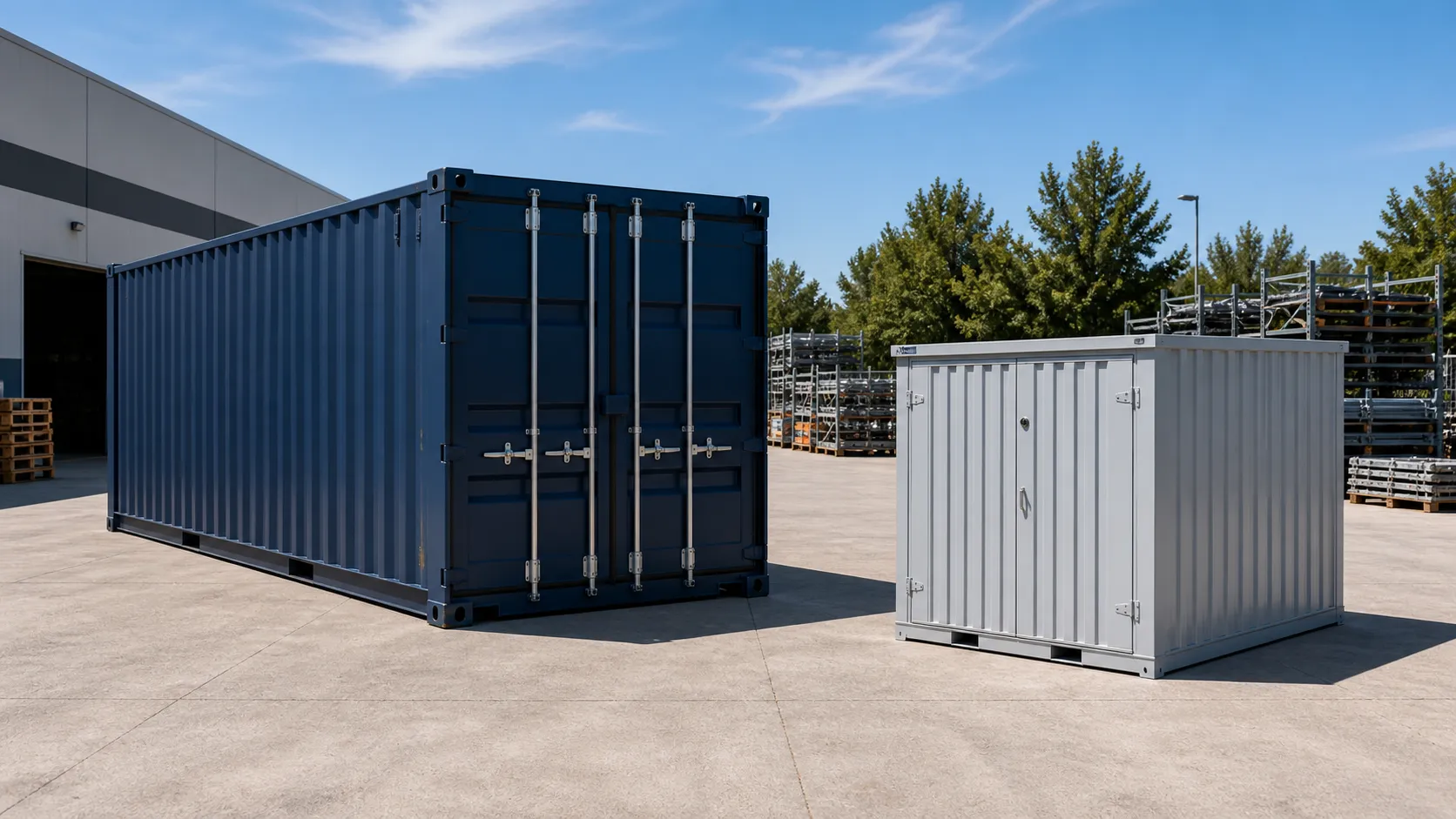
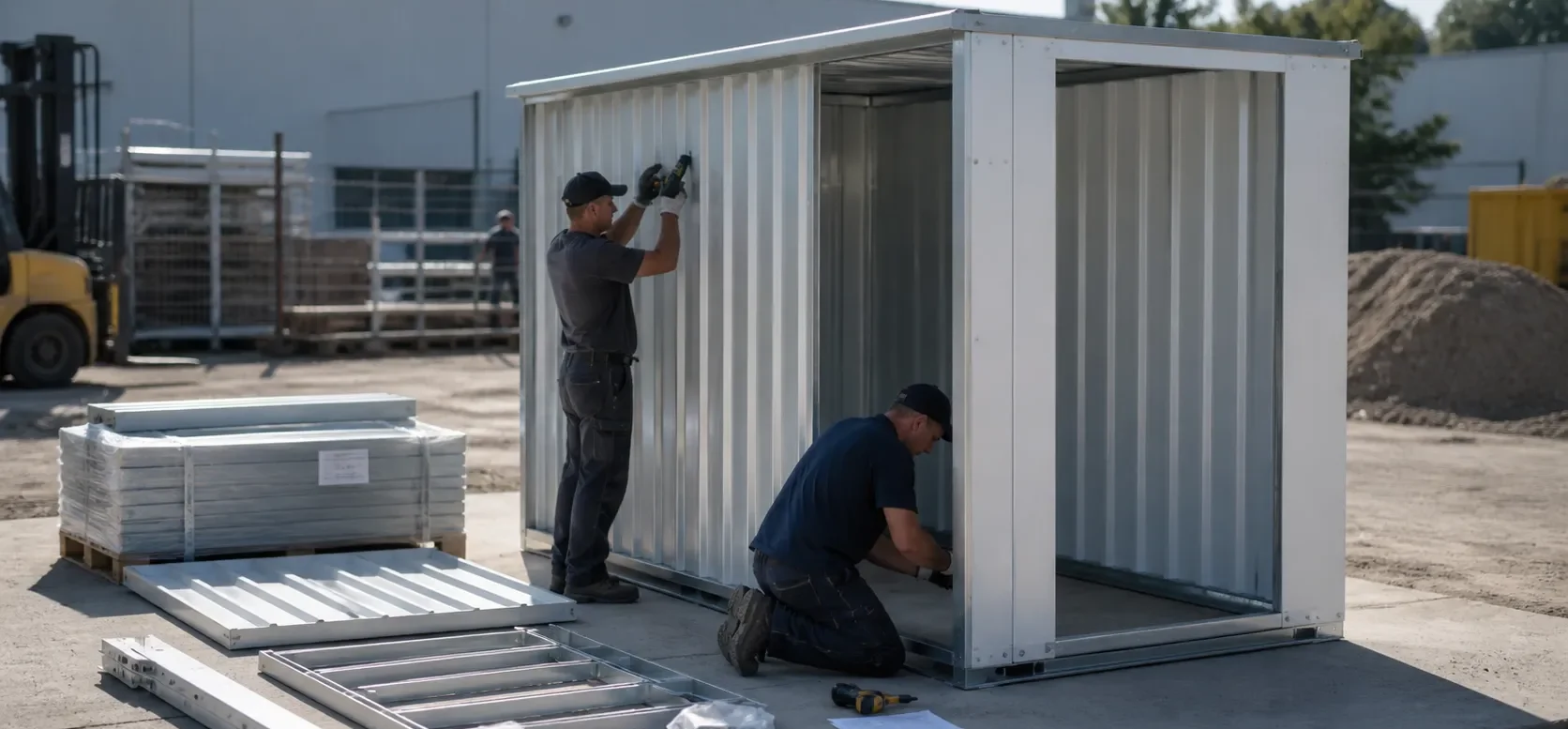
We build flat-pack steel kiosk units for teams that need dependable service points across real operating environments. If your team is comparing a container kiosk, kiosk unit, or box kiosk, we can help you plan the right setup around customer flow, placement, access, branding, delivery, and future rollouts.
Why Repeatable Kiosk Formats Matter
Many teams do not need just one kiosk.
A retail group may need pickup windows across several locations. A franchise team may need the same customer-facing service point in multiple markets. An event operator may need ticketing or information booths that can be used again. A parking group may need attendant kiosks across several lots. A security team may need consistent access-control points at gates, campuses, venues, or project sites.
When every location uses a different kiosk, the process becomes harder to manage.
One site uses a custom booth. Another uses a rental. Another uses a trailer. Another builds something locally. Each option may work for a single need, but the inconsistency creates problems for pricing, approvals, branding, placement, maintenance, and deployment planning.
A standardized flat pack kiosk gives your team a cleaner path. Once you identify the right size, layout, window placement, finish, and deployment plan, that model can be used again across future sites.
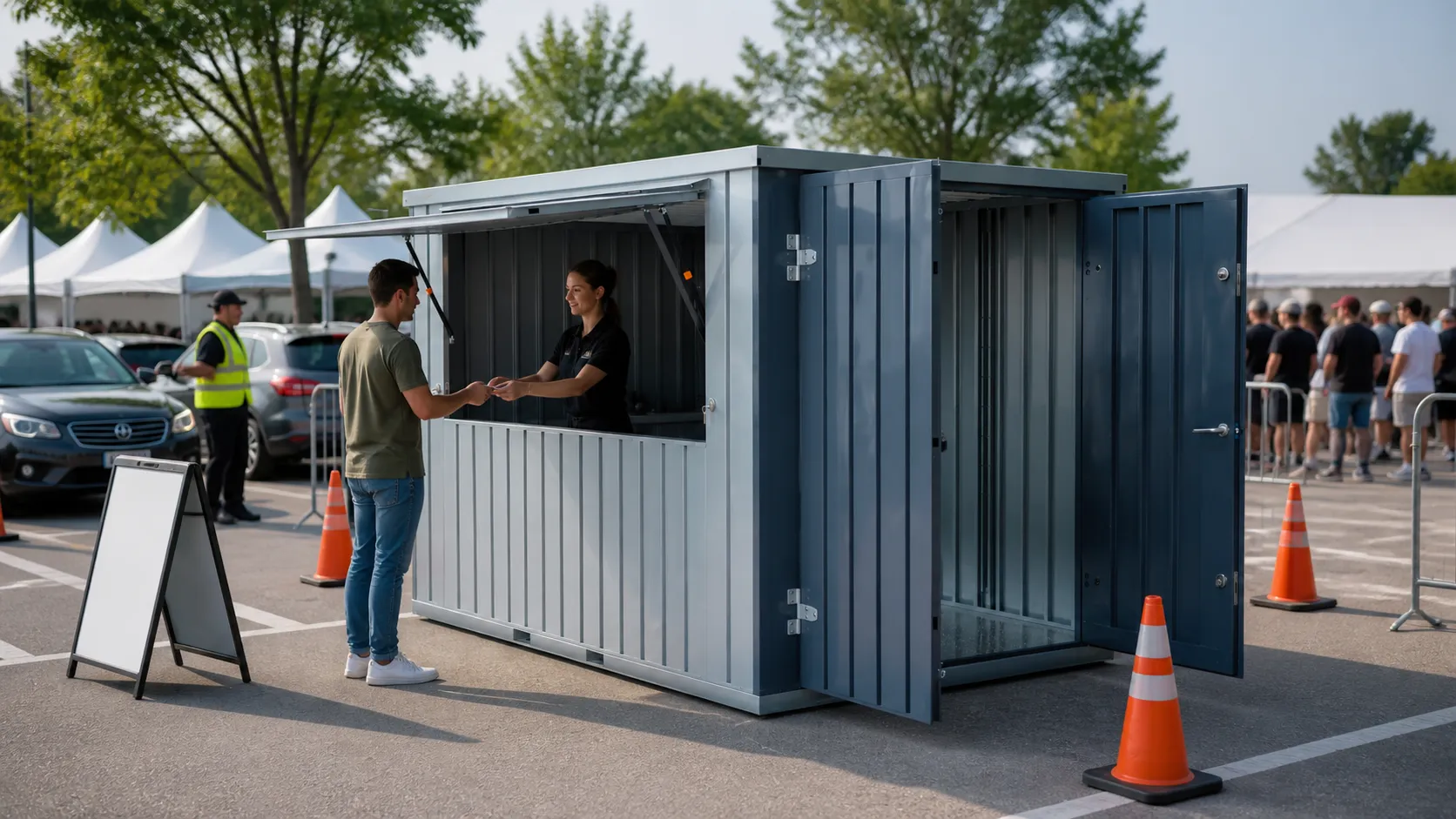
Built for Customer-Facing and Staff-Facing Operations
A kiosk has to work for the people on both sides of the window.
For customers, guests, drivers, or visitors, the kiosk should be visible, easy to approach, and simple to understand. For staff, it should support the task at hand: taking orders, checking tickets, giving directions, managing permits, verifying access, processing visitors, or supporting site operations.
That is where a planned kiosk unit can make the difference.
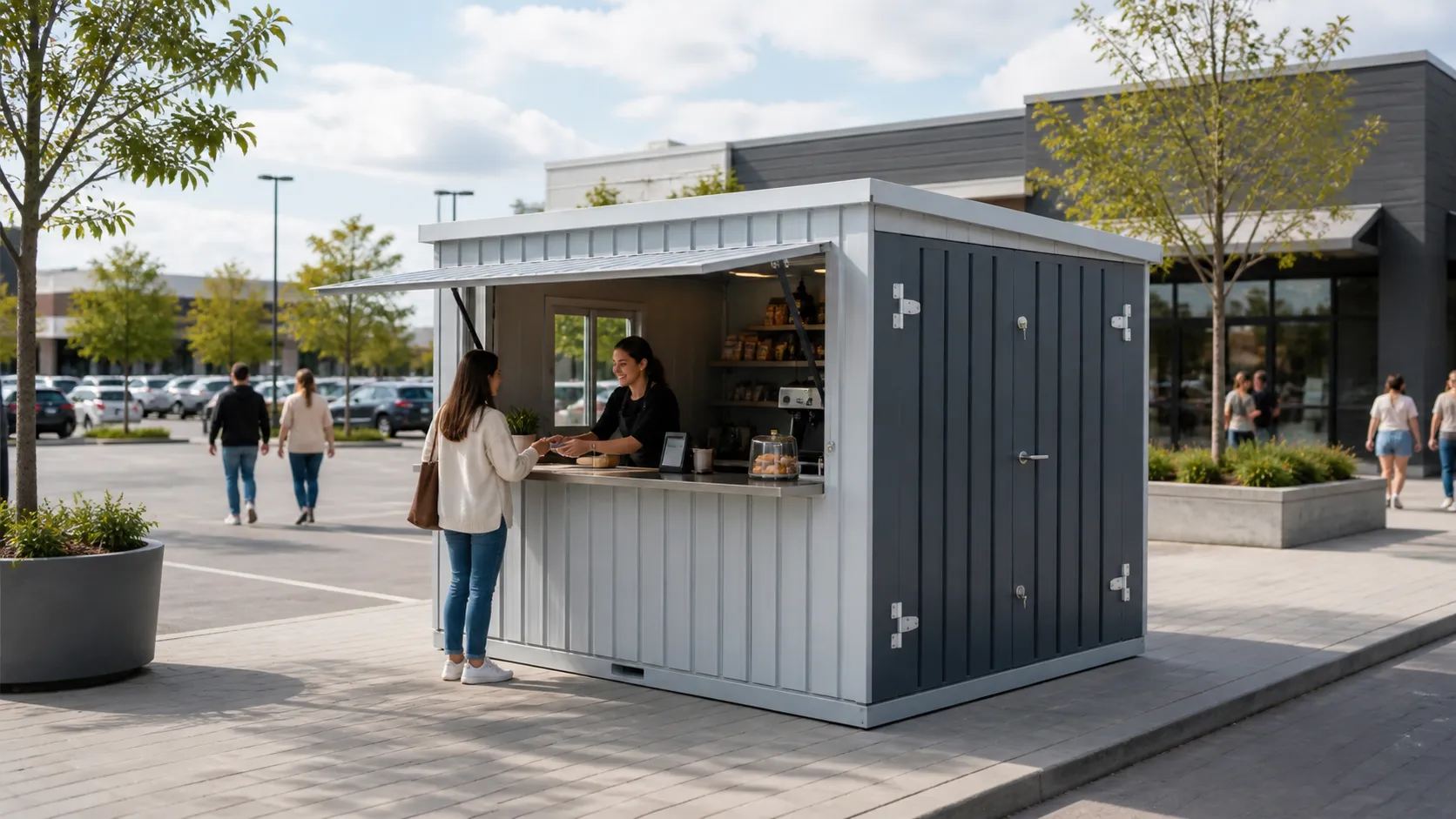
Flat-pack kiosk units can support retail pickup, ticketing, food service, parking operations, information points, event support, transportation assistance, security checkpoints, and municipal services.
The key is to plan the unit around the workflow. A kiosk for event ticketing may need visibility and crowd-flow planning. A parking kiosk may need clear driver access and sightlines. A security checkpoint may need controlled approach and staff visibility. A retail pickup kiosk may need customer access, brand presentation, and service window planning.
A kiosk should not just fit the site. It should support the interaction happening there.
Flat Pack Kiosks vs. Rentals, Trailers, and Custom Booths
Many buyers compare flat-pack kiosks with temporary rentals, trailers, custom-built booths, and converted container structures.
Each option can make sense in the right setting.
A rental may work for a temporary event. A trailer may work when mobility is the main concern. A custom booth may fit a unique one-time build. A converted structure may work when the site has the space and timeline to support it.
A flat pack kiosk may be a stronger fit when your team needs a service point that can be planned, purchased, placed, and repeated across more than one location.
For commercial teams, the value is not only the kiosk itself. It is the ability to standardize the service point. That means consistent sizing, consistent finishes, consistent access planning, consistent delivery expectations, and a clearer way to repeat the setup when the next site needs one.
Plan Placement, Visibility, and Service Flow Early
Kiosk placement can shape the entire experience.
A kiosk that is hard to find can frustrate customers. A kiosk that blocks movement can create congestion. A kiosk placed too far from the action can slow down staff. A security kiosk without clear sightlines may not support the access-control process. A parking kiosk without the right approach lane can disrupt traffic flow.
Before ordering a container kiosk, your team should think through how the unit will be used on-site.
Where will people approach from? Where will staff enter? Will the kiosk need a service window? Does the unit need to support one line, multiple queues, vehicle traffic, or pedestrian flow? Will the kiosk need visibility from a gate, entrance, parking lane, sidewalk, plaza, or event zone?
Planning these details before deployment helps the kiosk support the operation instead of creating friction.
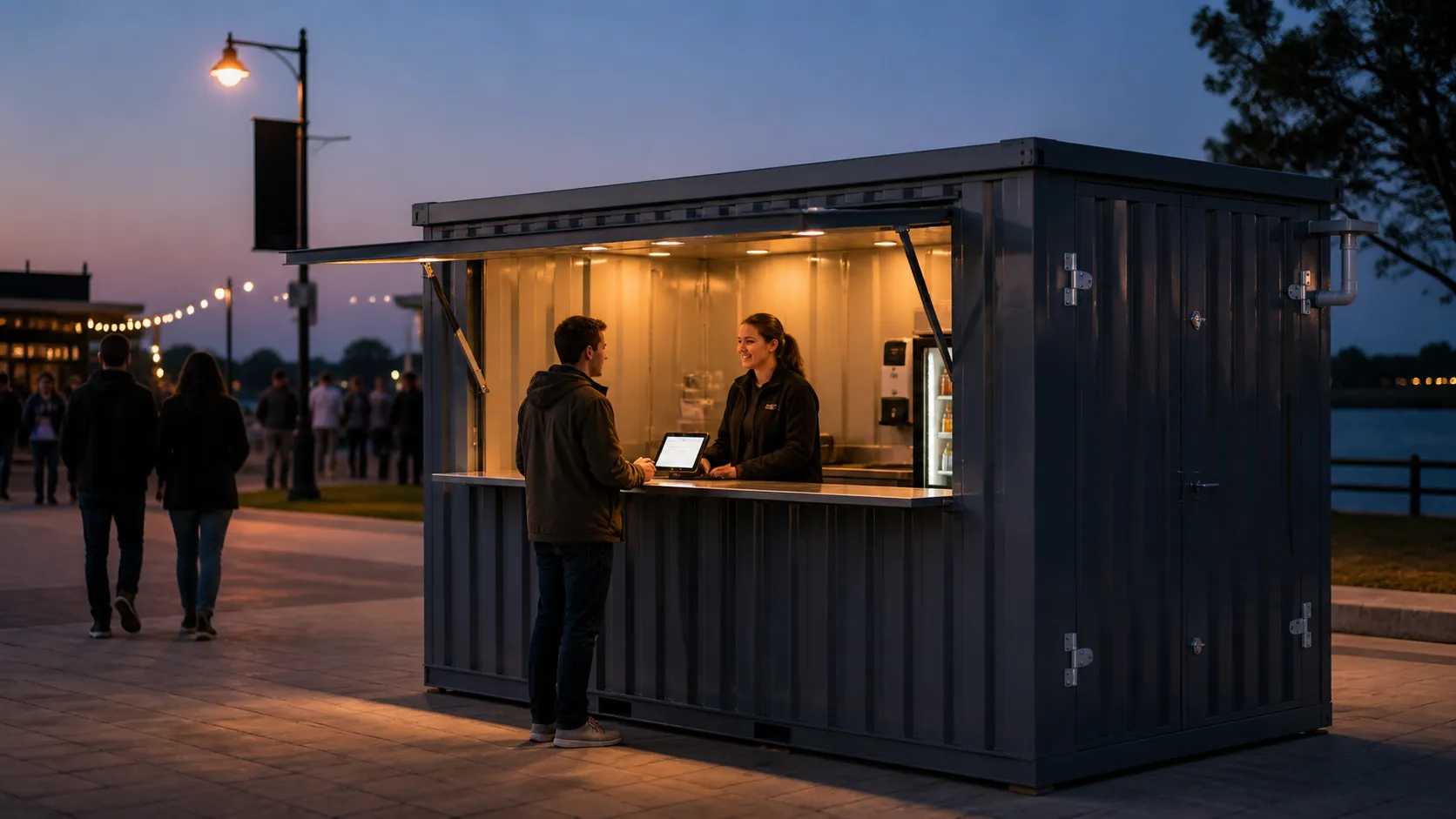
Match the Kiosk Format to the Use Case
Different kiosk use cases need different planning details.
A retail pickup kiosk may need a brand-ready appearance, a customer-facing window, and a layout that supports quick service. A food service kiosk may need service flow, counter space, and customer visibility. An event ticketing kiosk may need placement that supports crowd movement and fast transactions. A parking kiosk may need visibility, security, and driver access. A security checkpoint may need controlled approach, staff visibility, and defined visitor processing.
A box kiosk can be useful because it gives teams a defined service point without starting from scratch every time.
Depending on the project, kiosk planning may include size, window placement, door placement, finishes, locking options, flooring, branding, delivery, and site placement.
The right kiosk should match the environment, the staff workflow, and the customer experience.
Supporting Retail, Events, Parking, and Security
Flat-pack kiosks can support a wide range of deployment needs.
Retail and franchise teams may use kiosks for pickup, ordering, customer support, seasonal sales, or brand activations. Event and venue teams may use them for ticketing, merchandise, information, concessions, or guest support. Parking and transportation teams may use kiosks for attendants, permits, customer service, wayfinding, or access points. Security and guard teams may use kiosk units for visitor processing, entry control, screening support, or checkpoint operations.
The use cases are different, but the need is similar: a defined service point that can be placed where the interaction happens and repeated when the same need appears elsewhere.
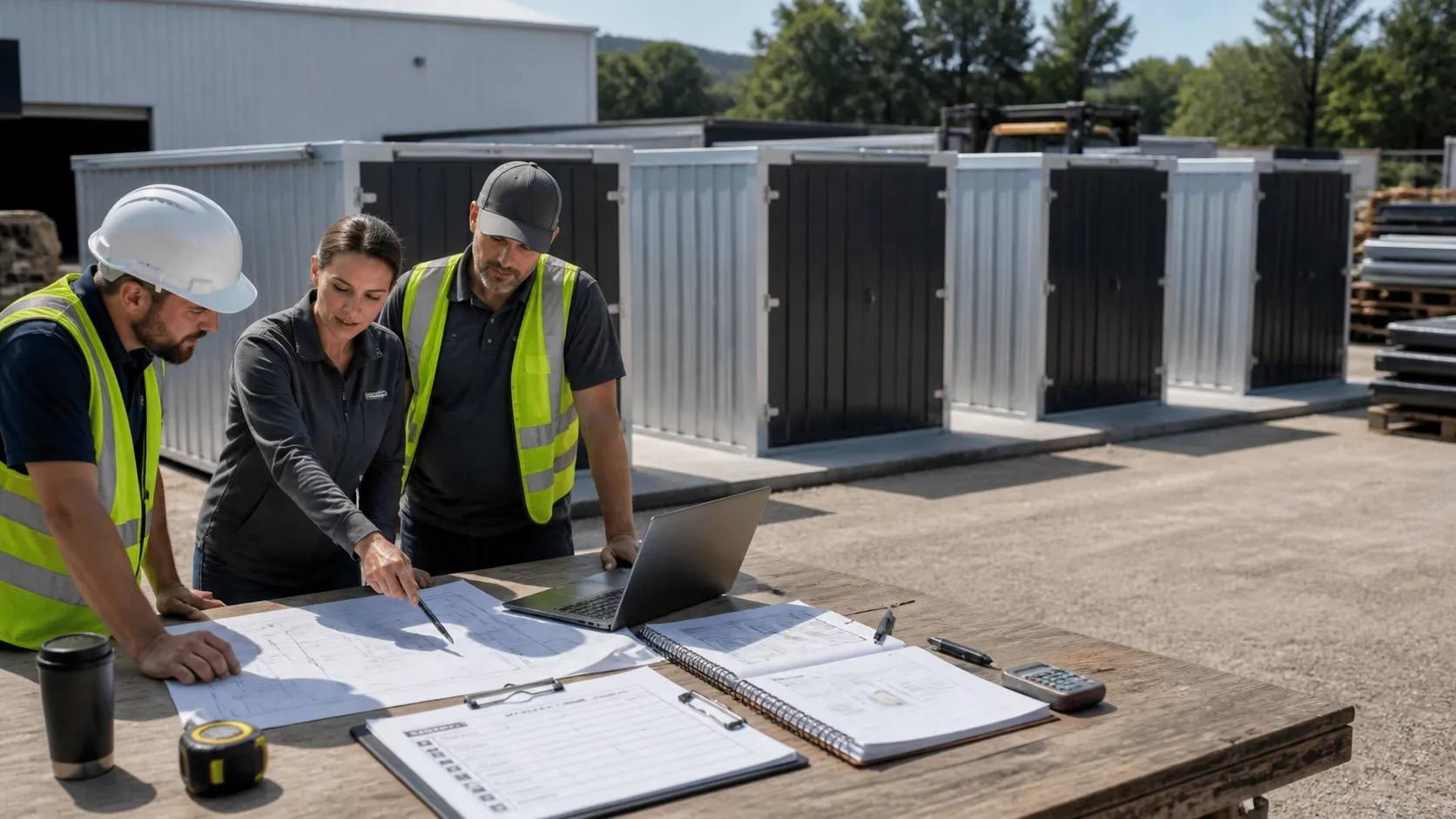
We help teams compare kiosk size, use case, placement, access, service-window needs, and rollout requirements before ordering.
Think Beyond One Location
A single kiosk can solve a local problem. A repeatable kiosk plan can support a program.
For retail, franchise, parking, event, municipal, and security teams, the same need often appears across multiple sites. If every location creates its own solution, the team ends up managing different vendors, specs, layouts, finishes, and timelines.
That makes future deployments harder than they need to be.
We help teams build kiosk plans that can be repeated. Once your team defines the right kiosk format, placement requirements, service-window needs, branding approach, and delivery plan, that setup can become a usable model for future locations.
For teams managing rollouts across the United States, Canada, or Puerto Rico, that consistency can support clearer planning and easier purchasing.
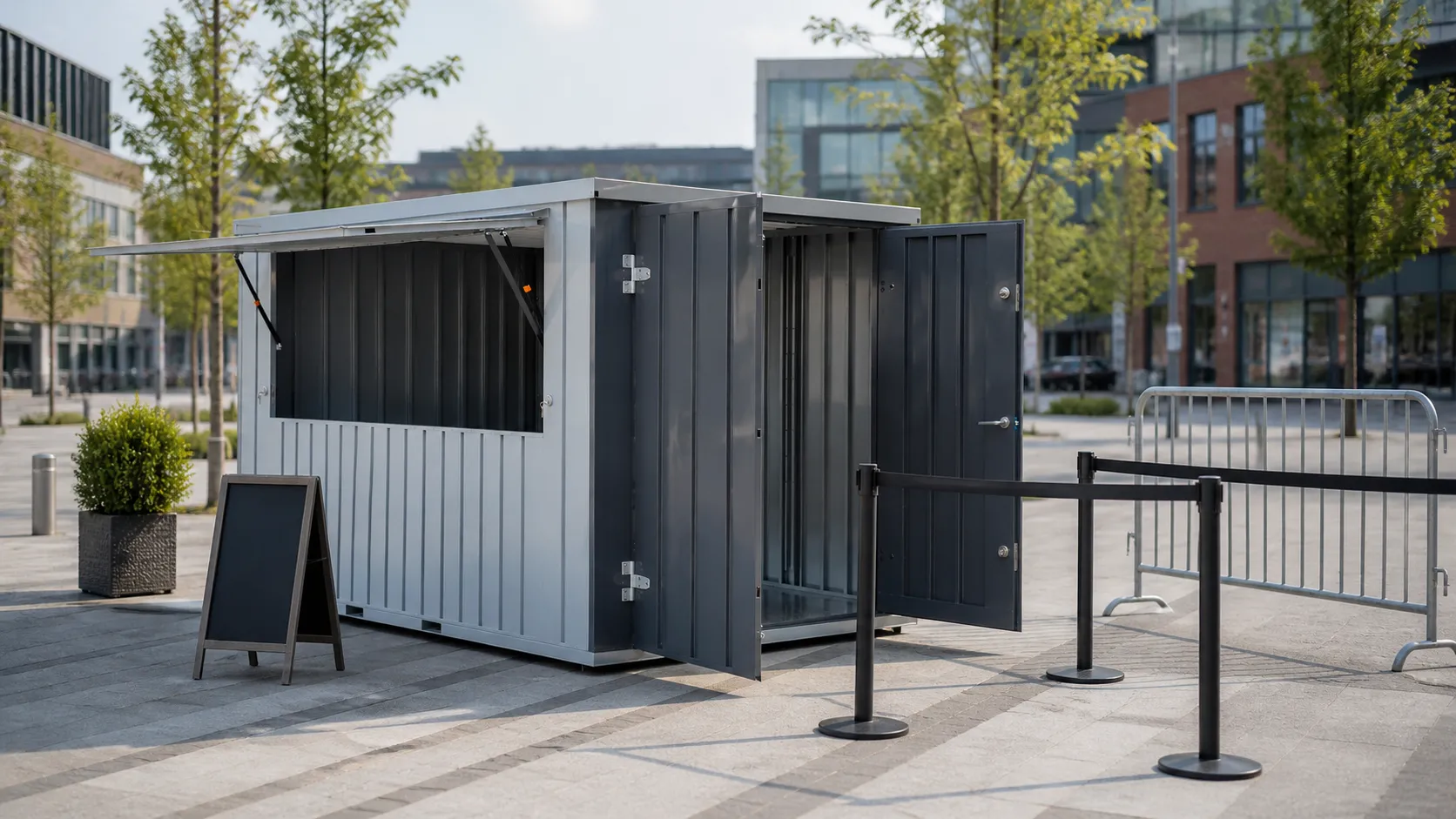
When a Flat Pack Kiosk Is the Right Fit
A flat-pack kiosk may be a practical fit when your team needs:
A repeatable service point for retail, ticketing, pickup, parking, information, or access control.
Customer-facing or staff-facing space that can be placed where the interaction happens.
Standardized kiosk units that can be used across multiple locations or events.
Placement planning for entrances, parking lanes, plazas, venues, sidewalks, campuses, or checkpoints.
Configurable options for service windows, finishes, access, locking, and layout needs.
A container kiosk alternative to one-off booths, temporary rentals, trailers, or custom-built structures.
When a kiosk supports daily operations, it should be easy to place, easy to recognize, easy to use, and easy to repeat.
Build a Better Kiosk Rollout Plan
When your team searches for a flat pack kiosk, the real need is usually more than a small structure.
You need a service point that supports the customer experience, staff workflow, site placement, brand presentation, and future deployment. You may need one kiosk now, but the same need may appear at another location, event, entrance, parking area, or security checkpoint later.
We help teams plan those details before ordering.
Our flat-pack kiosk units give retail, franchise, event, parking, municipal, transportation, and security teams a practical way to deploy customer-facing and staff-facing service points. With repeatable sizing, placement planning, service-window options, and rollout support, we can help your team create a kiosk setup that fits current and future locations.