We help procurement, facilities, and multi-site teams compare shipping footprint, placement, accessories, security, and repeat deployment before buying.
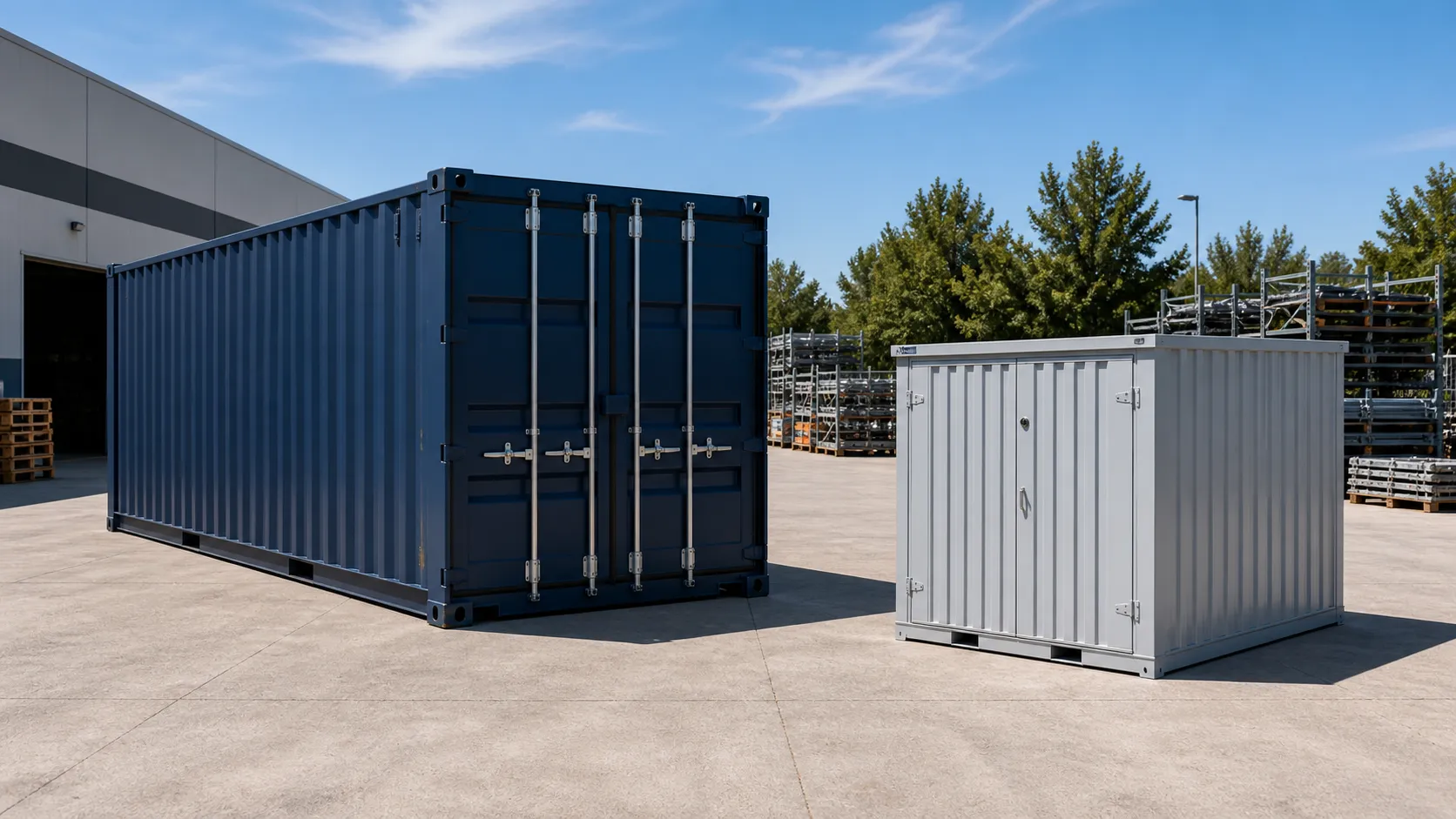
When commercial teams compare flat pack storage containers with traditional shipping containers, the decision is rarely just about size.
A shipping container is familiar. It is large, steel, and widely available. For some sites, that may be enough. But for facilities teams, procurement departments, contractors, warehouses, campuses, public works teams, property portfolios, and multi-site operators, the better question is whether the storage format fits how the site actually works.
Can it be delivered without disrupting operations? Can it be placed where storage is needed? Can the inside stay organized? Can the same storage setup be repeated across locations? Can accessories, locks, flooring, and layout choices support daily use?
That is where flat pack storage containers deserve a closer look.
We build flat-pack steel storage units for teams that need secure, practical, repeatable storage without relying on one-off container purchases or full-size shipping container delivery. If your team is comparing flat packed shipping containers or looking at flat pack storage containers for sale, we can help you evaluate the details that matter before you buy.
Start With the Real Storage Need
Before comparing container types, start with what needs to be stored and how often your team needs access.
A facilities team may need storage for tools, filters, spare parts, PPE, cleaning supplies, event materials, or seasonal equipment. A contractor may need jobsite storage for fasteners, fixtures, materials, and tools. A warehouse may need overflow storage, returns storage, dock-adjacent supplies, or project inventory. A property team may need outdoor storage for landscaping, repairs, resident support, or maintenance equipment.
Traditional shipping containers can provide a large open storage space, but a large open space is not always the right operational fit.
Commercial storage should protect what matters, support daily access, and reduce clutter instead of creating another area that becomes hard to manage. For business use, storage is not only about capacity. It is about control, layout, placement, security, and repeatability.
Compare Delivery and Placement
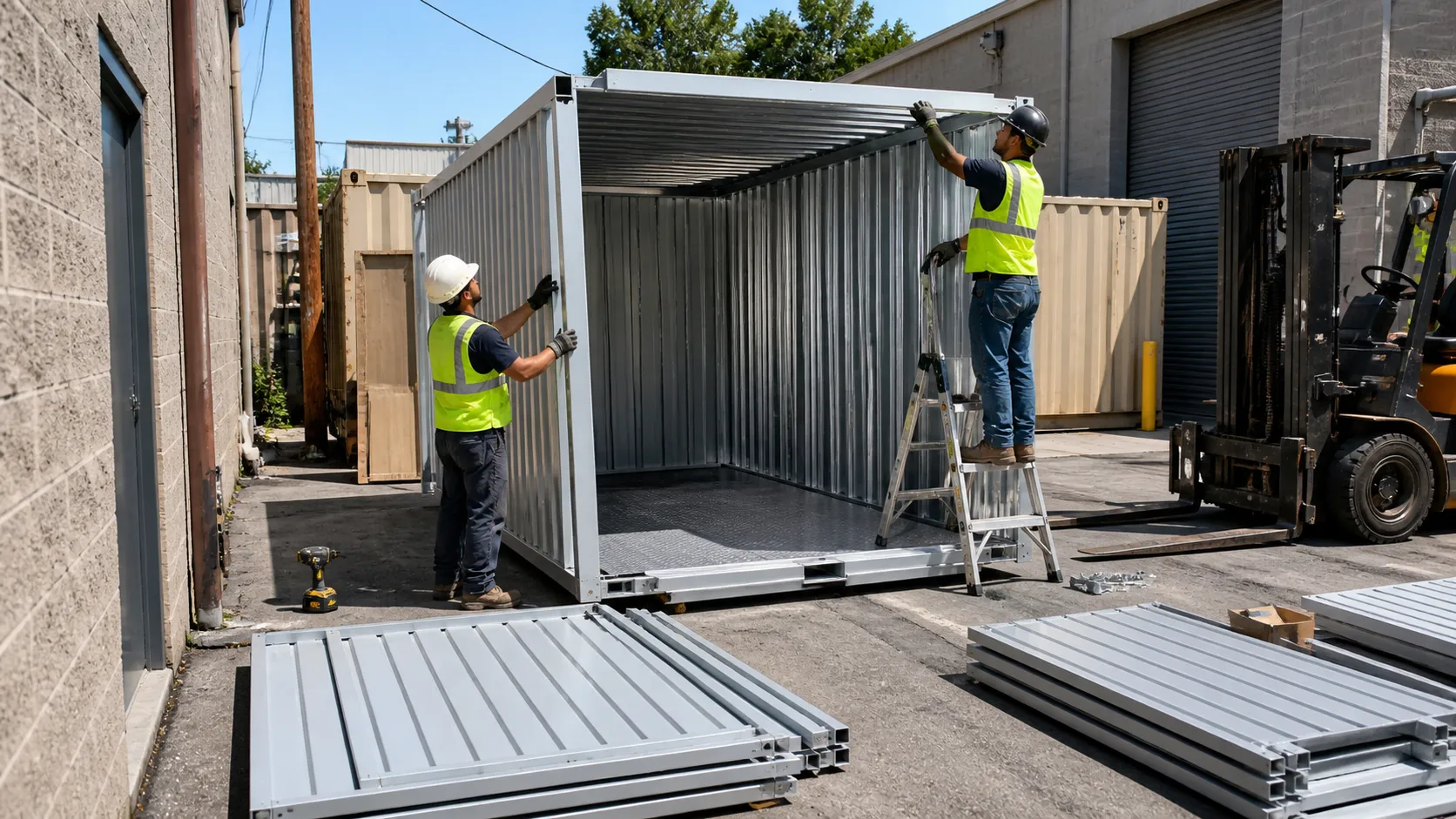
Delivery is one of the biggest differences between traditional shipping containers and flat-pack storage.
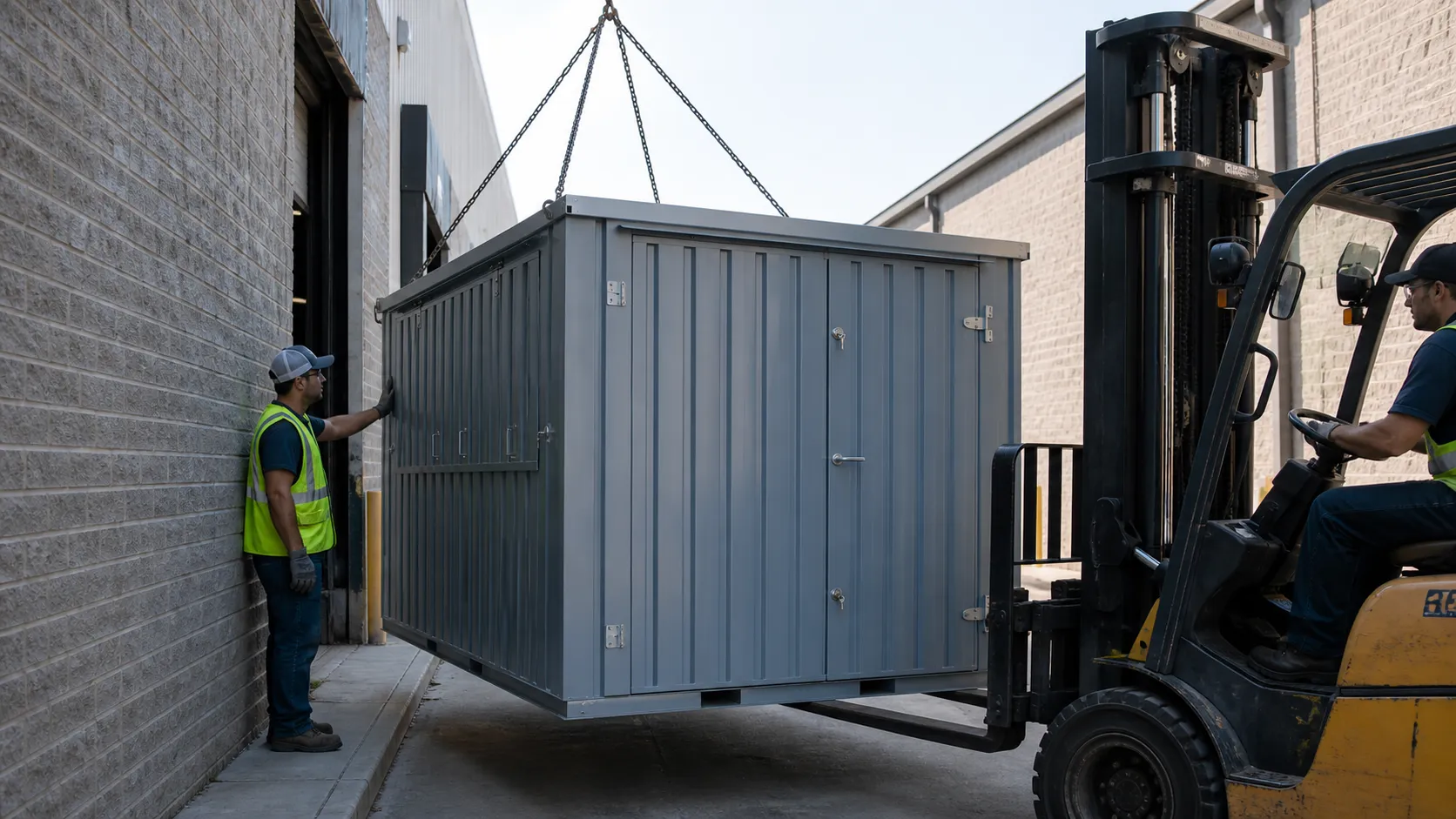
A full-size shipping container usually requires enough access for delivery equipment, unloading, turning, and placement. That can be difficult for tight facilities, active jobsites, campuses, service yards, retail properties, public works sites, and warehouse areas where space is already being used.
Flat-pack storage containers create a different planning path.
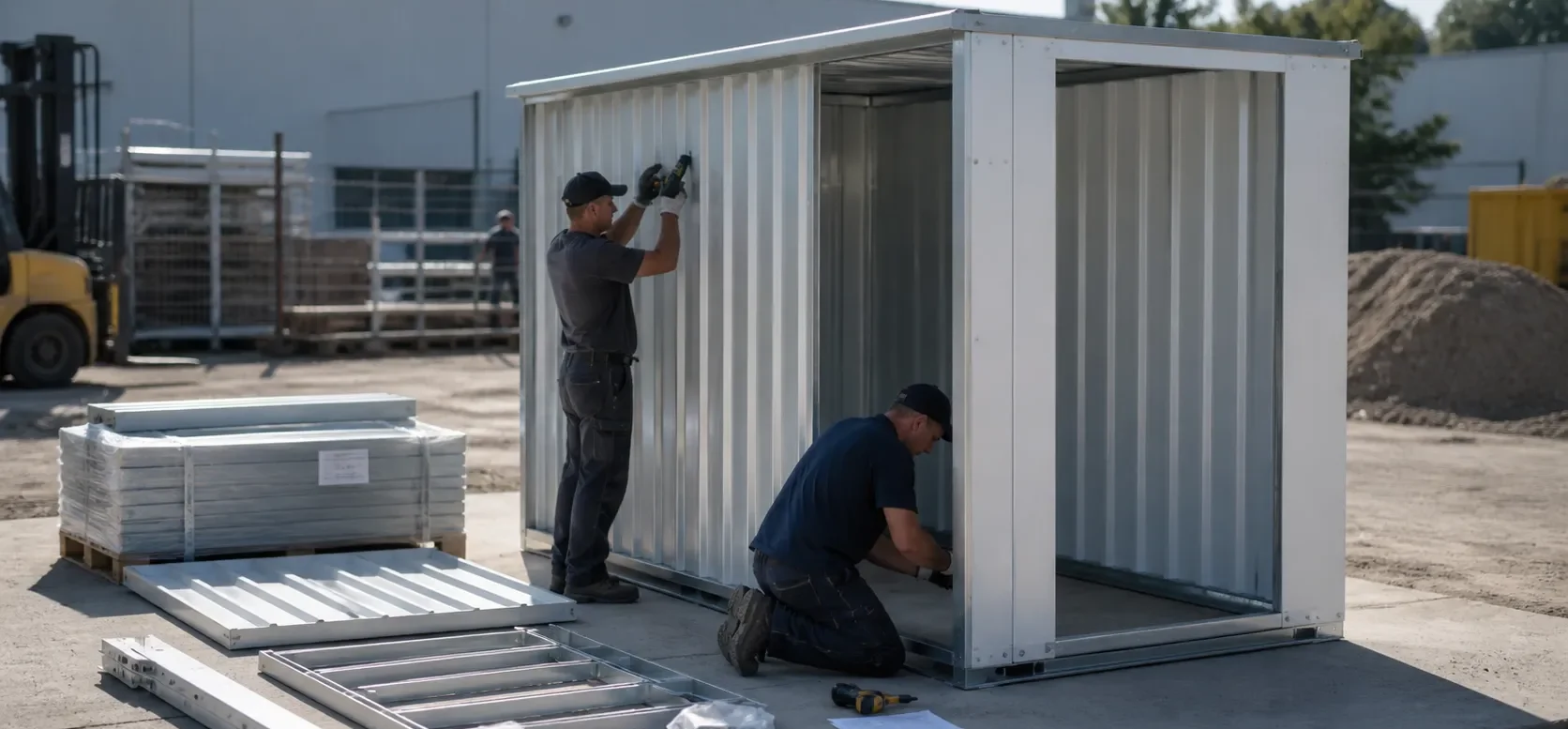
Because they ship compactly and are assembled on-site, they can be easier to plan around limited access, tight placement areas, shared receiving zones, or sites where a full-size container would create disruption. This can be especially useful when storage needs to be placed closer to the work instead of wherever a delivery truck can reach.
For one site, that can make deployment smoother. For multi-site teams, it can help create a more repeatable delivery and placement model.
Compare Storage Layout and Daily Access
A traditional shipping container gives you one large interior space. That may work for bulky materials, equipment, or general storage. But without a layout plan, that open space can become difficult to manage.
Tools get mixed with supplies. PPE gets buried. Long materials take over the floor. Crews spend time searching. Managers lose visibility into what is stored on-site.
Flat-pack storage units can be planned with daily access in mind.
We help teams compare unit size, door placement, storage purpose, and accessory needs before ordering. Available options may include shelving, pipe racks, locking upgrades, flooring upgrades, linking kits, insulation, anti-condensation spray, and color options depending on the model and order details.
Shelving can help keep smaller items organized. Pipe racks can support conduit, pipe, lumber, and other long materials. Locking options can help control access. Flooring upgrades can support frequent use. Linking kits can help teams bank units together when additional capacity is needed.
For commercial storage, the inside of the container matters as much as the outside.
Compare Repeatability Across Locations
One container purchase may solve one problem. Many storage problems happen across multiple locations.
A contractor may need storage across several jobsites. A facilities team may need the same setup across campuses or buildings. A warehouse group may need outdoor storage across distribution sites. A property portfolio may need standardized storage across multiple properties.
When every location chooses a different storage option, the program becomes harder to manage.
Different sizes. Different locks. Different vendors. Different accessories. Different delivery methods. Different maintenance expectations.
Flat-pack storage containers help teams build a more consistent model. Once your team identifies the right unit size, layout, accessories, and deployment process, that setup can be repeated across additional sites.
For procurement and operations teams, that consistency can make storage easier to budget, order, maintain, and scale.
Compare Shipping Containers Against Flat-Pack Storage Containers
Shipping containers are often practical when a site has plenty of room, easy delivery access, and a need for large open storage. They may be a fit for heavy-duty storage where the delivery footprint and placement requirements are not a concern.
Flat-pack storage containers may be a better fit when the site has access constraints, when storage needs to be placed closer to daily work, or when the same storage configuration needs to be repeated across multiple locations.
Commercial buyers should compare several key factors:
- Delivery access: Can the unit be delivered and placed without disrupting operations?
- Placement flexibility: Can storage go where the team actually needs it?
- Interior organization: Will the layout support tools, supplies, materials, PPE, and inventory?
- Security: Can access be controlled for the people who need it?
- Repeat deployment: Can the same unit, layout, and accessory plan be used again?
- Total rollout fit: Does the storage format support one site only, or a broader program?
The right answer depends on the site, the items being stored, and the long-term plan.
When Flat Packed Shipping Containers Make Sense
The phrase flat packed shipping containers is often used by buyers who are familiar with traditional containers but want a more flexible format.
They may be looking for a container that can ship more efficiently, move through tighter access points, support on-site assembly, or avoid some of the placement challenges that come with full-size containers.
That is a useful comparison.
Flat-pack containers are not just a different way to ship a container. They are a different way to plan storage. The format allows teams to think through unit size, placement, assembly, accessories, and repeat deployment before the unit arrives.
That planning matters when storage affects daily operations, jobsite flow, tenant access, warehouse productivity, or multi-site consistency.
What to Look for Before You Buy
If your team is reviewing flat pack storage containers for sale, compare more than the listed size.
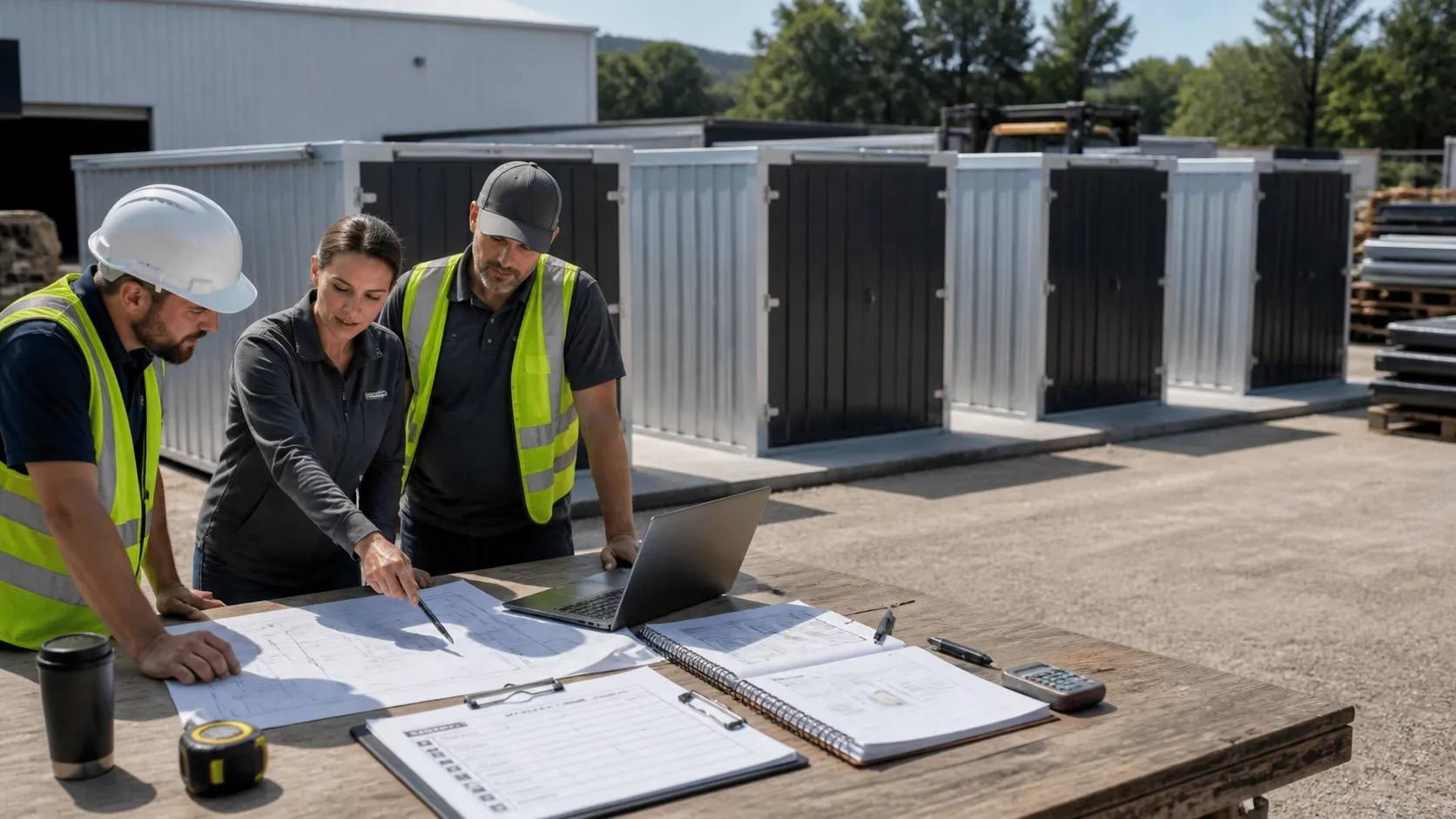
Start with the site. Where will the unit go? How will people access it? What delivery or assembly conditions need to be considered? Will it be used daily, weekly, seasonally, or for long-term storage?
Then compare the contents. Are you storing tools, parts, equipment, materials, inventory, tenant items, PPE, long stock, or supplies? Will the storage need shelving or racks? Will multiple departments or crews need separate access?
Finally, compare the rollout plan. Is this a one-time purchase, or could the same storage need appear across additional sites?
We help teams answer those questions before ordering so the purchase supports the work instead of creating another operational problem.
How We Support Commercial Storage Planning
We build flat-pack steel storage units for commercial teams that need practical, repeatable storage.
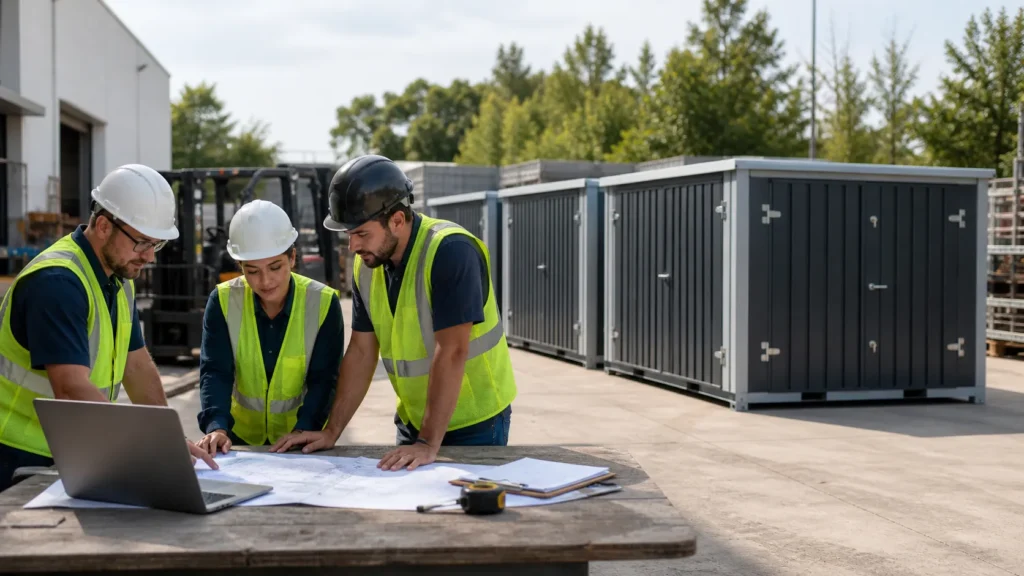
Our units are designed for facilities, jobsites, warehouses, property teams, campuses, public works departments, and multi-site organizations that need storage close to the work. We support buyers with product options, accessory planning, delivery considerations, and rollout guidance so storage can be planned with more clarity from the start.
For most teams, storage units are the starting point. They can support tools, equipment, supplies, materials, inventory, maintenance needs, and site-based storage.
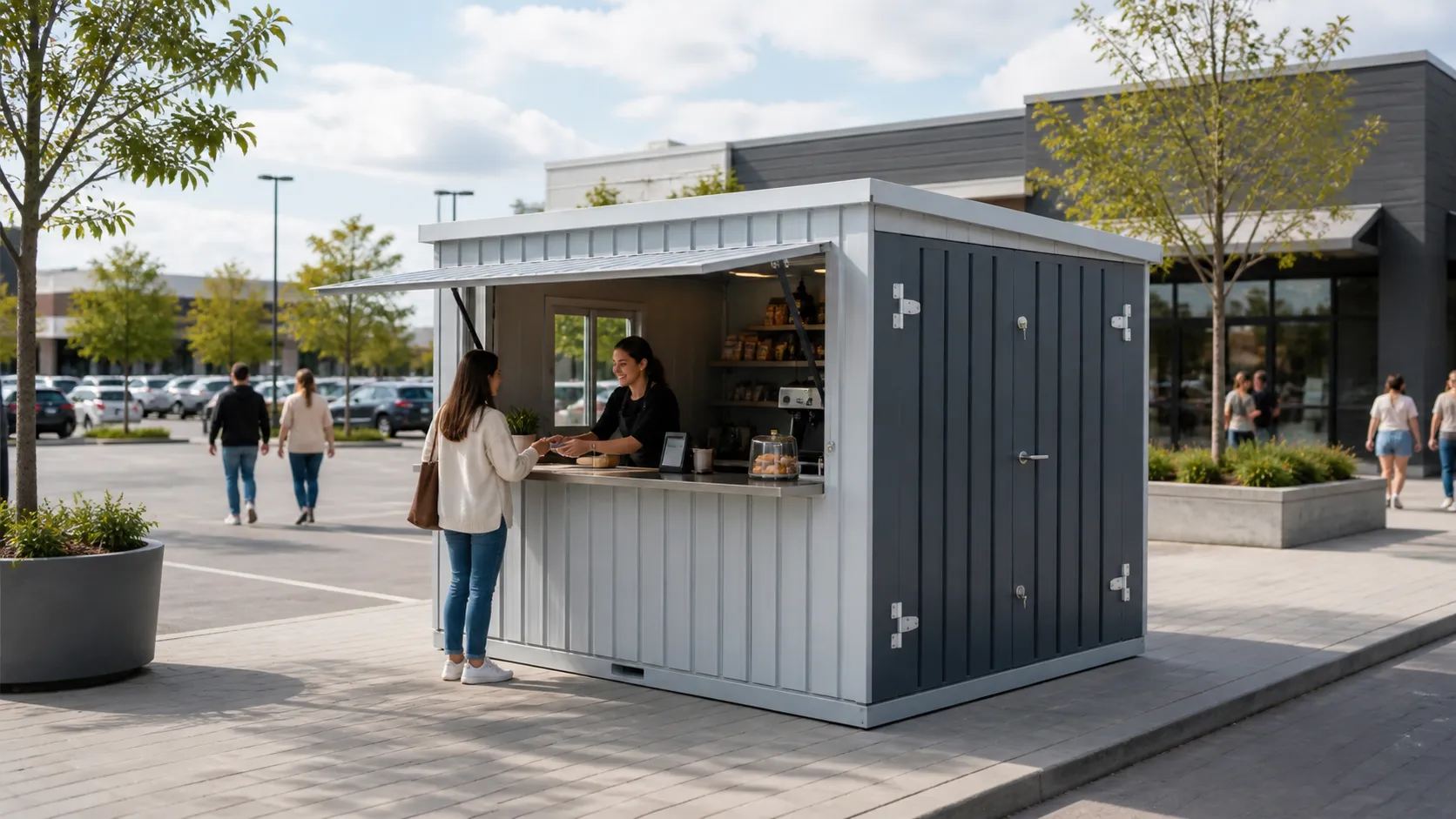
For teams that need separate access, multi-compartment units can create individual lockable bays within a single footprint. For teams that need service windows, public-facing support, or compact field administration, kiosk and office formats may also fit a broader rollout plan.
The goal is to help your team choose the right storage format before you buy.
Build a Smarter Storage Comparison
When your team compares shipping containers and flat-pack storage containers, the decision should come down to fit.
A shipping container may work when you need large open storage and have the space to receive and place it. A flat-pack storage container may be a stronger fit when you need flexible placement, accessory-supported organization, repeatable specs, and a clearer deployment plan.
For procurement, facilities, and multi-site teams, the value is not only in the container. It is in choosing a storage setup that can support daily use, protect what matters, and work across future locations.
If your team is comparing flat pack storage containers, flat packed shipping containers, or flat pack storage containers for sale, we can help you evaluate the right unit size, accessories, placement needs, and rollout path before ordering.