We help facilities and operations teams plan delivery, placement, assembly, accessories, and site readiness before choosing a self-assembly storage unit.
Self-assembly storage can be a practical option when your team needs secure storage without the delivery challenges of a traditional full-size container.
For facilities teams, warehouses, contractors, campuses, property teams, public works departments, and multi-site operations, the appeal is clear. A flat-pack storage unit can support tools, parts, PPE, materials, equipment, seasonal inventory, maintenance supplies, and site-based storage while giving your team more flexibility around delivery and placement.
Still, self assembly storage containers work best when the details are planned before the unit arrives.
Your team should know where the unit will go, how it will be received, what access is available, which size fits the storage need, which accessories should be included, and how the unit will support daily operations after assembly.
We build flat-pack steel storage units for teams that need secure, organized, and repeatable storage across active working sites. If your team is comparing self assembly containers or searching for a self assembly shipping container, we can help you plan the right storage setup before ordering.
Start With the Site, Not the Container
Before choosing a unit, look at the site where it will be used.
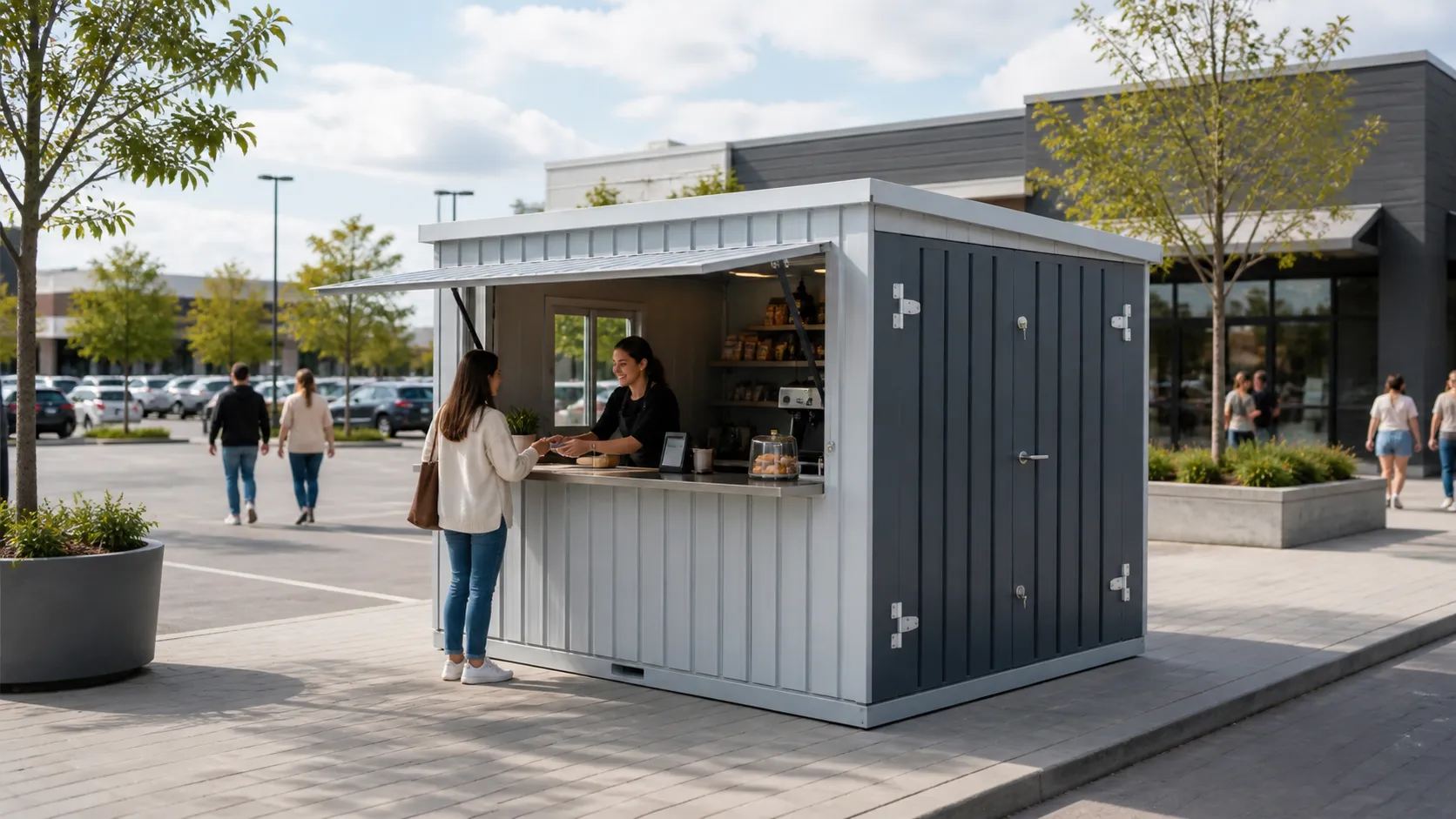
A storage unit may need to fit near a maintenance area, warehouse dock, jobsite staging zone, campus facility, service yard, property operations area, or public works location. Each site has different access conditions, traffic flow, ground surfaces, and placement limits.
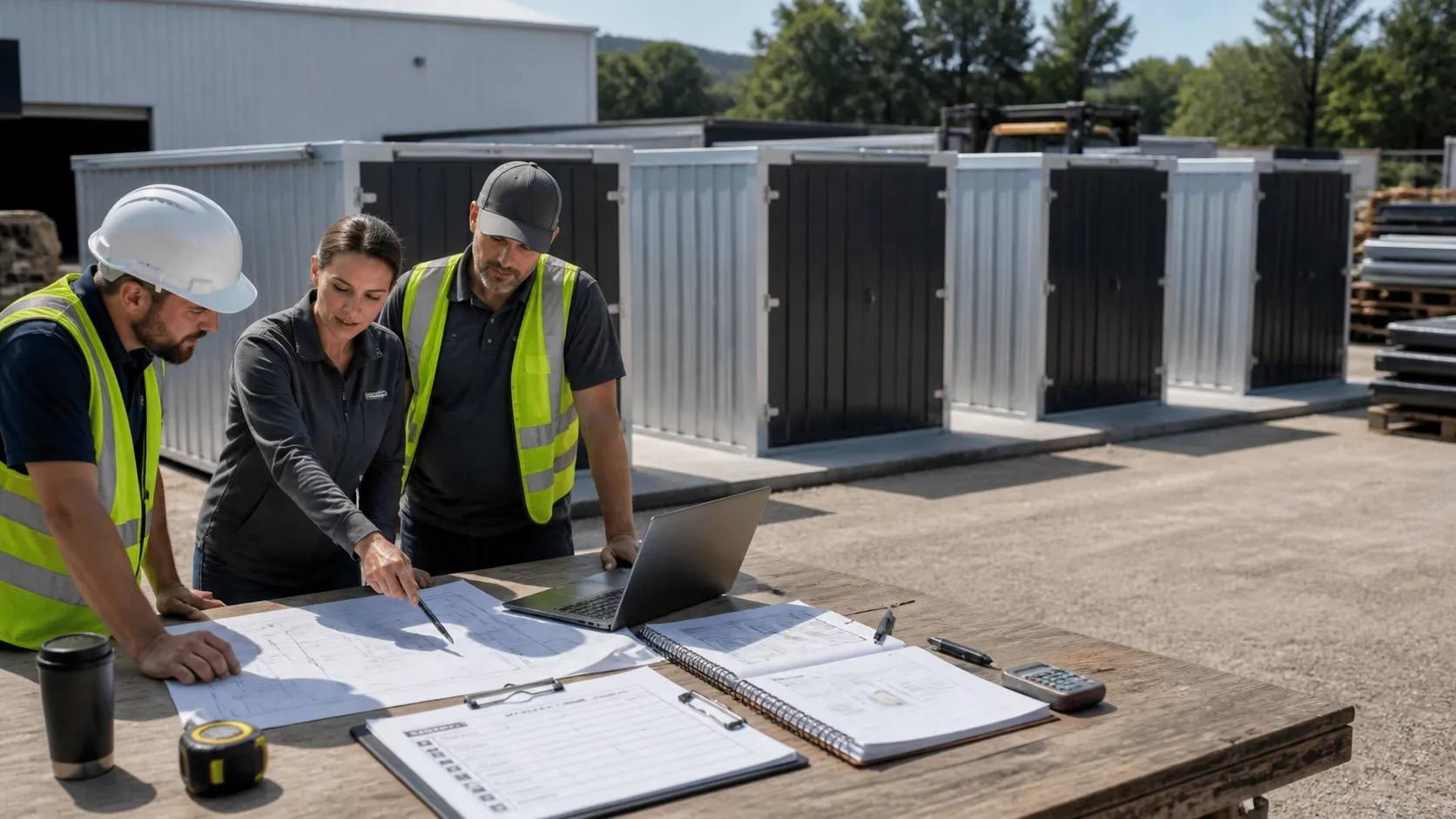
Start with the practical details. Where will the storage unit be placed? How will people access it? Is the placement area flat, stable, and ready for use? Will the unit sit near vehicles, pedestrians, equipment, or active work zones? Does the site have enough room for delivery, staging, and assembly?
These questions matter because self-assembly storage is not only about how the unit ships. It is about whether the final storage setup works for the people using it every day.
Understand What Self-Assembly Means
Self-assembly does not mean the planning should be casual.
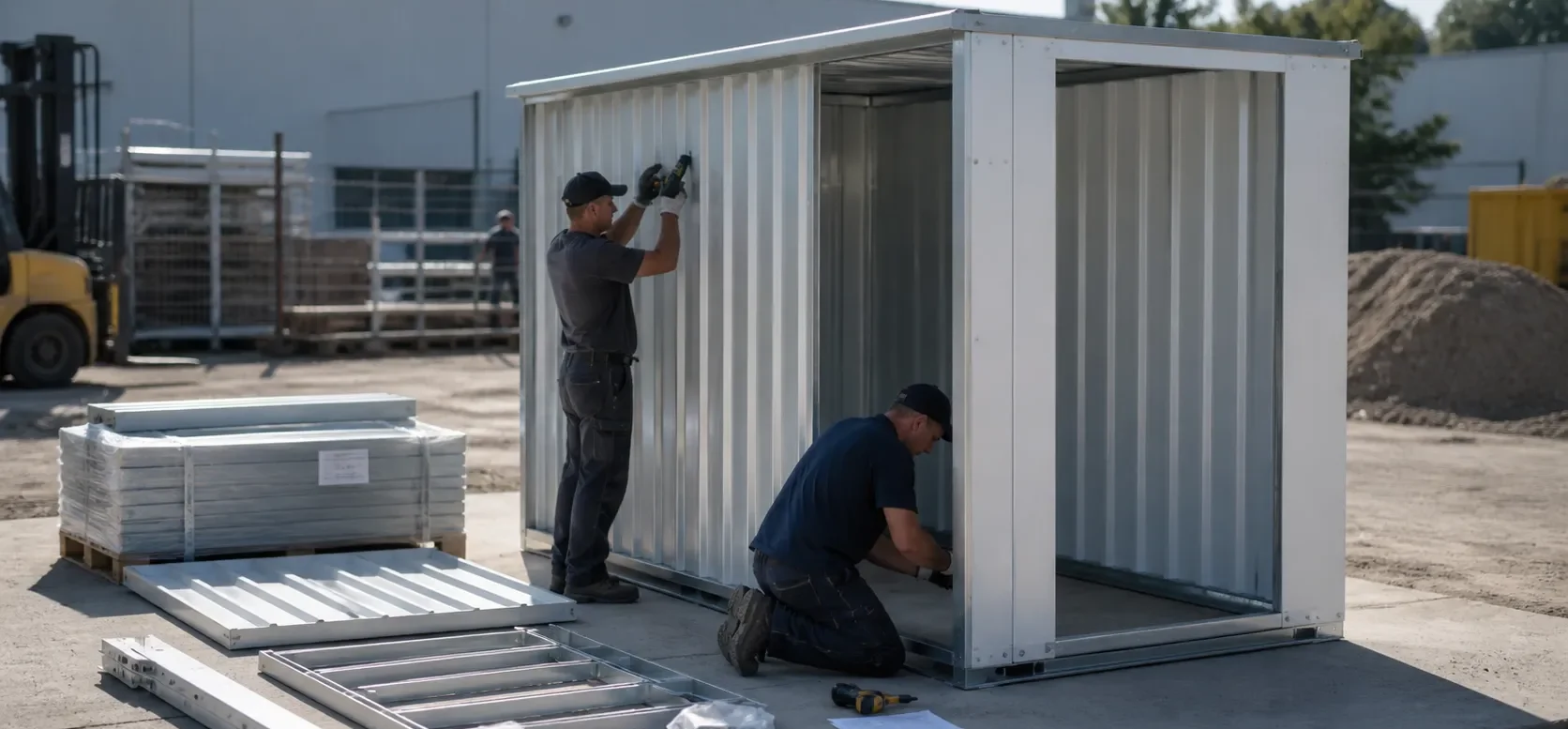
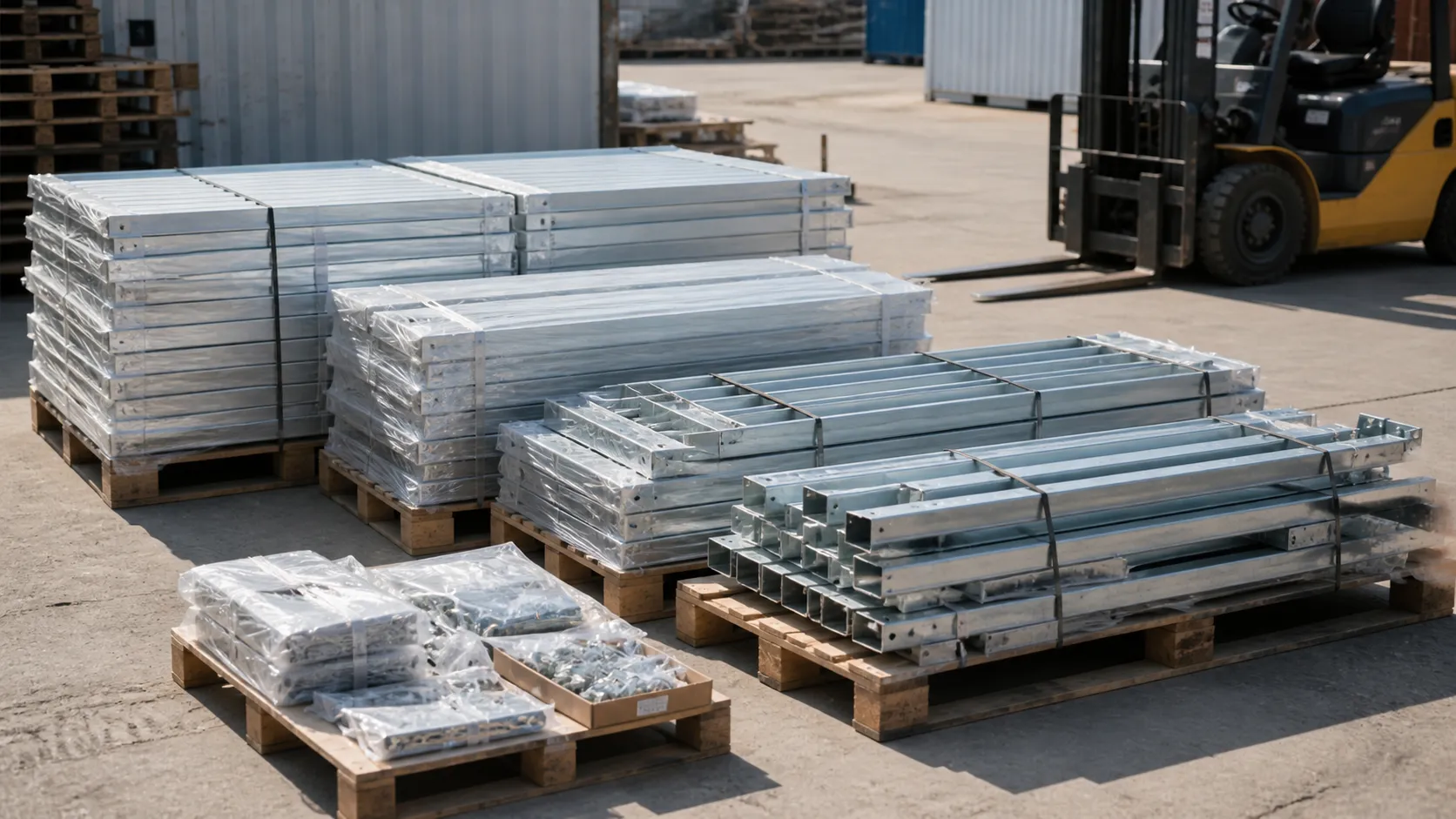
A self-assembly storage unit arrives in a format that supports more compact delivery and on-site assembly. That can be useful for sites where traditional container delivery may be harder to coordinate, but your team still needs to prepare for receiving, staging, placement, and setup.
Our flat-pack storage units are built for commercial use with durable steel construction, weather-ready finishes, secure locking options, forklift pockets, a hardware kit, and assembly guidance. Available unit sizes give teams a range of footprints for different storage needs, from compact spaces to larger operational storage.
That flexibility is useful, but the right setup still depends on the site. A compact unit may be enough for tools, parts, or PPE. A larger unit may be better for equipment, materials, warehouse overflow, or multi-department storage.
Plan Delivery, Staging, and Placement Early
Delivery planning should happen before the order is finalized.
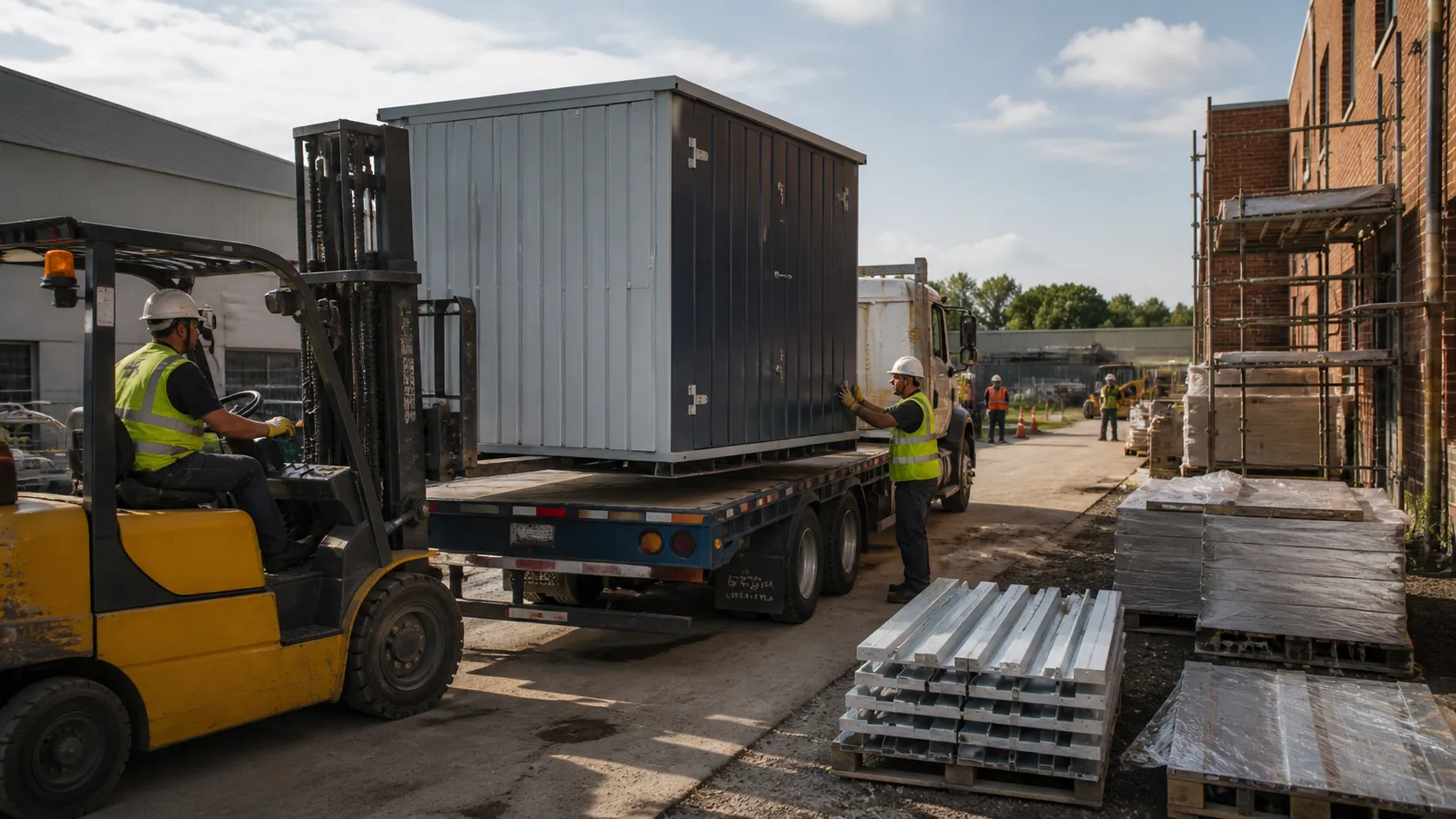
Even when a storage unit ships compactly, your team should confirm how it will be received. That includes access roads, receiving windows, unloading areas, staging space, and the final placement zone.
For active sites, this can be especially important. A warehouse may need to keep dock access open. A jobsite may need to work around trades, equipment, and deliveries. A campus may need to avoid blocking service routes. A property team may need to place storage without disrupting tenants, residents, parking, or maintenance access.
Planning delivery and placement early helps reduce surprises. It also helps your team choose a unit size and configuration that fits the site instead of forcing the site to adapt after the unit arrives.
Compare Self-Assembly Containers With Traditional Shipping Containers
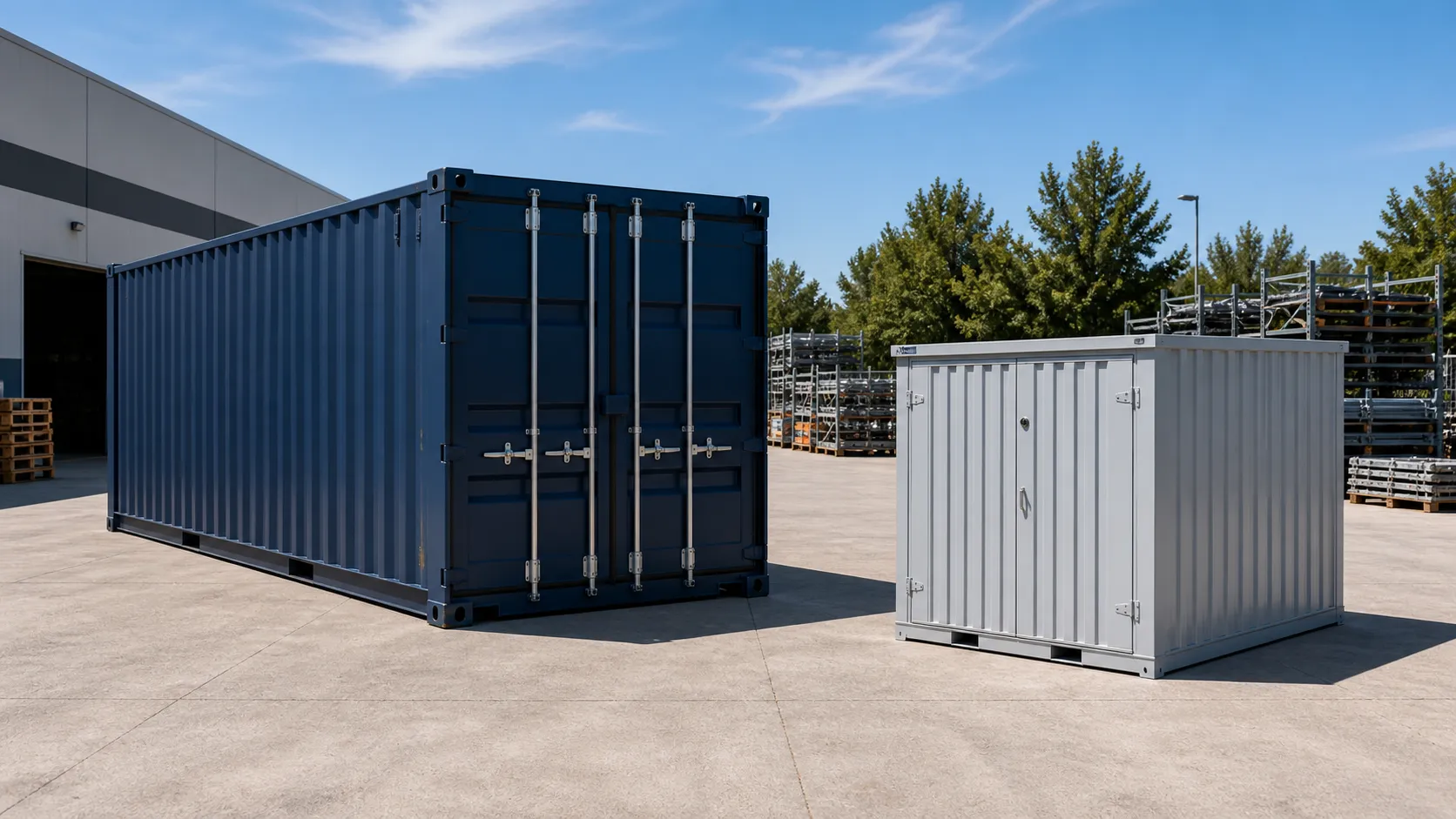
Many buyers use the phrase self assembly shipping container because they are comparing flat-pack storage with traditional container options.
Traditional shipping containers can work well when a site has plenty of room, easy delivery access, and a need for large open storage. But they may be harder to place around tight facilities, active jobsites, campuses, yards, properties, or warehouses with limited receiving space.
Self-assembly storage gives teams another path.
Because the unit ships compactly and is assembled on-site, your team can think through access, placement, size, accessories, and repeat deployment before ordering. That can be helpful when storage needs to be closer to the work, when delivery access is limited, or when the same storage setup may need to be repeated across several locations.
The right choice depends on your site, your storage needs, and your long-term plan.
Choose a Size Around Daily Use
Size should not be chosen by footprint alone.
A unit may fit in the available space but still be difficult to use if the interior layout is too tight, if materials are hard to reach, or if the wrong items are being stored together.
Start with what the unit needs to hold.
Facilities teams may need storage for tools, filters, maintenance parts, cleaning supplies, PPE, and seasonal equipment. Contractors may need space for fasteners, fixtures, materials, and tools. Warehouses may need overflow storage, returns storage, dock-adjacent supplies, or short-term project inventory. Property teams may need storage for landscaping equipment, repairs, resident support, or shared-site operations.
Then think about access.
Will crews need to enter the unit regularly? Will materials be stacked? Will shelves be installed? Will long materials need racks? Will multiple departments use the same unit? Will the unit support one site or become part of a repeatable rollout?
Those answers help define the size, layout, and accessory package before ordering.
Plan Accessories Before Assembly
A storage unit works better when the inside is planned before it is filled.
Without the right layout, tools get mixed with parts, PPE gets buried behind supplies, and long materials take over floor space. Over time, storage can become harder to use than it should be.
Accessories can help turn a storage unit into a more organized working asset.
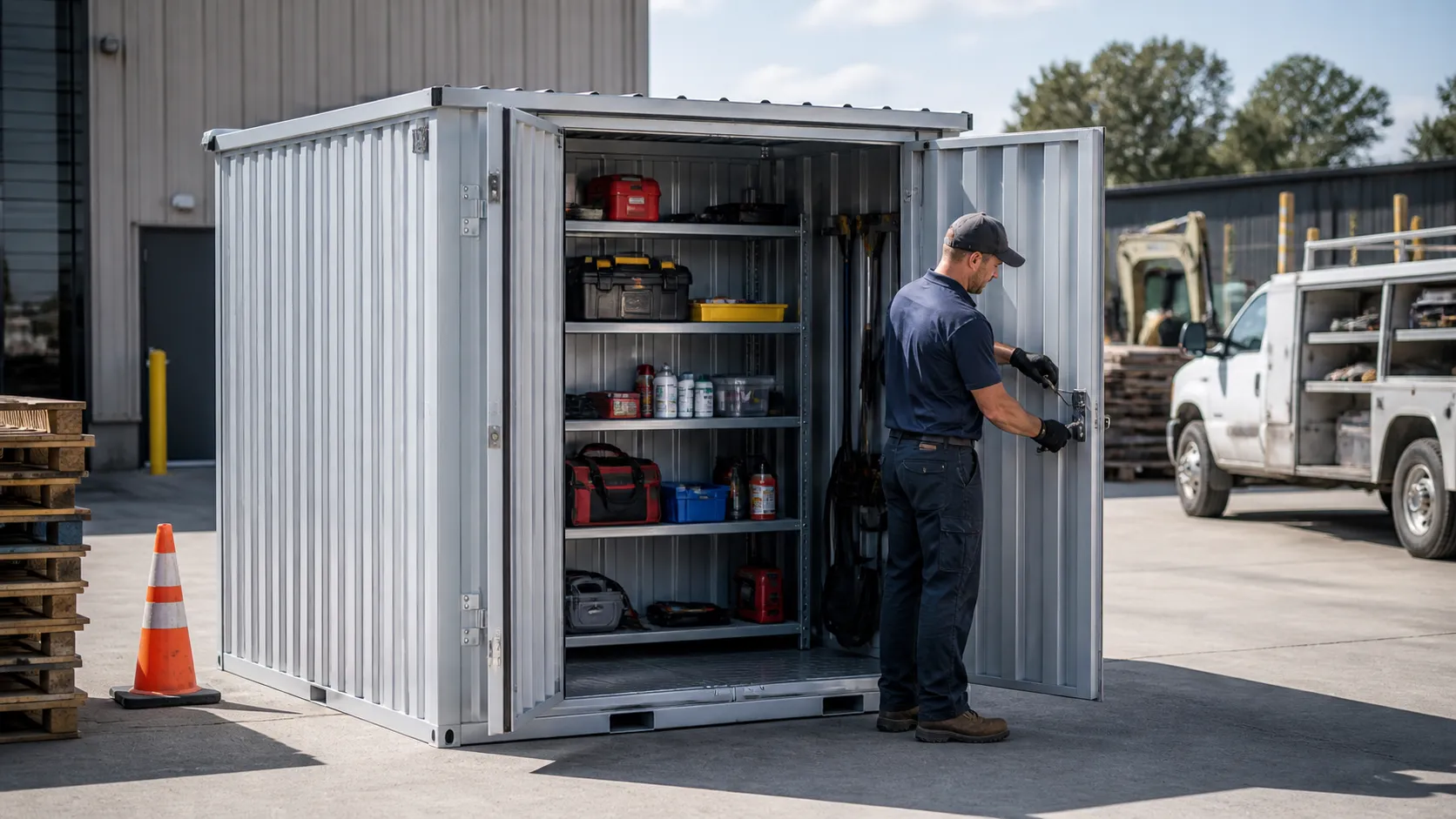
Available options may include interior shelving, exterior shelving, pipe racks, secure locking system upgrades, flooring upgrades, and linking kits for banking units. These options can help organize tools, fasteners, parts, conduit, lumber, supplies, equipment, and materials while supporting cleaner daily access.
Shelving can keep smaller items off the floor. Pipe racks can support long materials. Locking upgrades can help control access. Flooring upgrades can support frequent use. Linking kits can help teams expand capacity when more than one unit is needed.
Accessories should be part of the purchase plan, not something added after storage becomes cluttered.
Think Through Security and Access
Self-assembly storage is often used close to active work areas, which makes access control important.
A facilities team may need shared access for maintenance staff. A contractor may need controlled access by crew. A warehouse may need storage for restricted parts or supplies. A property manager may need separate access for staff, vendors, or departments.
Before ordering, decide who needs access and how the unit should be secured.
For some teams, a single storage unit with a secure locking system may be enough. For others, a multi-compartment unit may make more sense when separate lockable bays are needed for departments, crews, tenants, or shared-site operations.
Good storage planning should make access easier for the right people and harder for everyone else.
Standardize the Setup for Future Sites
Many teams start with one storage unit, then realize the same need exists elsewhere.
One facility needs maintenance storage. Another warehouse needs overflow space. Another jobsite needs tool storage. Another campus needs equipment storage. If every site solves the problem differently, storage becomes harder to manage.
Different sizes. Different locks. Different layouts. Different accessory packages. Different delivery expectations.
We help teams avoid that pattern by planning storage with repeatability in mind.
Once your team identifies the right unit size, layout, accessories, and placement approach, that setup can be used again across additional sites. For procurement, facilities, and operations teams, standardization can make storage easier to budget, order, deploy, and maintain.
What to Confirm Before You Order
Before ordering self assembly storage containers, confirm the practical details that affect success on-site.
Know the storage goal. Define whether the unit will hold tools, parts, equipment, materials, PPE, inventory, tenant items, or seasonal supplies.
Confirm the placement area. Make sure the site has a suitable location for the assembled unit and a plan for access around it.
Review delivery and staging. Identify receiving conditions, access paths, unloading needs, staging areas, and timing.
Choose the unit size. Match size to both storage volume and daily workflow.
Plan accessories. Include shelving, racks, locks, flooring, or linking kits where needed.
Think about repeat use. Decide whether this setup should become a standard for future locations.
These steps help your team order with more confidence and reduce back-and-forth later.
Plan Self-Assembly Storage With More Confidence
When your team searches for self assembly storage containers, the real question is usually not whether the unit can be assembled.
The better question is whether the full storage setup will work for your site.
You need the right unit size. You need a placement plan. You need access that works for daily use. You need accessories that keep storage organized. You need delivery timing that fits operations. You may also need the same setup across more than one location.
We help teams plan those details before ordering.
Our flat-pack steel storage units give facilities and operations teams a practical way to add secure, organized storage for tools, supplies, equipment, PPE, materials, inventory, and site-based needs. With multiple unit sizes, accessory options, and rollout planning, we can help your team choose a setup that supports both current and future sites.
If your team is comparing self assembly containers or looking for a self assembly shipping container alternative, we can help you plan the next step.