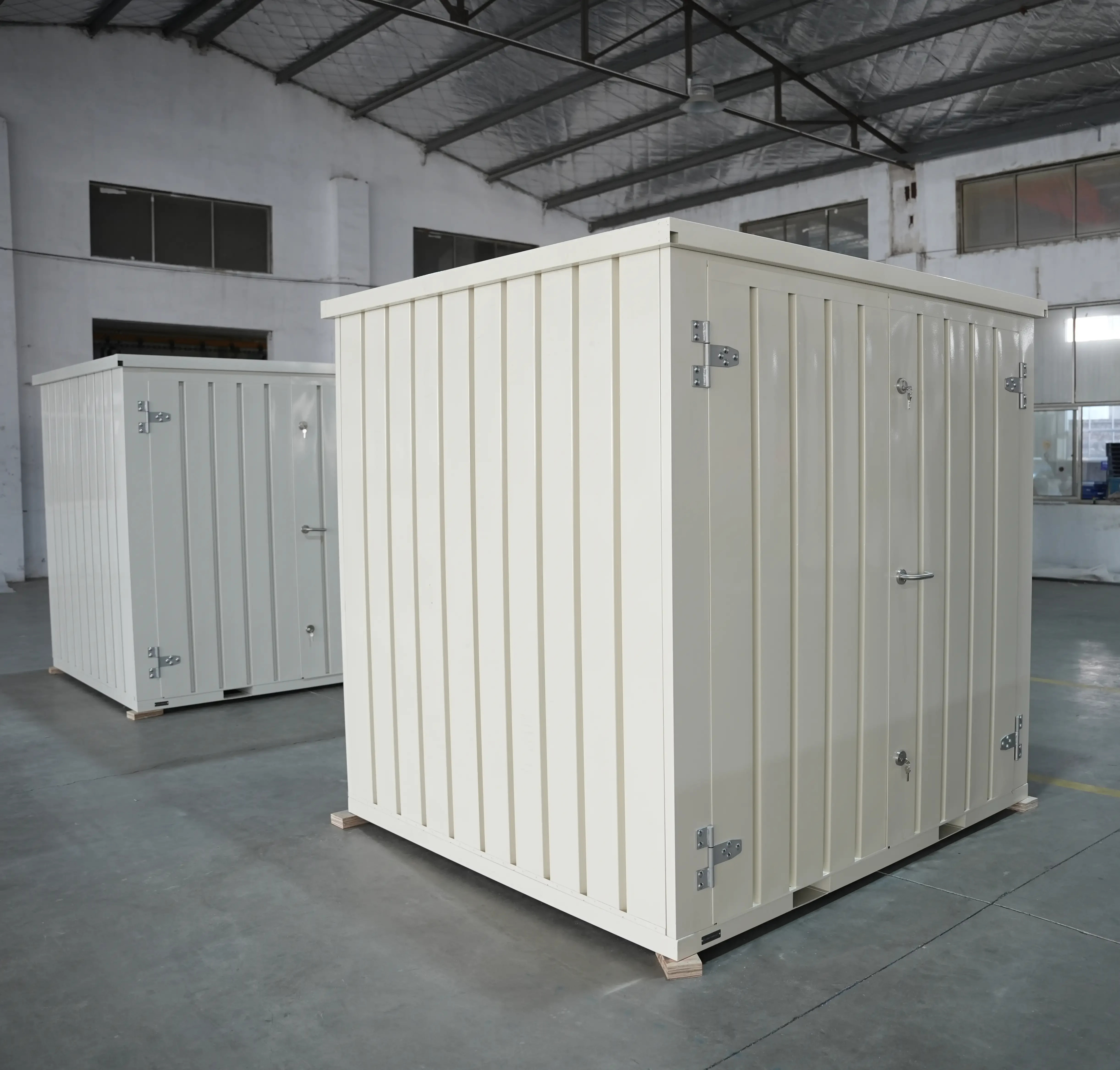
Mobile Storage Unit: Understand the Full Cost Before You Commit

We help commercial teams choose the right mobile storage unit by matching capacity, site fit, security, placement, and ownership to the way we actually need the storage to work.

A need for additional storage can appear quickly. Inventory builds up. Tools need a more secure home. A project adds equipment and materials. A property runs out of maintenance space. Another location needs the same storage capability as the first.

The quickest answer is often to search for a mobile storage unit and compare whatever options appear.

But commercial storage deserves a little more thought.

The right decision depends on more than the size of the container or an advertised monthly rate. We need to understand what we are storing, how frequently we need access, where the unit will sit, how much site space we can dedicate to it, and whether the need is truly temporary.

We build our flat-pack commercial storage around those real-world requirements.

Instead of treating storage as another temporary problem to solve, we can create a secure, practical configuration that works with the site today and can be repeated when we need more capacity tomorrow.

01 What are we storing?
02 How often do we need access?
03 Where will the unit sit?
04 How much site space can we use?
05 Is the need truly temporary?

Storage Units

Our core flat pack storage unit lineup is available in 7 sizes from 3.5′ to 19′. All units feature a 7.5′ width, galvanized steel construction, and a powder-coated finish for secure, standardized commercial storage.

3.5' x 7.5'

1m x 2.29m

Our most compact storage solution, perfect for tight spaces while providing superior protection and reliability.

Residential, Small spaces

5' x 7.5'

1.5m x 2.29m

Compact yet spacious container engineered for durability, versatility, and long-lasting performance.

Residential, Small business

7' x 7.5'

2m x 2.29m

Popular residential size offering excellent storage capacity with a manageable footprint.

Residential, HOA communities

10' x 7.5'

3m x 2.29m

Versatile mid-size unit that balances capacity with footprint. Perfect for contractors and job sites.

Contractors, Job sites

13' x 7.5'

4m x 2.29m

Extended capacity unit offering more space while maintaining easy transport. Great for equipment dealers.

Equipment dealers, Retail

16' x 7.5’.

5m x 2.29m

Large capacity storage for demanding applications. Ideal for industrial operations and property management.

Industrial, Property management

19' x 7.5’.

6m x 2.29m

Our largest single-compartment storage unit, providing maximum capacity for commercial and industrial needs.

Industrial, Large-scale storage

Plan Around the Contents

Start With What We Actually Need to Store

Choosing the right storage starts with the contents, not the container.

A unit used for tools and equipment has different requirements from one holding parts, maintenance supplies, seasonal inventory, PPE, retail stock, or project materials.

We need enough capacity to store those assets comfortably, but simply choosing the largest available option can waste valuable site space and budget.

That is why we look at the full requirement.

We consider how much we need to store, how items will be organized, how frequently they need to be accessed, whether shelving would improve usability, and how the storage will interact with normal site activity.

That gives us a much clearer picture of the right unit size and quantity.

Our storage range makes it possible to match capacity to the requirement rather than forcing every operation into one standard footprint.

For a single location, that may mean choosing one appropriately sized unit. For a larger operation, it may make more sense to separate tools, inventory, supplies, or equipment into several standardized units with distinct purposes.

Compare Storage Unit Sizes
Commercial flat pack storage units for tools, equipment, inventory, and supplies
Match Storage to the Requirement
Tools & equipment
Parts & maintenance supplies
Seasonal inventory & retail stock
PPE & project materials

Choose enough capacity for the work without giving up more site space or budget than necessary.

Balance Capacity With Footprint

Choose Capacity Without Giving Up More Site Space Than Necessary

Space has value.

On construction sites, industrial properties, commercial buildings, equipment yards, campuses, multifamily properties, and other active environments, every square foot competes with parking, loading, circulation, equipment, work areas, or future expansion.

Our goal is to add useful storage without creating unnecessary congestion.

That means considering both interior capacity and exterior footprint.

A storage unit needs to hold what matters, but it also needs to fit naturally into the site. Door access should make sense. Teams should be able to reach the contents without interrupting normal operations. Equipment and vehicle movements should remain practical.

Right-sizing creates a better balance between capacity and footprint.

Instead of paying for unused space or struggling with a unit that is too small, we can plan around what the operation actually requires.

Site Space Has to Support the Whole Operation
01
Parking

Storage should not consume more vehicle space than necessary.

02
Loading & Circulation

Keep access routes and normal site movement practical.

03
Work Areas

Maintain useful operating space around the storage location.

04
Door Access

Position the unit so teams can reach contents efficiently.

05
Future Expansion

Leave room for the site and storage requirement to grow.

The best storage footprint is large enough for the requirement without taking more of the property than the operation needs.

Make Sure the Storage Works at the Site Before We Order

The right portable storage unit can still become the wrong choice if placement is treated as an afterthought.

Before finalizing a configuration, we consider where the storage needs to go and how it will function once it is there.

That can include the available footprint, site access, ground conditions, door orientation, pedestrian movement, vehicle routes, parking, loading areas, equipment traffic, and everyday access. For a busy operation, those details matter.

Storage placed too far from the work can add unnecessary movement. Storage positioned in the wrong location can interfere with traffic or usable site space. A poorly oriented door can make accessing tools or inventory more difficult than it needs to be. We want the unit to become part of the workflow, not an obstacle within it.

Our flat-pack format also gives us a different way to think about transportation and deployment. We can plan the storage around the destination and operating environment rather than treating delivery as the only logistical question.

Flat pack storage container and compact flat-packed units arriving at a Norfolk Virginia commercial facility.

Commercial storage often protects assets that have a direct impact on productivity.

Tools need to be available when crews arrive. Replacement parts need to be easy to find. Equipment, supplies, materials, and inventory need protection from unauthorized access and everyday exposure.

Our storage units are built from galvanized steel with a powder-coated finish and secure locking provisions for commercial use. Forklift pockets help support practical handling, while standardized configurations make it easier to plan repeat deployments.

But strong storage is not only about the exterior.

How we organize the inside can be equally important.

Shelving Separate smaller parts, supplies, tools, or inventory.
Open Floor Space Preserve room for larger equipment and materials.
Secure Access Help protect assets while keeping them available to the right teams.
Close to the Work Position storage where crews and operators can use it efficiently.

The goal is simple: protect what matters without making it difficult to use. When storage is secure, organized, and located close to the work, it becomes an operating resource rather than somewhere we simply put things.

Request the Specifier Package

Search for mobile storage units or portable storage units , and we can quickly find several very different categories presented under similar language.

There are moving containers, rental pods, traditional self-storage services, delivered storage rentals, conventional shipping containers, and commercial storage systems.

Each can make sense for a different requirement.

Temporary Rental

May be appropriate when we need storage for a short, clearly defined period.

Moving Containers

Can work well when the primary need is transporting household belongings.

Off-Site Storage

May make sense when onsite access is not important.

Owned Flat-Pack Storage

Built for operations that need secure capacity close to the work and greater control over long-term use.

Our owned flat-pack commercial storage serves a different purpose.

We focus on operations that need secure storage capacity close to the work and want greater control over how that storage is configured, deployed, and used over time.

Instead of asking only: “Where can we get a mobile storage unit?”
A better question is: “What type of storage makes sense for the way we are going to use it?”

The lowest visible price is not always the lowest total cost.

Rental pricing can look attractive when we focus on a monthly rate. But recurring commercial storage can also involve delivery, pickup, rental duration, repeated deployment, and ongoing payments.

Ownership creates a different economic model.

We do not assume it is automatically the right answer for every requirement. Instead, we look at how long we expect to need storage and how often the same need is likely to return.

If we need one unit briefly, rental may make sense.

If we consistently need extra capacity, support recurring projects, manage multiple properties, maintain long-term onsite storage, or repeatedly face the same storage shortage, ownership deserves a closer comparison.

We can evaluate the complete requirement around:
Unit size and quantity
Expected period of use
Delivery and deployment
Accessories and shelving
Repeat storage needs
Additional locations
Future expansion

That gives us a more useful comparison than placing a purchase price beside a single monthly rental rate.

Build Your Storage Rollout BOM

Put Mobile Storage to Work Where We Need It

Commercial storage needs appear in many different environments, but the underlying problem is often the same: we need secure capacity close to where the work happens. We may need storage for tools and materials on a project site.

We may need maintenance supplies at a commercial or multifamily property.

We may need overflow inventory beside a warehouse or industrial operation.

We may need equipment and replacement parts positioned near field teams.

We may need seasonal supplies, campus materials, municipal equipment, or operational assets that do not justify permanent construction but still need a reliable home.

Our mobile self storage containers give us a way to bring organized commercial storage closer to those requirements. Rather than relying on one generic use case, we can select the size and configuration around the assets, workflow, site, and expected duration.

Weather-resistant flat pack storage container used daily in an industrial outdoor work environment.
Flat pack commercial storage unit for repeatable multi-site storage programs
Build Once. Repeat With Confidence. Turn a successful storage setup into a repeatable standard.

Define the unit size, configuration, accessories, and purchasing requirements, then use that structure again as new needs appear.

Standardize for Growth

Turn One Storage Need Into a Repeatable System

A single storage unit can solve today's problem.

Standardization helps us solve the next one faster.

When we manage several properties, recurring projects, multiple operating locations, or a growing network, rebuilding the storage decision from scratch every time creates unnecessary work.

We can establish repeatable unit sizes, configurations, accessories, and purchasing requirements.

That gives procurement teams a clearer product set to work with. Facilities teams know what to expect. Operations teams can create more consistent storage practices from one location to another.

Standardized storage also makes expansion simpler.

If another site needs the same setup, we already have a starting point. If one location needs additional capacity, we can add to the existing approach rather than redesigning it.

Storage becomes part of the operating system instead of an improvised response to a recurring problem.

Repeatable unit sizes
Defined configurations
Standard accessories
Clearer purchasing requirements
Request Multi-Site Pricing
Plan the Full Requirement

Build the Right Mobile Storage Setup From Day One

We do not believe commercial storage should be chosen from one dimension or one price.

Those questions help us move from a vague need for a mobile storage unit to a storage setup designed around the operation.

Our standardized flat-pack storage units give us the flexibility to choose the right capacity while keeping future deployments more consistent. Our commercial construction, secure configurations, accessory options, and deployment-focused approach help us plan for more than the first day of use.

Whether we need one unit or are building a storage standard across multiple locations, we can start with the requirement and develop the right configuration from there.

We look at the full picture:
01 What are we storing?
02 How much capacity do we need?
03 How much site space is available?
04 Where should the unit be positioned?
05 How frequently will we access it?
06 What security and organization do we need?
07 Will the requirement repeat?
08 Could another location need the same configuration?

Start with the operation, then choose the capacity, footprint, security, accessories, placement, and repeatability around it.