Mobile Storage Box: Choose the Right Commercial Storage Before You Commit

We help commercial teams turn a general need for a mobile storage box into the right owned flat-pack storage configuration, with practical choices for size, placement, security, organization, and future expansion.

When we need more storage, finding a box is rarely the hardest part. Choosing storage that actually works for the operation is.

A search for a mobile storage box can lead to moving containers, rental pods, conventional shipping containers, household storage products, and portable commercial units. Those options solve very different problems.

We focus on owned commercial flat-pack steel storage systems .

Our core storage range includes seven lengths from 3.5' through 19', all 7.5' wide. We also offer office units, kiosk units, multi-compartment configurations, shelving, locking solutions, and accessories for more specialized requirements.

That range gives us the flexibility to match storage more closely to the site instead of defaulting to a single oversized format.

Whether we need one unit or a repeatable configuration across multiple locations, we can start with the requirement and build from there.

Storage Units

Our core flat pack storage unit lineup is available in 7 sizes from 3.5′ to 19′. All units feature a 7.5′ width, galvanized steel construction, and a powder-coated finish for secure, standardized commercial storage.

3.5' x 7.5'

1m x 2.29m

Our most compact storage solution, perfect for tight spaces while providing superior protection and reliability.

Residential, Small spaces

5' x 7.5'

1.5m x 2.29m

Compact yet spacious container engineered for durability, versatility, and long-lasting performance.

Residential, Small business

7' x 7.5'

2m x 2.29m

Popular residential size offering excellent storage capacity with a manageable footprint.

Residential, HOA communities

10' x 7.5'

3m x 2.29m

Versatile mid-size unit that balances capacity with footprint. Perfect for contractors and job sites.

Contractors, Job sites

13' x 7.5'

4m x 2.29m

Extended capacity unit offering more space while maintaining easy transport. Great for equipment dealers.

Equipment dealers, Retail

16' x 7.5’.

5m x 2.29m

Large capacity storage for demanding applications. Ideal for industrial operations and property management.

Industrial, Property management

19' x 7.5’.

6m x 2.29m

Our largest single-compartment storage unit, providing maximum capacity for commercial and industrial needs.

Industrial, Large-scale storage

Portable flat pack storage unit for commercial tools, equipment, and materials
Plan Around the Contents Start with what needs to go inside.

Capacity, access, site space, organization, and future growth all help define the right storage setup.

Define the Requirement First

Start With What We Need to Store

The right portable storage unit starts with what needs to go inside it.

We may need secure storage for tools and equipment at a jobsite. We may be managing inventory overflow, replacement parts, PPE, maintenance supplies, seasonal stock, materials, or field-service equipment.

Each requirement affects the size and configuration we should choose.

We can begin by defining a few practical details:
What we need to store
How much capacity we need
How often we need access
How much site space is available
Which organization or accessory options will help
Whether the requirement is likely to grow

That gives us a better basis for choosing storage than simply selecting the biggest unit available.

Our goal is to provide enough usable capacity without consuming more space than the operation requires.
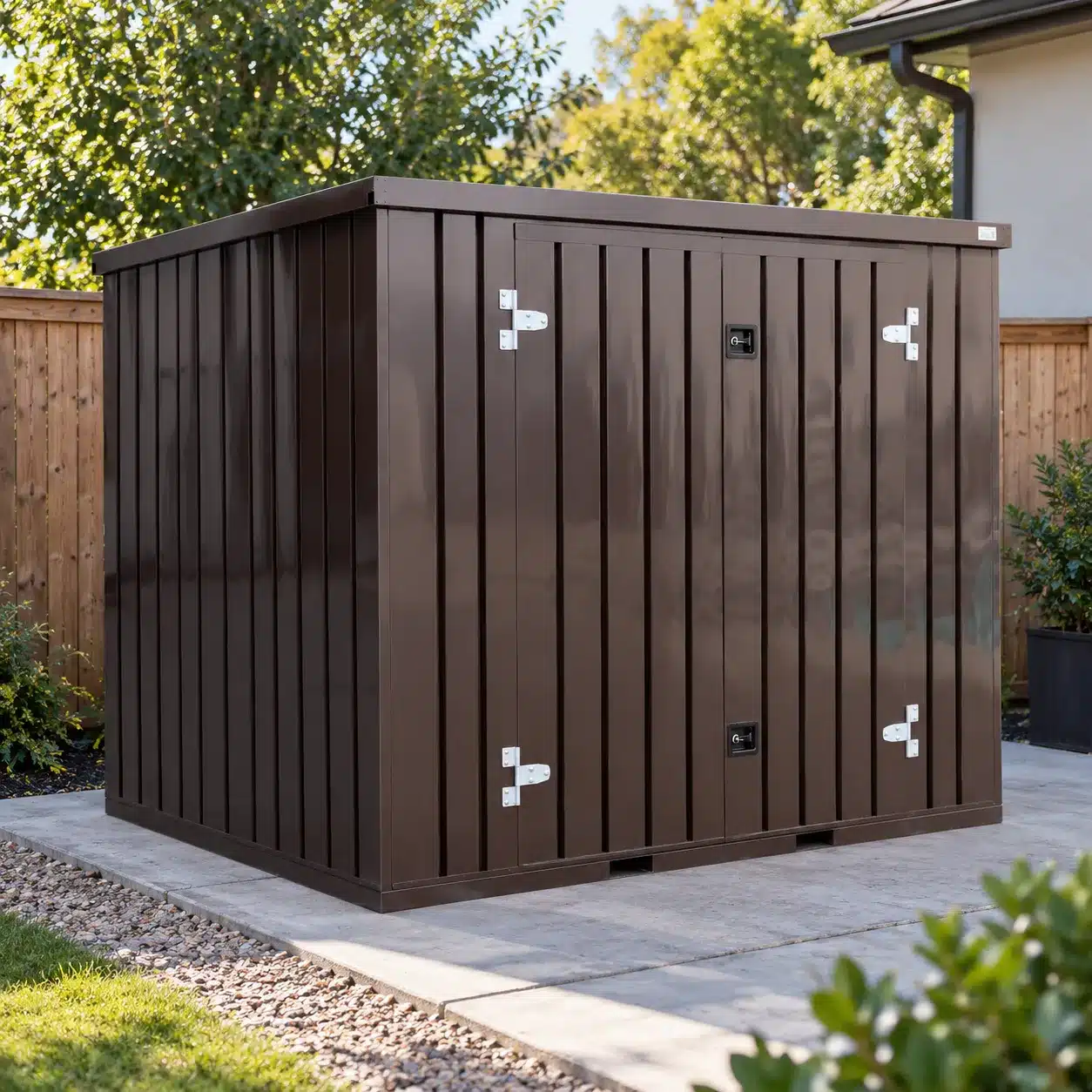
Compare Storage Unit Sizes
Plan Capacity Around the Site

Choose Capacity Without Wasting Valuable Site Space

Storage capacity and site footprint need to work together.

Our seven standardized storage lengths give us more flexibility to match the unit to the available space. A smaller unit can place tools, supplies, or maintenance inventory close to the point of use. Larger units can support more substantial equipment, materials, or stock.

In some situations, several appropriately sized units can also work better than one large space.

We may want to separate tools from materials, maintenance supplies from inventory, or one department's equipment from another's. Multiple units can also help us position storage closer to where it is actually needed.

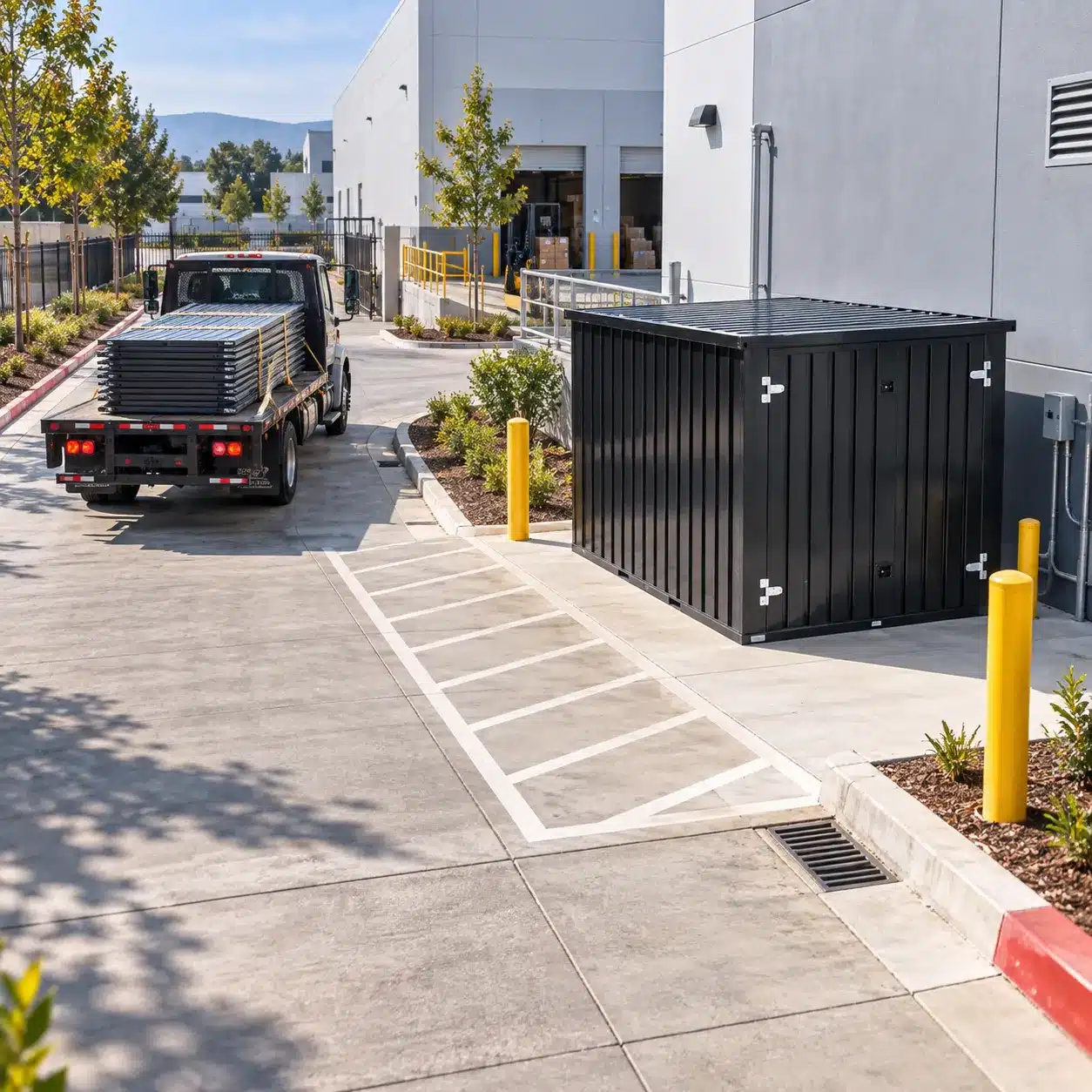
That flexibility is valuable on jobsites, commercial properties, industrial facilities, equipment yards, and other locations where parking, loading, traffic, and operating space all compete for the same footprint.

We can choose the storage around the operation—not force the operation around the storage.

Build Your Storage Rollout BOM
Match Capacity to the Way the Site Works
01
Smaller Units

Keep tools, supplies, or maintenance inventory close to the point of use.

02
Larger Units

Support equipment, materials, stock, and broader storage requirements.

03
Multiple Units

Separate materials, teams, departments, or different access requirements.

04
Better Placement

Position storage closer to where people actually need to use it.

Site Space Has to Support More Than Storage
Parking Loading Traffic Operations

Make Sure the Storage Fits the Site Before We Order

The right capacity does not guarantee the right fit.

Before selecting a mobile storage container, we also need to consider how the unit will reach the site, where it will be positioned, and how teams will use it after installation.

That can include: vehicle access, unloading conditions, available footprint, assembly space, clearances, door orientation, loading areas, parking, pedestrian movement, and normal site traffic.

Considering those details early helps us identify potential constraints before they become expensive problems.

It also makes multi-location purchasing easier. Once we understand the placement requirements for a particular configuration, we have a stronger starting point for evaluating the next location.

Local zoning, permitting, anchoring, and property-use requirements can vary. We recommend confirming applicable requirements with the appropriate local authority before installation.

Commercial storage needs to protect more than household belongings.

We may be storing tools, equipment, replacement parts, inventory, PPE, construction materials, maintenance supplies, or other assets the operation depends on every day.

Our core flat-pack storage units use galvanized steel construction with powder-coated finishes and can be configured with locking, shelving, racks, and other accessory options depending on the application.

Security and organization should work together.

A unit may be secure from unauthorized access, but it still needs to function efficiently for the people using it.

Shelving Keep smaller parts and supplies visible and easier to retrieve.
Racks Support specific equipment and material-storage requirements.
Right-Sized Capacity Reduce unnecessary stacking and improve everyday access.
Locking Options Plan security around the assets and the way teams use the unit.

We can plan the interior around what is being stored rather than treating organization as an afterthought.

Request the Specifier Package

The terms mobile storage box , mobile storage containers , and portable storage units cover a wide range of products and purchasing models.

We provide owned flat-pack commercial storage.

We are not selling household plastic storage boxes, and we are not positioning our units as temporary moving-storage rentals. Our flat-pack units are also distinct from conventional shipping containers.

That distinction matters because each format has its place.

Short-Term Rental

A rental may make sense when the requirement is genuinely short-term.

Moving Container

A moving-container service may be appropriate when relocation is the primary goal.

Shipping Container

A conventional shipping container may suit applications specifically designed around that format.

Flat-Pack Commercial Storage

We focus on owned storage that can be configured, deliberately placed, and used as part of a longer-term operating plan.

Understanding that difference before comparing prices helps us make a better purchasing decision.

Find the Right Storage Configuration

Price matters. But the purchase price alone does not tell us whether a storage solution is a good fit.

We also need to consider capacity, footprint, transportation, accessories, destination, site requirements, quantity, expected duration of use, and whether we will need the same configuration again.

Our flat-pack format allows units to travel compactly before assembly at the destination. That makes transportation an important part of the overall planning process, particularly when multiple units or locations are involved.

Ownership is another consideration.

If we only need storage briefly, renting may be appropriate. When storage becomes an ongoing part of the operation, owning a defined configuration can give us greater control over availability, placement, organization, and future reuse.

A Better Purchasing Question

What storage configuration gives us the right capacity, footprint, usability, and purchasing model for the way we actually operate?

Build Your Storage Rollout BOM
Flat pack portable commercial storage system in an operational setting
Commercial Storage Across Operations Different environments. The same planning questions.

Define the contents, capacity, location, access, organization, and repeat requirements before choosing the storage setup.

Flexible Commercial Applications

Put Portable Storage to Work Across the Operation

Our flat-pack storage systems can support commercial requirements across a wide range of environments.

We can configure storage for construction and contractor operations, industrial facilities, manufacturing, warehousing and 3PL, property management, self-storage, equipment dealers, retail, municipalities, education, healthcare, agriculture, transportation, utilities, telecom, energy, and other field operations.

The contents may change, but the core questions remain remarkably consistent.

01 What are we storing?
02 How much capacity do we need?
03 Where will the unit go?
04 Who needs access?
05 How should the interior be organized?
06 Will another site need the same setup?

Answering those questions turns a vague search for a storage box into a defined commercial requirement.
Build a Repeatable Storage Standard

Standardize Storage Across Multiple Locations

A storage solution becomes even more valuable when we can confidently repeat it.

For multi-site operations, we can establish preferred unit sizes, accessory packages, applications, and placement considerations that give future locations a clear starting point.

The exact mix can still change by site. One location may need a compact maintenance unit while another requires several larger storage units.

What does not have to change is the entire purchasing process.

We support commercial requirements across the United States , Canada , and Puerto Rico , including organizations planning storage across multiple locations.

That can make specifications, internal approvals, quote comparisons, and repeat purchasing more consistent as the operation grows.

Request Multi-Site Pricing
Standardize the Parts That Should Stay Consistent
01
Preferred Unit Sizes

Define the configurations that fit common storage requirements.

02
Accessory Packages

Establish shelving, locking, and organization options for repeat use.

03
Applications

Match approved configurations to recurring operational needs.

04
Placement Considerations

Give future locations a practical starting point for deployment.

A repeatable process can improve:
Specifications
Internal approvals
Quote comparisons
Repeat purchasing
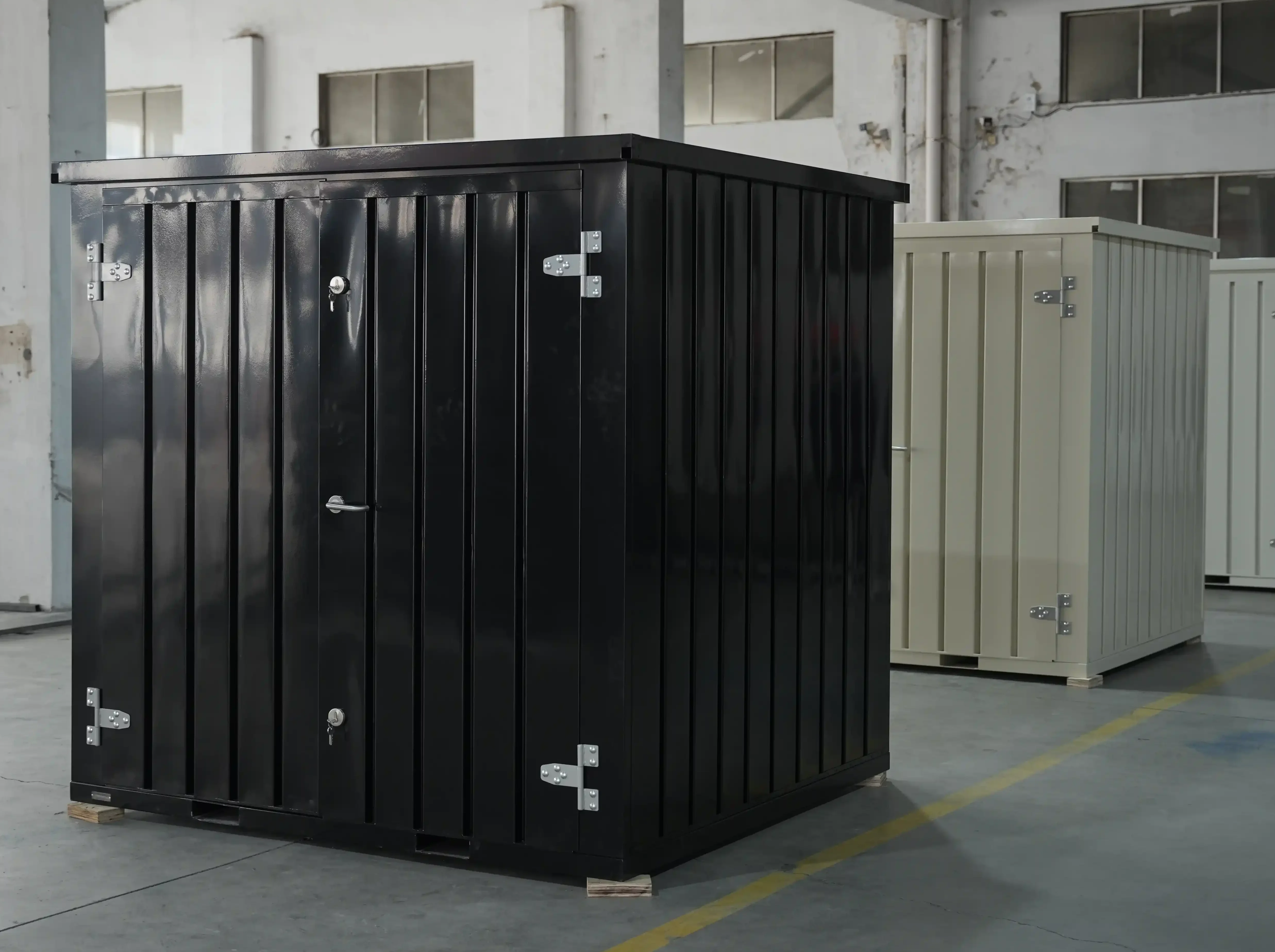
Standardized flat pack mobile storage units for commercial use
Built for Repeatable Commercial Use Standard options create a clearer storage system.

Choose the size, configuration, accessories, and deployment approach once, then build from that standard as requirements grow.

Why Standardization Matters

Why We Build Our Mobile Storage Around Standardized Options

We want commercial storage to create more control over space, assets, and operations.

Our approach combines:
Seven storage lengths from 3.5' through 19'
A consistent 7.5' width across our core storage range
Galvanized steel construction
Powder-coated finishes
Locking and organization options
Shelving and accessory choices
Compact flat-pack transportation
Office, kiosk, and multi-compartment configurations
Technical product information
Placement planning
Repeatable configurations
Multi-site purchasing support

We can solve an immediate storage requirement without losing sight of what happens next.

If the same configuration works at another site, for another department, or during the next stage of growth, we already have a defined system to build from.

Plan Beyond the First Purchase

Choose Mobile Storage That Works Beyond Day One

If we are evaluating a mobile storage box , mobile storage containers, or portable storage units, we can begin with the practical requirement rather than guessing at the product.

We can define what needs to be stored, available footprint, required capacity, access, organization, placement, quantities, and future locations.

From there, we can determine the right unit size, configuration, accessory package, deployment approach, and purchasing path.

The goal is straightforward: secure commercial storage that fits the site, protects what matters, supports everyday work, and gives us a configuration we can confidently use again.

Build the Plan Around
  • What needs to be stored
  • Available footprint
  • Required capacity
  • Access and organization
  • Placement and quantities
  • Future locations

One clear storage configuration that can support the operation today and remain easier to repeat tomorrow.