

Self Assembly Storage Containers That Deploy Faster With Less Freight Friction
Move and deploy self assembly storage containers faster with flat-pack delivery, steel construction, and a repeatable rollout plan across multiple sites.
2-4 wk Build
2-4wk Ship
7 Sizes
US · CA · PR
Move more units more efficiently and assemble secure storage on site with a repeatable format built for multi-location operations. Traditional storage can create friction before it ever reaches the site. It takes up more transport space, adds more delivery pressure, and often forces operators into a slower, bulkier deployment process than they need. For teams adding storage across multiple locations, that friction compounds quickly. Freight becomes harder to manage. Timelines stretch. Expansion feels more complicated than it should. Self assembly storage containers offer a cleaner alternative.
Read More
The advantage is not simply that they assemble on site. The advantage is that they arrive in a format built for easier movement, cleaner rollout, and more predictable deployment. Flat-pack storage gives operations teams a more structured way to add secure, weather-ready storage without treating every delivery like a separate logistics problem.
Flatbox is built around that model. Our rollout-planning system helps buyers define the same sizes, options, accessories, and quantities across multiple sites, then move that standardized kit into pricing and deployment planning. The result is a cleaner path from interest to rollout.
Faster Deployment Starts Before the Unit Arrives
Self-assembly storage is appealing for a simple reason: teams need storage without the drag that comes with bulkier delivery and more complicated installation.
When a unit arrives flat-packed and assembled on site, the storage decision shifts from a heavy transport exercise into a more manageable deployment plan. That matters most when:
storage is needed across several locations
delivery space is tighter
site timelines are already compressed
buyers want a more predictable rollout path
freight efficiency matters as much as the unit itself
Read More
Flatbox supports that need by treating storage as a system rather than a one-off purchase. The model is built around standardized kits, smarter shipping, and repeatable deployment.
That helps operators reduce wasted transport space, simplify receiving, and get storage into place without turning rollout into a bigger coordination problem than it needs to be.
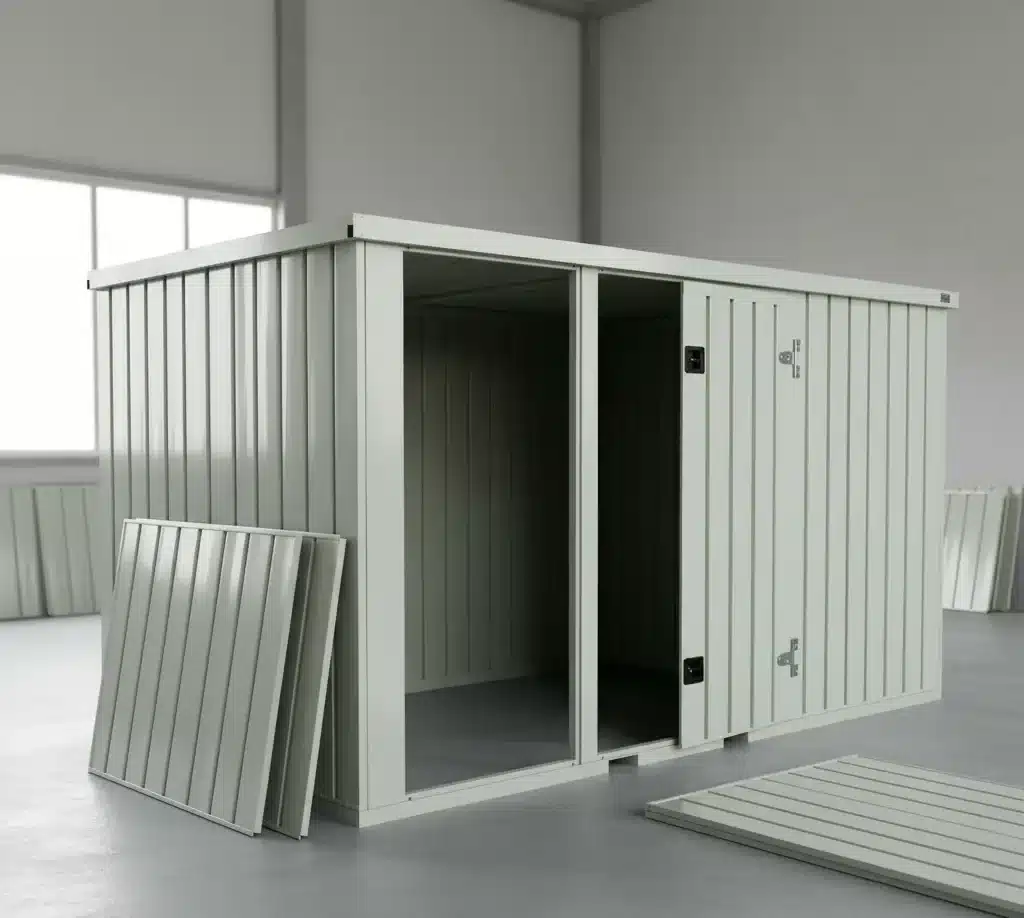
Self Assembly Storage Should Still Feel Durable
A unit that is easier to move
still has to perform once it is in place. That is one of the first practical concerns buyers have when comparing self-assembly storage with more traditional formats. The right answer is not a lighter-duty compromise. It is a storage format that combines easier transport with dependable performance.
That is why self assembly metal storage containers matter as both a keyword and a real buying concern.
Flatbox supports that need with
galvanized steel flat-pack units designed for durability, weather resistance, and repeatable deployment. Buyers get a more efficient shipping format without giving up the kind of secure, field-ready storage that operations teams depend on.
The result is a unit that is easier to move and still strong enough to support real-world daily use.
Easier Assembly Keeps Teams Focused on Operations
The strongest self-assembly storage systems do more than ship efficiently. They also reduce what the site has to wrestle with after delivery.
A practical assembly model helps teams:
get storage usable faster
reduce setup friction on site
avoid unnecessary scheduling drag
support cleaner site planning
add storage without turning deployment into a major event
That matters because time spent managing storage installation is still time pulled away from the rest of the operation. A better setup process helps operators move from delivery to usable space with less interruption. For multi-site programs, that advantage compounds. Every unit becomes easier to stage, easier to assemble, and easier to bring into service without slowing down the broader rollout.
That is where the self assembly shipping container angle becomes especially useful. Buyers are not just looking for a container category. They are looking for storage that is easier to ship, easier to assemble, and easier to integrate into active operations.
Repeatable Rollout Is the Real Long-Term Value
One fast setup is useful. A repeatable rollout is far more valuable.
This is where many storage purchases start to break down. One unit works at one site, but the next location needs different sizing, different options, different accessories, or a different ordering path. Procurement gets more complicated. Site teams lose consistency. Expansion becomes slower than it should be.
Flatbox is built to solve that problem directly.
Read More
The Build Your Rollout BOM process is designed around standardization. Buyers can define a rollout kit that includes:
- sizes
- options
- accessories
- site counts
- quantities
- regional delivery needs
That keeps future deployment cleaner because the specification is already organized. Instead of recreating the storage decision every time, teams can work from a format that already fits their needs and is easier to repeat across locations.
That matters for:
- multi-site operators
- facilities teams
- procurement groups
- jobsite programs
- self-storage operators
- field teams adding capacity in phases
The biggest gain is not simply faster assembly. It is a storage model that becomes easier to use again.
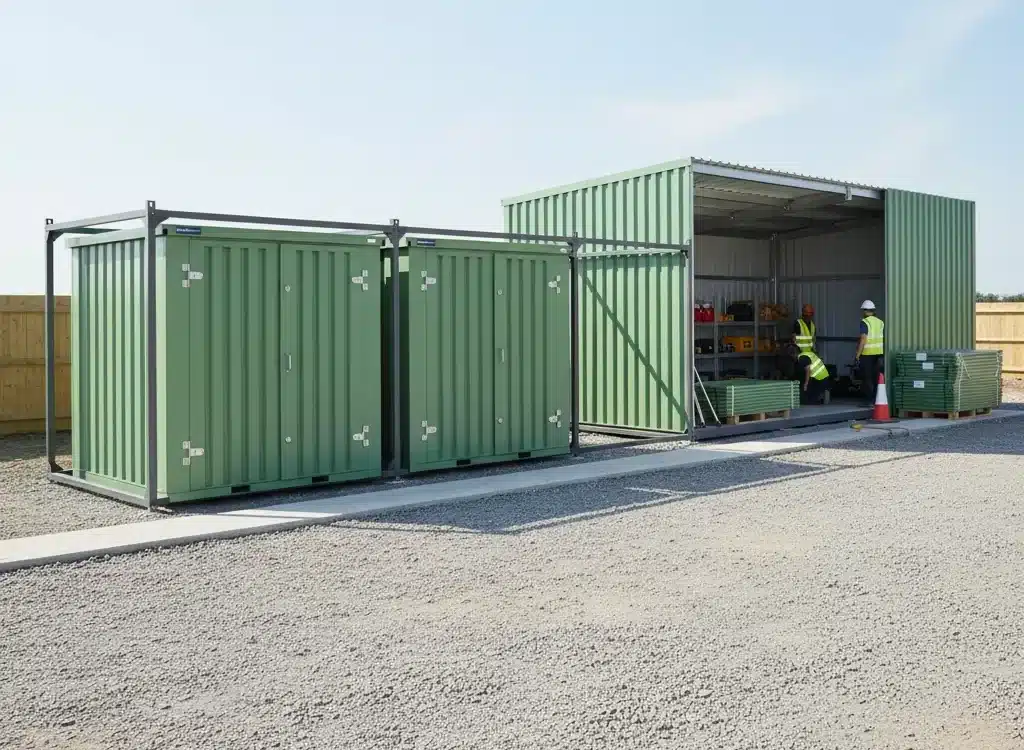
Less Freight Pressure Creates a Better Storage Decision
Freight is one of the biggest hidden problems in storage deployment.
Traditional units take up more transport space and can create inefficiency before they ever arrive. That is why flat-pack storage is such a strong fit for buyers who care about rollout efficiency as much as the product itself.
A stronger storage decision often means:
- more efficient transport
- easier site placement
- cleaner delivery planning
- less waste in rollout
- a format that scales better as more sites are added
Why Flatbox Is a Strong Fit
Buyers interested in self-assembly storage are usually solving for speed, transport efficiency, and repeatability at the same time.
They need:
- storage that ships more efficiently
- a unit that assembles cleanly on site
- durable metal construction
- a format that stays easier to repeat across locations
- a clearer path from planning to rollout
Flatbox supports that need with:
- galvanized steel flat-pack units
- standardized sizing and upgrade options
- a BOM flow built for multi-site rollout planning
- support across the United States, Canada, and Puerto Rico
- a logistics model built around cleaner deployment and repeat use
Self Assembly Storage Containers That Support Cleaner Rollout
The strongest self assembly storage containers are the ones that make the larger operation easier to manage.
That usually means:
- faster deployment with less freight friction
- durable performance through self assembly metal storage containers
- easier transport and planning through the self assembly shipping container model
- simpler on-site setup
- a repeatable standard across locations
- a cleaner path from site need to rollout-ready specification
Build Your Rollout BOM
A stronger self-assembly storage strategy should reduce freight drag, simplify deployment, and make future rollout easier to manage.
Flatbox helps operations teams plan standardized storage rollouts across the United States, Canada, and Puerto Rico.
Flatbox
Website: flatboxsolutions.com
Email: info@flatboxsolutions.com
Sales: sales@flatboxsolutions.com
Phone: 754-216-8553