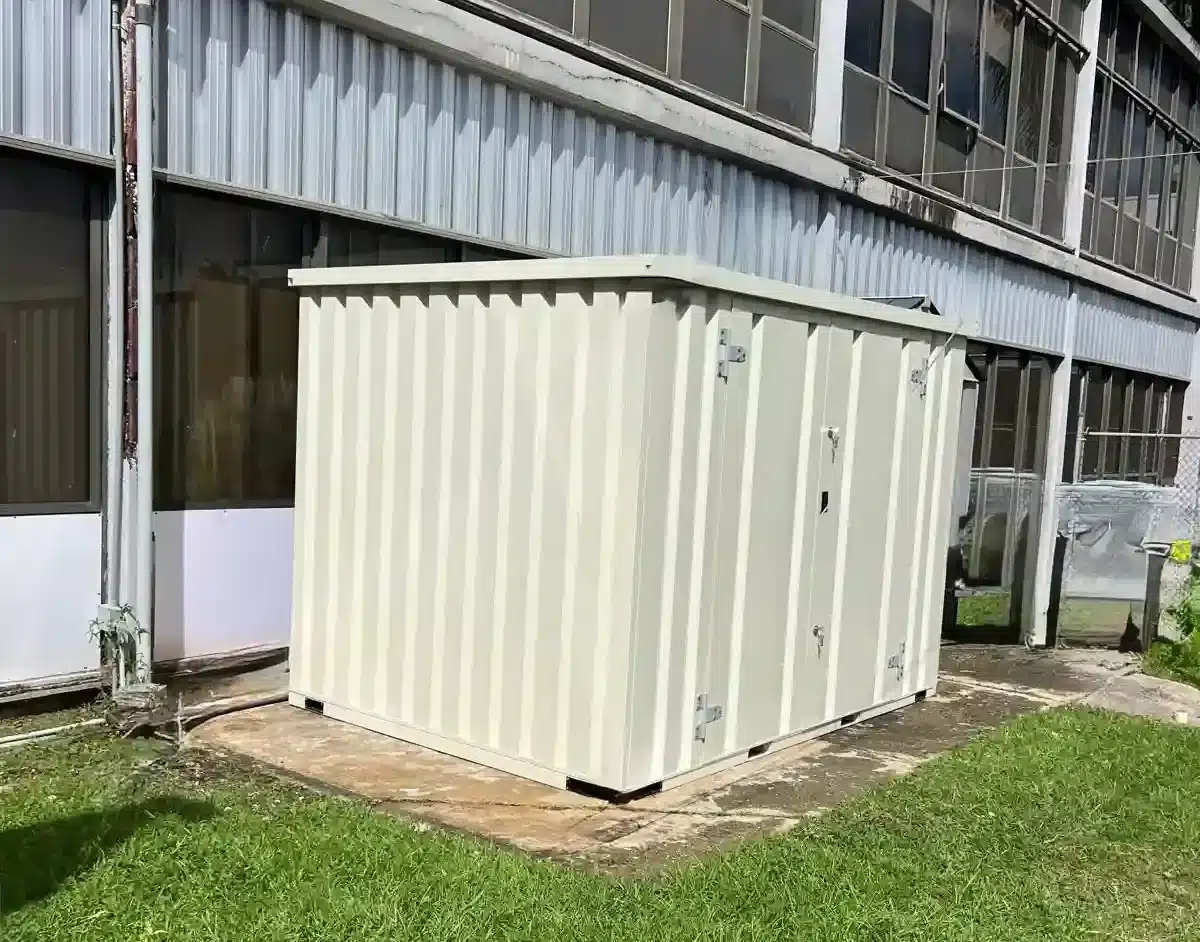
When Jobsite Boxes Are Too Small for the Way Your Crew Works
We build flat-pack steel storage units that help contractors secure tools, stage materials, organize supplies, and standardize jobsite storage across projects.
2-4 wk Build
2-4wk Ship
7 Sizes
US · CA · PR
A standard jobsite box has a clear purpose. It gives crews a lockable place to store tools, small equipment, hardware, and supplies close to the work area. For a smaller project or a single crew, that may be enough. But once the job grows, the storage problem changes. Materials arrive in phases. Multiple trades need access. PPE gets mixed with fasteners. Long stock has nowhere to go. Fixtures, tools, and supplies end up spread across trucks, trailers, temporary rooms, and small boxes that were never meant to hold everything.
Read More
That is when your team needs more than a lockable chest. We build flat-pack steel storage units for contractors and field teams that need larger, more organized, and more repeatable jobsite storage. Our units help crews secure tools, stage materials, protect supplies, and create a storage setup that can be used across active and upcoming projects.
If your team is comparing jobsite boxes for sale, we can help you move from small tool storage to an owned storage system built around the way your crews actually work.
Jobsite Boxes Work Until the Project Outgrows Them
A jobsite box can be a smart choice when the need is simple: protect tools, keep small equipment secure, and reduce clutter around the work area. The challenge comes when that same box is expected to handle a larger jobsite storage plan.
Active construction sites often need room for hand tools, power tools, batteries, safety gear, hardware, fixtures, parts, plans, conduit, pipe, lumber, fasteners, and phase-based materials. When too many categories are packed into one small space, organization breaks down quickly.
Crews spend time searching for items. Materials become harder to track. Supplies get reordered because no one can find what is already on-site. Tools are more likely to be misplaced when storage is crowded, shared, or poorly separated.
Read More
We help contractors solve the larger storage issue with flat-pack steel units that provide more usable capacity than a standard jobsite box. Instead of forcing every item into one chest, your team can plan storage by crew, trade, material type, or project phase.
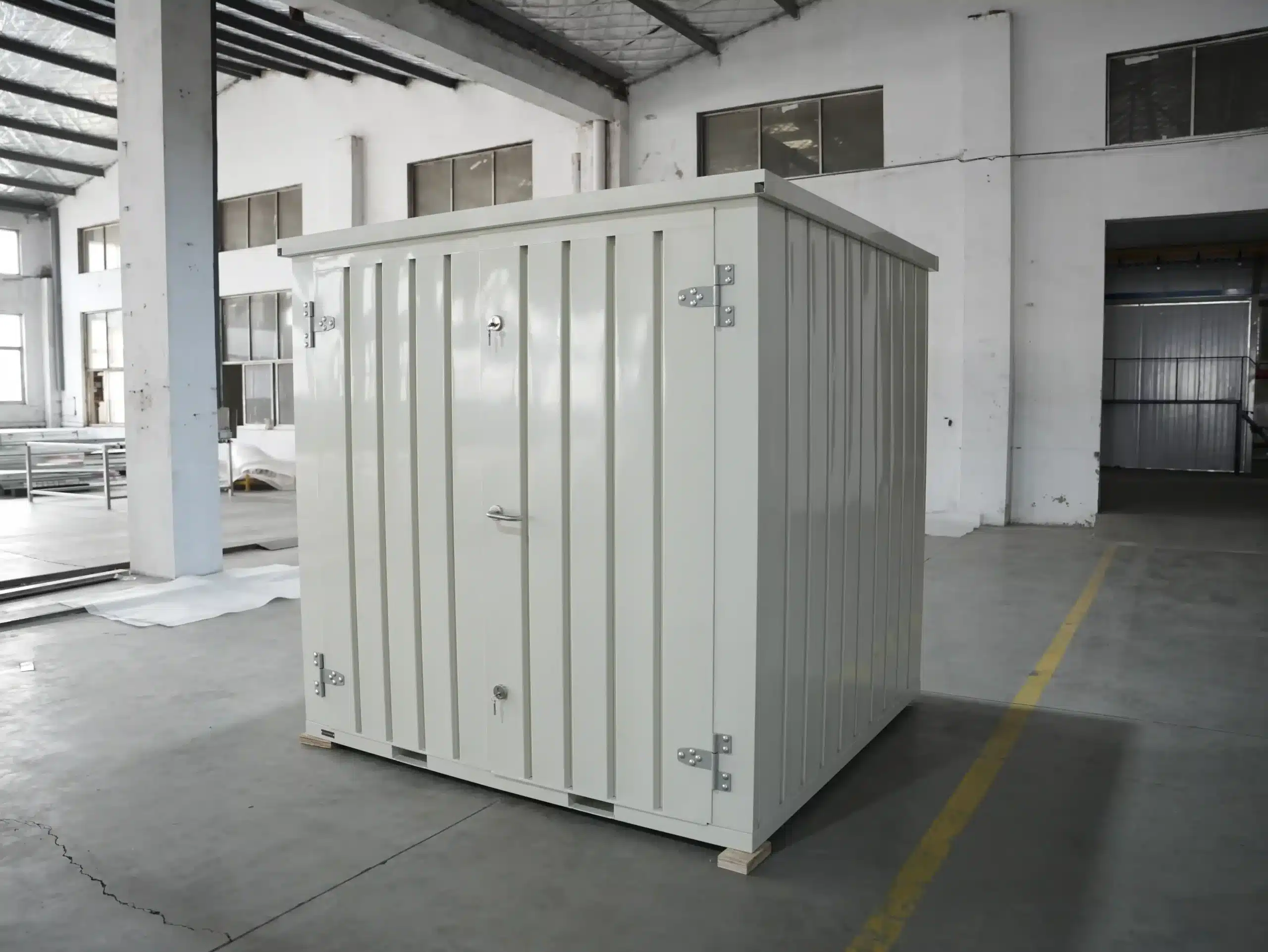
Better Jobsite Storage Protects More Than Tools
Tool security matters
but jobsite storage has to protect more than tools.
Materials, fixtures, PPE, parts, plans, and supplies all have value. When they are left exposed, stored loosely, or spread across multiple areas, the risk of loss, weather damage, duplicate purchases, and delay increases.
Our steel storage units are designed for outdoor jobsite use and active work environments. They give contractors a secure place to store the items crews rely on throughout the day while helping keep the site cleaner and easier to manage.
That matters when
the schedule is tight and several teams are working in the same space. Crews need access without digging through a crowded box. Site leads need a clearer way to stage materials by phase. Project managers need fewer one-off storage decisions as conditions change.
With Flatbox, storage becomes part of the project plan instead of a temporary workaround.
More Room for Materials, PPE, Fixtures, and Supplies
Many buyers searching for jobsite boxes for sale are looking for security, but the real need may be capacity.
A jobsite box may hold tools well, but it may not be the right fit for larger materials, bulk supplies, fixtures, pipe, conduit, equipment, or items that need to stay close to the work area. When crews start using trucks, corners of the site, borrowed rooms, or multiple small boxes to make up for limited storage, the setup becomes harder to manage.
Our flat-pack storage units give teams more room to work with. We offer multiple sizes so your team can choose a footprint that fits the site, crew size, and materials being stored.
A compact unit can support smaller jobsites or limited-access projects.
A larger unit can support material staging, equipment, parts, and multi-trade storage. When more capacity is needed, your team can plan multiple units or repeat the same setup across future projects. The goal is not just more space. The goal is storage that supports the work.
Organization Should Be Built Into the Storage Plan
A crowded jobsite box can become a catchall. Once that happens, storage stops helping and starts slowing crews down.
We help teams plan storage around access, separation, and workflow. Depending on the unit and project needs, available options can include shelving, pipe racks, secure locking upgrades, flooring upgrades, and linking kits.
Shelving can help separate smaller supplies, hardware, PPE, and replacement parts. Pipe racks can support conduit, pipe, and long materials. Locking options help control access. Flooring upgrades can support heavier use. Linking kits can help teams bank units together when additional capacity is needed.
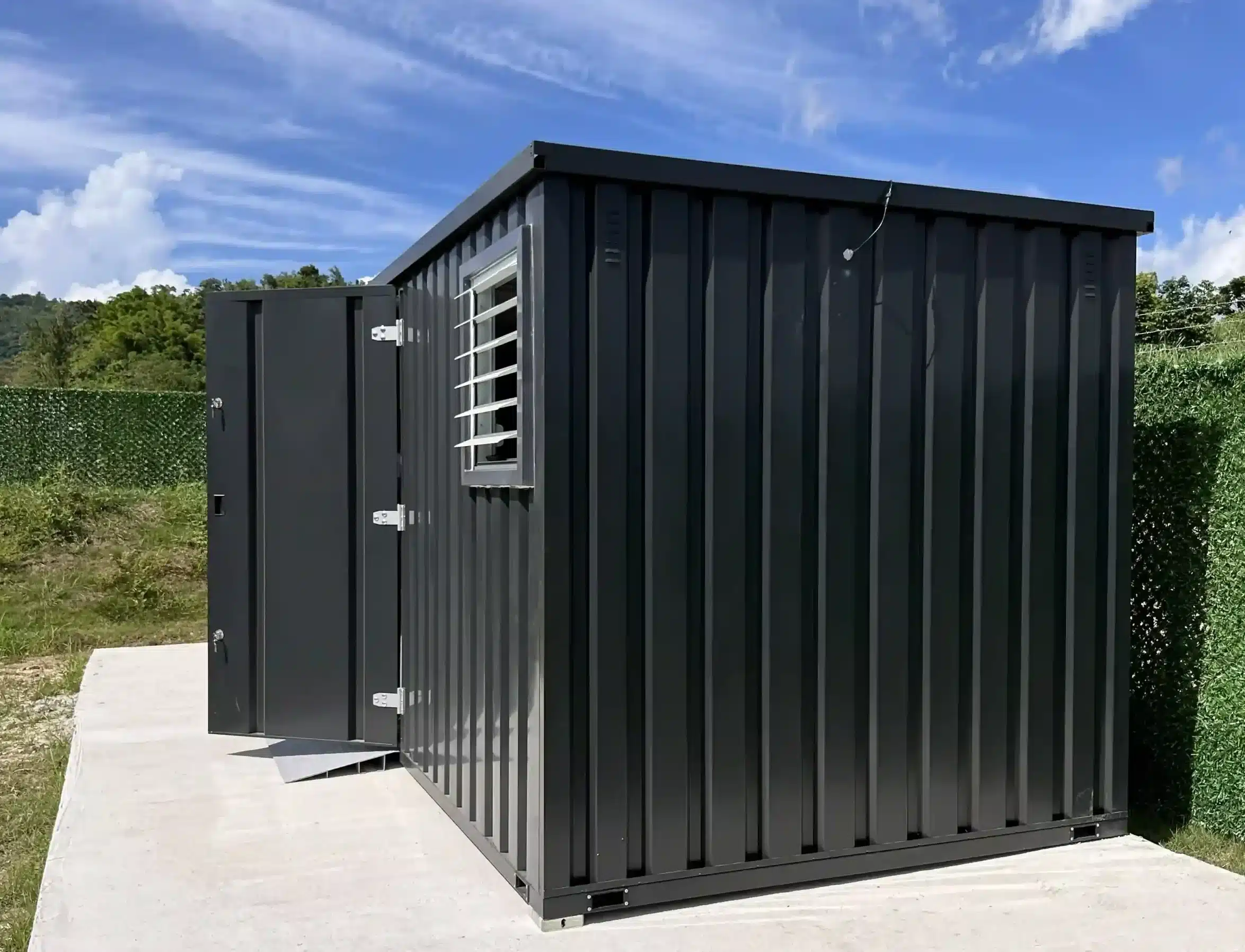
For contractors, that kind of organization can make daily work smoother. Crews know where materials belong. Site leads can keep supplies separated by phase or trade. Project managers get a more repeatable setup instead of a different storage workaround on every job.
Standardized Storage Helps Crews Stay Consistent
Storage decisions are often made project by project.
One job uses a few jobsite boxes. Another uses a rented container. Another buys a shed. Another relies on truck storage. Each choice may solve the immediate problem, but over time, the process becomes inconsistent.
Different projects end up with different storage sizes, locks, access methods, layouts, and habits. That creates more work for crews and managers. It also makes future planning harder because every job starts with a new storage decision.
We build flat-pack storage units around repeatable sizes and configurations. Once your team finds the setup that works, you can use it again across similar projects.
That consistency is useful for general contractors, regional builders, renovation teams, public-sector projects, franchise rollouts, industrial jobsites, and recurring service work. It helps crews understand the storage layout faster, helps procurement standardize purchases, and gives project managers a cleaner way to plan storage before work begins.
Built for Contractors and Active Worksites
Our storage units are built for teams that need storage where the work happens.
Contractors can use them for tools, fasteners, fixtures, PPE, equipment, and phase-based materials. Facilities teams can use them during renovations and maintenance projects. Industrial teams can use them for parts, safety gear, returns, and project supplies. Property teams can use them for repairs, seasonal work, landscaping, and construction support.
Each use case has different details, but the need is the same: durable storage that can be placed close to the work, organized for daily access, and reused when the next project begins.
Flat-pack deployment also supports teams that need practical storage across multiple locations. Instead of sourcing different storage options for every project, your team can build a repeatable setup with unit sizes and accessories that match how your crews work.
Jobsite Storage Across the United States, Canada, and Puerto Rico
Jobsite conditions vary by region, project type, and site layout. A dense urban project in the United States may have different storage needs than a facility upgrade in Canada or a deployment in Puerto Rico. Weather, access, delivery timing, and available space all matter.
We support teams planning jobsite storage across the United States, Canada, and Puerto Rico. Whether your team needs storage for one active project or a repeatable setup across multiple jobsites, we can help compare unit sizes, accessories, and deployment details before you order.
That planning helps reduce guesswork. Instead of choosing a jobsite box based only on what is available at the moment, your team can build storage around what needs to be protected, where it will be placed, who needs access, and how often the setup will be reused.
When to Move Beyond a Standard Jobsite Box
Traditional jobsite boxes can still be useful. They are practical for small tools, compact storage needs, and simple projects. But when your crew needs more space, stronger organization, and a repeatable storage setup, a flat-pack steel storage unit may be the better fit.
Our units are worth considering when you need:
- More storage capacity for tools, materials, PPE, fixtures, equipment, and supplies.
- Secure outdoor storage for active construction sites and field projects.
- Better organization with shelving, racks, locking options, and storage accessories.
- Repeatable layouts for crews, trades, project phases, and future jobsites.
- Owned storage instead of one-off purchases or temporary workarounds.
- Deployment planning across the United States, Canada, and Puerto Rico.
Build Jobsite Storage Around the Way Your Crew Works
When your team searches for jobsite boxes, the first goal is usually security. The larger goal is productivity. You want tools protected, materials organized, supplies easy to access, and crews focused on the work instead of searching for what they need.
We help contractors move from small job boxes to a more complete jobsite storage system.
Our flat-pack steel storage units give teams a practical way to secure tools, stage materials, organize supplies, and standardize storage across projects. With multiple unit sizes, useful accessories, and rollout planning, we can help your team build a setup that supports the way your crews actually work.