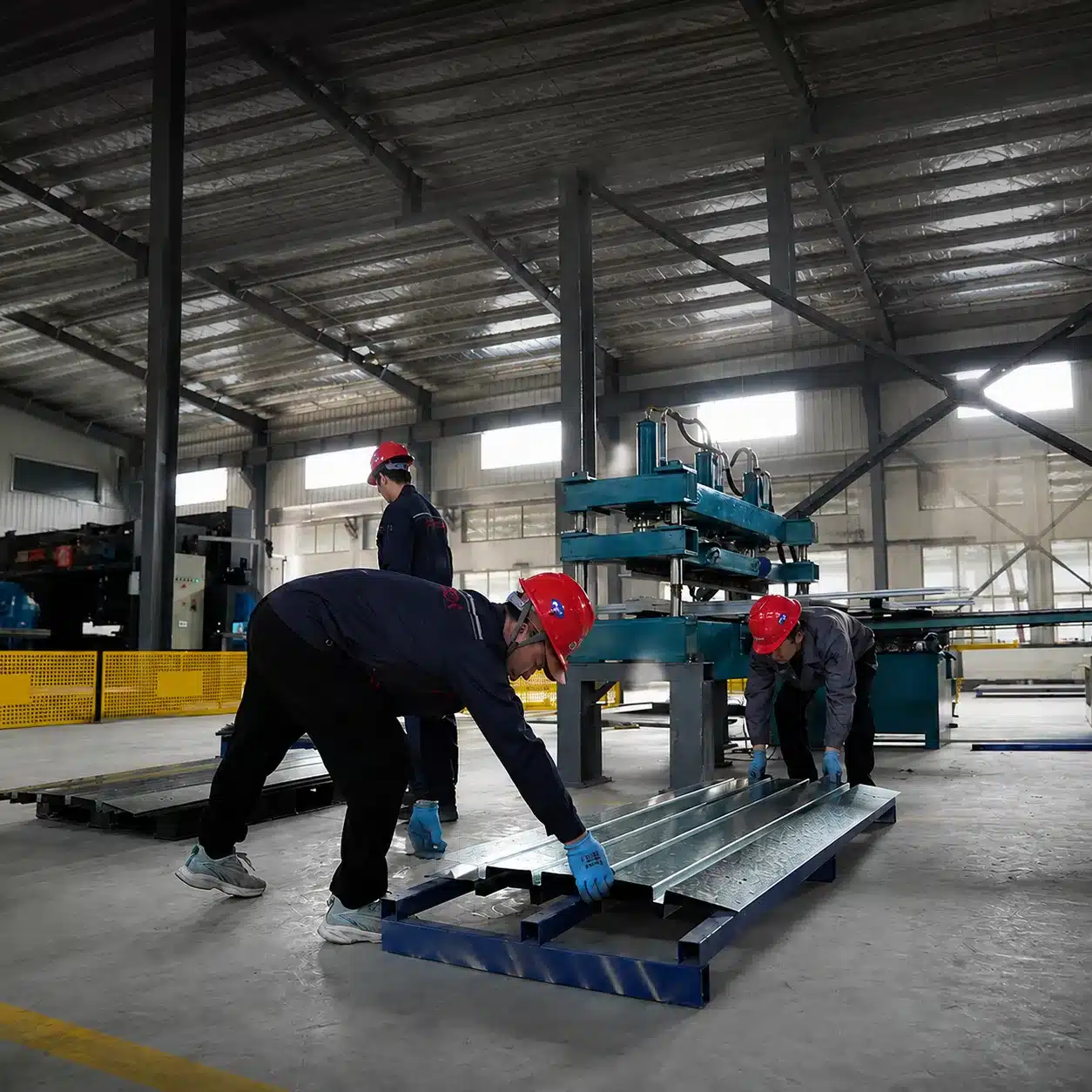
Flat Pack Containers for Sale With Clear Specs Before You Buy
We help procurement, facilities, and multi-site teams compare flat-pack container sizes, accessories, delivery needs, and rollout options before ordering.
2-4 wk Build
2-4wk Ship
7 Sizes
US · CA · PR
Buying a container should not feel like guesswork. When your team searches for flat pack containers for sale, you are likely comparing more than product photos. You may need to understand available sizes, storage capacity, locking options, accessories, delivery requirements, assembly needs, and whether the same unit can be used across more than one site.
Read More
That matters for procurement teams, facilities managers, contractors, warehouse operators, property teams, campuses, and multi-site organizations. A container may look like a simple purchase, but once it becomes part of daily operations, every detail matters.
The right flat-pack container should fit the site, protect what is stored, support daily access, and make future ordering easier. The wrong choice can create clutter, inconsistent specs, delivery issues, and extra work for every location.
We build flat-pack steel containers for teams that need secure, practical, repeatable storage and deployment planning. If your team is comparing flat pack storage containers for sale or researching flat packed shipping containers, we can help you choose the right unit, accessories, and rollout path before you order.
A Clearer Way to Buy Flat-Pack Containers
Many container searches lead to product listings with limited context. You may see size names, price ranges, shipping notes, assembly claims, or wholesale language, but not always enough information to understand how the container will work at your site. Procurement teams need more than a catalog. They need to know how the unit will be used, where it will be placed, how it will be secured, and whether it can be repeated across facilities, jobsites, yards, campuses, or properties. We help teams approach the purchase as a storage plan.
That starts with the intended use. Are you storing tools, parts, PPE, equipment, supplies, materials, inventory, tenant items, or maintenance gear? Will one department use the unit, or will several teams need access? Does the site need one open compartment or separate lockable bays? Is this for one location, or will the same setup be repeated across multiple sites?
Those answers help shape the right purchase.
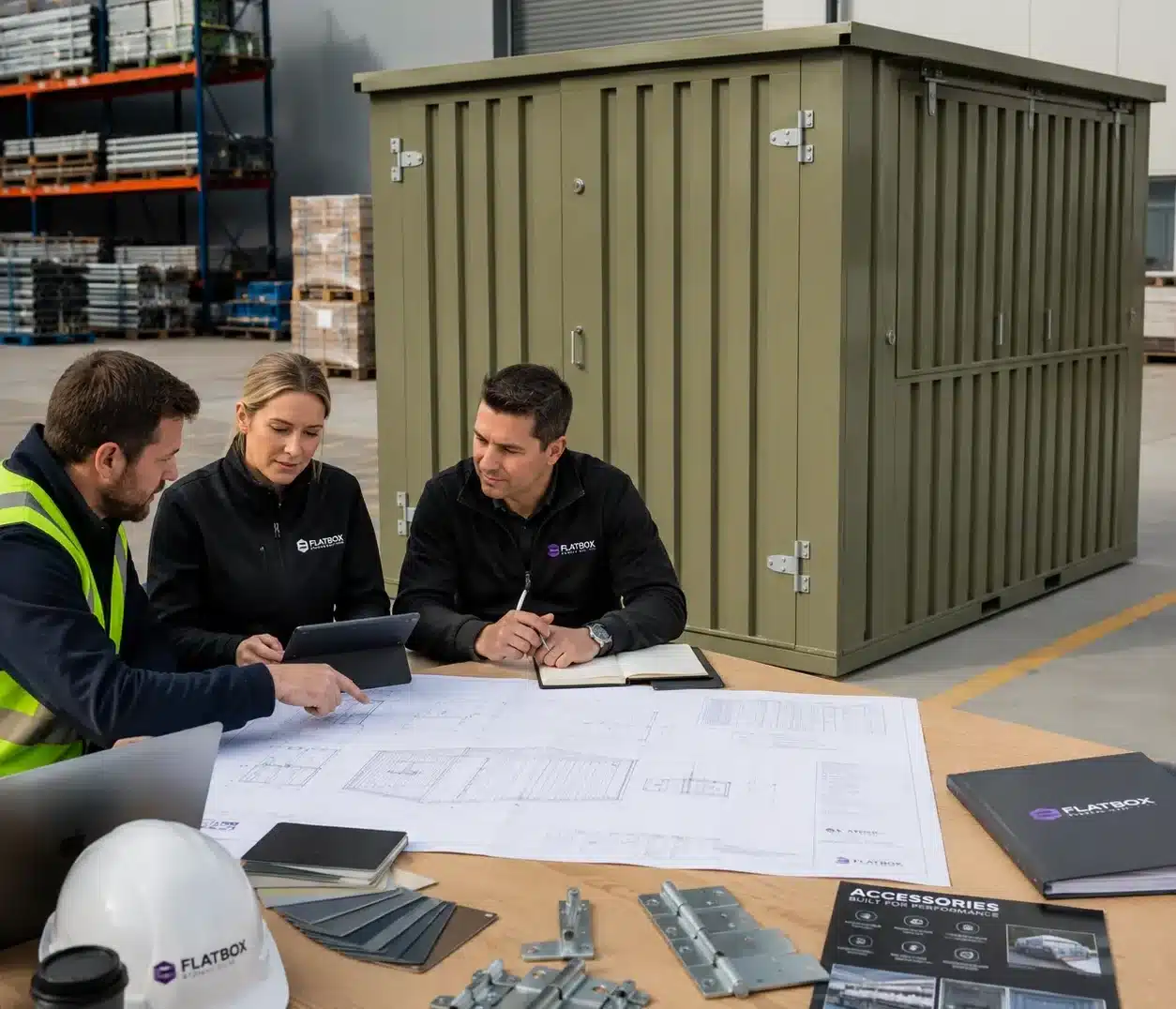
Flat-Pack Storage Containers for Commercial Use
A flat-pack storage container should support real work.
For facilities teams, that may mean tools, filters, spare parts, cleaning supplies, PPE, event materials, and seasonal inventory. For contractors, it may mean jobsite tools, fixtures, fasteners, materials, and phase-based supplies. For warehouses, it may mean overflow inventory, returns, dock-adjacent supplies, parts, or temporary project storage. For property teams, it may mean landscaping equipment, maintenance supplies, resident support, or shared-site storage.
We build flat-pack steel storage units for commercial use, outdoor placement, and repeat deployment.
Our storage lineup gives teams
multiple size options, from compact units for tighter spaces to larger units for broader operational storage. A smaller unit may work well for a maintenance area, service corridor, compact jobsite, or back-of-house location. A larger unit may support equipment, warehouse overflow, construction materials, property operations, or multi-department storage.
The goal is to buy storage that fits how your team works, not just a container that fits a price point.
When Flat-Pack Containers Make More Sense Than Shipping Containers
Traditional shipping containers can be useful, but they are not always the right fit for every site.
A full-size container may be difficult to deliver, place, or coordinate around tight facilities, active jobsites, campuses, warehouse yards, retail properties, or service areas. Some teams need storage close to the work but do not have the access, space, or delivery conditions required for a traditional container.
Flat-pack containers give teams another option. Because they ship compactly and are assembled on-site, they can help simplify storage planning where access, freight, placement, or repeat deployment matters. For multi-site teams, the flat-pack format can also support a more consistent storage model.
Instead of every location sourcing a different container, your team can work from repeatable unit sizes, accessory packages, and deployment expectations.
That makes flat-pack storage useful when storage is part of a broader operational plan.
Standardized Specs for Multi-Site Purchasing
One container purchase can solve a short-term problem. Multiple inconsistent purchases can create a long-term one.
A site manager buys one type of storage unit. Another location orders a different container. Another team adds a shed. Another rents a temporary box. Over time, the storage system becomes harder to manage.
Different sizes. Different locks. Different accessories. Different delivery timelines. Different maintenance needs. Different replacement cycles.
We help teams reduce that inconsistency.
Our flat-pack containers are built around standardized configurations so procurement and operations teams can plan repeatable purchases. Once your team identifies the right unit size, layout, accessories, and placement approach, that setup can be used again across additional locations.
Accessories That Make Storage Easier to Use
The container itself is only part of the decision.
A storage unit works better when the inside stays organized and access is controlled. Without the right layout, tools get mixed with parts, PPE gets buried behind supplies, long materials take over the floor, and crews lose time searching for what they need.
We help teams plan accessories as part of the purchase.
Available options may include shelving, pipe racks, secure locking upgrades, flooring upgrades, linking kits, insulation, anti-condensation spray, color options, and flexible door placement depending on the model and order details.
Shelving can help keep tools, parts, and supplies off the floor. Pipe racks can support conduit, pipe, lumber, and other long materials. Locking options can help control access. Flooring upgrades can support daily use. Linking kits can help teams bank multiple units together when more storage capacity is needed.
When you are comparing flat pack storage containers for sale, accessories should be part of the buying decision, not an afterthought.
Product Options for Different Storage Needs
We support several flat-pack container formats.
For most buyers, storage units are the starting point. These are designed for tools, equipment, materials, inventory, maintenance supplies, and general site-based storage.
For buyers who need separate access, multi-compartment units can create individual lockable bays within a single footprint. These can be useful for self-storage operators, property teams, campuses, events, departments, crews, or shared-site storage needs.
For teams that need customer-facing or service-oriented space, kiosk units may support ticketing, pickup, retail, security, information points, or event operations.
For teams that need a compact work area, office units may support jobsite coordination, field administration, guard stations, utility work, campus operations, or emergency response.
This gives procurement and operations teams a practical way to compare flat-pack containers by use case, not just by size.
Delivery, Placement, and Assembly Planning
Before ordering, your team should know how the unit will reach the site and where it will go.
Active facilities, warehouse yards, campuses, jobsites, public works sites, and property portfolios often have placement constraints. There may be limited receiving windows, tight service lanes, active vehicle flow, equipment movement, shared loading areas, or safety requirements.
We help teams plan those details early.
A flat-pack container purchase should account for unit size, site access, placement area, assembly needs, locking requirements, accessories, and future rollout plans. That planning can reduce surprises and help your team choose a setup that fits the site before the order is placed.
For single-site buyers, this creates a smoother purchase path. For multi-site buyers, it helps create a repeatable deployment model.
When Flat Pack Containers for Sale Are the Right Fit
Flat-pack containers may be a strong fit when your team needs:
- Owned storage instead of temporary rental containers or one-off local purchases.
- Commercial-grade storage for tools, equipment, supplies, materials, PPE, inventory, or site operations.
- Practical delivery planning for active sites, limited access areas, or multi-location rollouts.
- Organized layouts with shelving, pipe racks, locking options, flooring upgrades, and accessories.
- Repeatable specs for facilities, warehouses, jobsites, campuses, properties, yards, or service locations.
- Flat packed shipping container alternatives that can support storage without relying on traditional full-size container delivery.
Build a Smarter Purchase Plan
When your team searches for flat pack containers for sale, the real question is not just which unit is available.
The better question is which unit will work for your site, your team, your storage needs, and your future locations.
We help teams compare those details before ordering. Our flat-pack steel containers give procurement, facilities, and multi-site teams a practical way to buy storage with clearer specs, useful accessories, and rollout planning from the start.
If your team is ready to compare sizes, accessories, locking options, delivery needs, placement details, or multi-site pricing, we can help you build the next step.