Interior shelving can keep smaller parts and supplies visible.


We provide secure steel construction storage containers in multiple sizes to keep tools, equipment, and materials protected, organized, and close to active work.
Construction sites rarely stand still. Materials arrive, crews move between phases, equipment shifts, access routes change, and available space gets tighter as the project advances. Storage has to keep up without becoming another obstacle.
We design our construction storage containers around that reality.
Our flat-pack steel units give us a practical way to keep suitable tools, equipment, materials, and supplies secure and accessible on site. With multiple sizes and configurable options, we can match storage more closely to the project footprint, crew workflow, and intended use.
For one project, that can mean better control and less wasted movement. Across recurring work, it can become a repeatable storage standard that simplifies future planning.
Our core flat pack storage unit lineup is available in 7 sizes from 3.5′ to 19′. All units feature a 7.5′ width, galvanized steel construction, and a powder-coated finish for secure, standardized commercial storage.
3.5' x 7.5'
1m x 2.29m
Our most compact storage solution, perfect for tight spaces while providing superior protection and reliability.
Residential, Small spaces
5' x 7.5'
1.5m x 2.29m
Compact yet spacious container engineered for durability, versatility, and long-lasting performance.
7' x 7.5'
2m x 2.29m
Popular residential size offering excellent storage capacity with a manageable footprint.
Residential, HOA communities
10' x 7.5'
3m x 2.29m
Versatile mid-size unit that balances capacity with footprint. Perfect for contractors and job sites.
Contractors, Job sites
13' x 7.5'
4m x 2.29m
Extended capacity unit offering more space while maintaining easy transport. Great for equipment dealers.
Equipment dealers, Retail
16' x 7.5’.
5m x 2.29m
Large capacity storage for demanding applications. Ideal for industrial operations and property management.
Industrial, Property management
19' x 7.5’.
6m x 2.29m
Our largest single-compartment storage unit, providing maximum capacity for commercial and industrial needs.
Industrial, Large-scale storage
Once tools and purchased materials reach the jobsite, they need a defined place to stay between uses. Scattered storage can expose valuable items to weather, repeated handling, unauthorized access, and unnecessary movement. It can also make it harder for crews to find what they need when schedules are already tight. We start with the storage requirement itself.
Our units use galvanized/galvalume steel panels, corrugated profiles, protective powder-coated finishes, and secure locking options. Depending on the application, we can also configure units with flooring choices, insulation, and anti-condensation treatment.
That gives us a practical way to match the unit to the intended use instead of treating every project as though it needs the same specification.
Some building materials have manufacturer-specific requirements for temperature, ventilation, moisture, separation, or handling. We account for those requirements rather than assuming a standard enclosed unit is appropriate for every material.
The goal is simple: keep suitable tools and materials protected, controlled, and ready when the work calls for them.
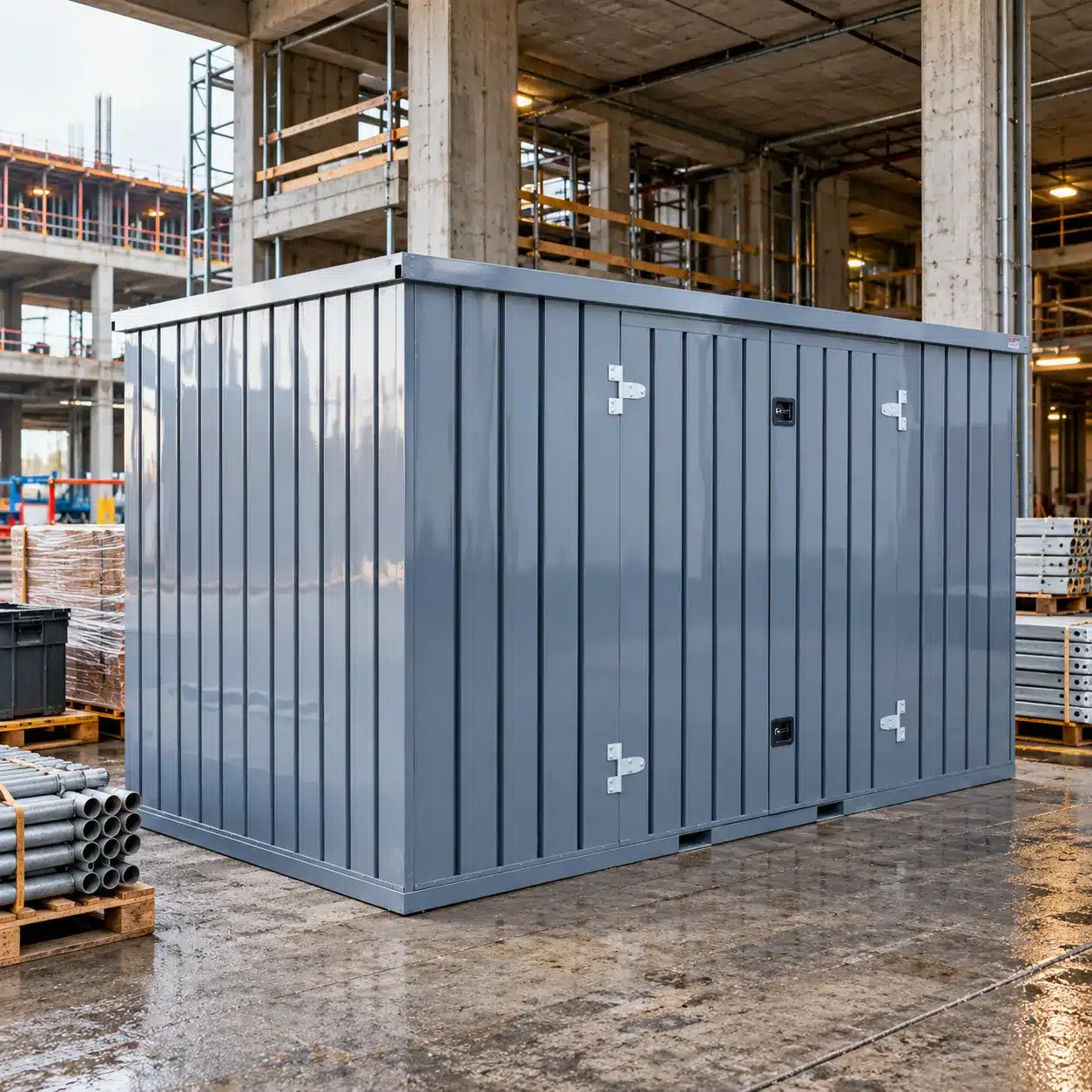
Secure storage matters, but organization matters too.
Crews need fast access to tools, fasteners, fittings, consumables, long materials, and equipment without searching through mixed inventory or moving unrelated items out of the way.
We can configure storage around that workflow.
Interior shelving can keep smaller parts and supplies visible.
Pipe racks can provide a defined place for long stock.
Multi-compartment configurations can help separate inventory by crew, trade, workstream, or project phase.
Secure access options can also help keep higher-value items separated from general supplies.
That creates a clearer storage environment.
Frequently used items can remain easier to reach.
Materials for later phases can stay organized without interfering with current work.
Separate storage zones can also help crews maintain clearer accountability for tools and supplies.
Our construction site storage containers are built to support the work, not force the work to adapt around disorganized storage.
Every square foot on a construction site has a job. Deliveries, equipment, staging areas, excavation, access routes, temporary facilities, subcontractors, and future phases all compete for space. Storage needs to stay close enough to be useful without blocking the operation.
We offer units in 3.5′, 5′, 7′, 10′, 13′, 16′, and 19′ lengths, giving us several ways to match storage capacity to the available footprint.
A compact unit can support a specific crew, trade, material group, or constrained area. Larger units can support broader project inventory. Multiple standardized units can also be arranged into an organized storage bank where site conditions allow. Available door-placement options give us additional flexibility when planning access. Forklift pockets support handling where suitable equipment and site conditions are available. Linking options can support multi-unit configurations when the project calls for them.
We consider storage capacity, access, traffic flow, placement, security, and project phasing together.
That helps us keep storage near the work without letting storage get in the way of the work.
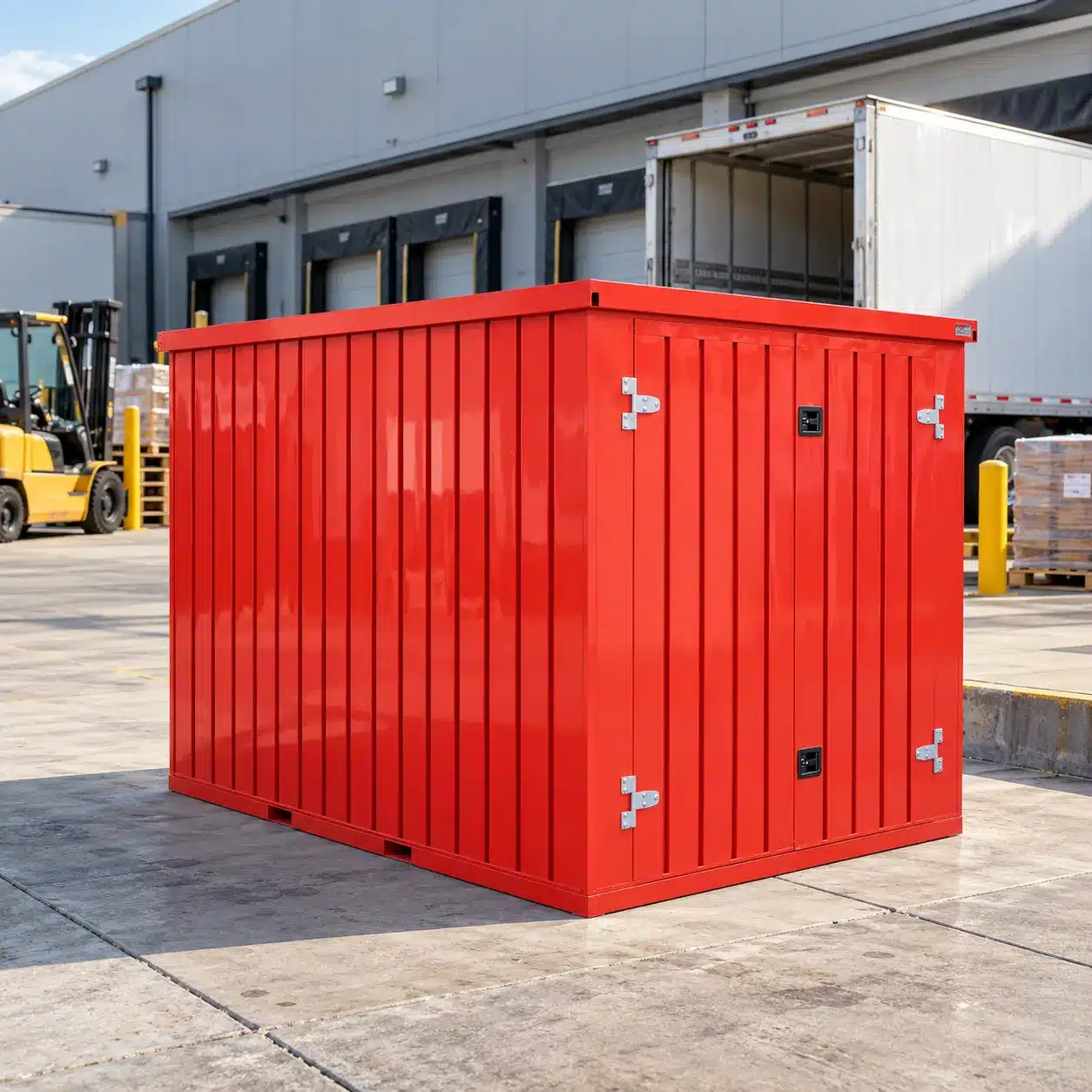
The right setup starts with the requirement, not the product list.
We look at what needs to be stored, how much space it requires, how often crews need access, the available site footprint, and how the project is expected to change.
From there, we can define an appropriate mix of unit sizes and options.
Our available configurations can include interior and exterior shelving, pipe racks, secure locking options, flooring choices, insulation, anti-condensation treatment, flexible door placement, linking kits, and multi-compartment layouts.
We keep the specification practical. We select the features that support the storage requirement, crew workflow, security needs, and site conditions.
That gives us the consistency of a standardized product range with enough flexibility to build a storage setup around the project.
Construction storage is easier to manage when we plan it before the site is under pressure.
We can define unit sizes, quantities, configuration requirements, access needs, and intended placement before delivery. That creates a clearer basis for assembly, delivery, and site coordination.
The practical details matter.
We can plan around where units will be positioned, which direction doors should face, what access is needed for delivery and placement, which areas must remain clear for future work, and whether one crew or several workstreams need separate storage.
Planning those details early helps keep storage from becoming a last-minute problem.
Build and delivery requirements vary by order and destination, so we work from the needs of the specific project rather than relying on a generic schedule.
We sell our storage units for owned deployment rather than rental.
Rental can make sense for a short-term or isolated need. Ownership offers another model when storage will support recurring projects, ongoing operations, or a steady pipeline of work.
Once we identify a configuration that works well, we can help standardize it for future use.
That can include preferred unit sizes, shelving layouts, pipe racks, locks, flooring, and door configurations. When one project ends, the storage asset can remain part of the broader equipment plan instead of disappearing with a rental period.
For recurring work, that creates an opportunity to reuse what works instead of rebuilding the storage decision from zero on every project.
A useful storage setup becomes more valuable when it can be repeated.
For multi-project construction programs, we can use a proven configuration as the starting point for future jobs. Individual sites may still require different quantities, placements, or accessories, but the underlying specification can remain familiar.
Our process can stay consistent:
define what needs protection → select the right sizes → organize the interior → plan placement → coordinate delivery → refine the specification for future use
Our storage containers for construction support that approach because the product range is standardized while the final configuration remains flexible.
That gives us a practical path from a one-project storage purchase to a repeatable construction storage program.
We support commercial construction storage programs across the United States, Canada, and Puerto Rico.
Whether we are planning storage for one active jobsite or building a repeatable specification across multiple projects, we can coordinate unit selection and configuration around the requirements of each deployment.
Our standardized product range gives us a consistent starting point while allowing sizes, quantities, accessories, and layouts to reflect the site.
We can solve the storage requirement in front of us while building a system that remains useful on the next project.
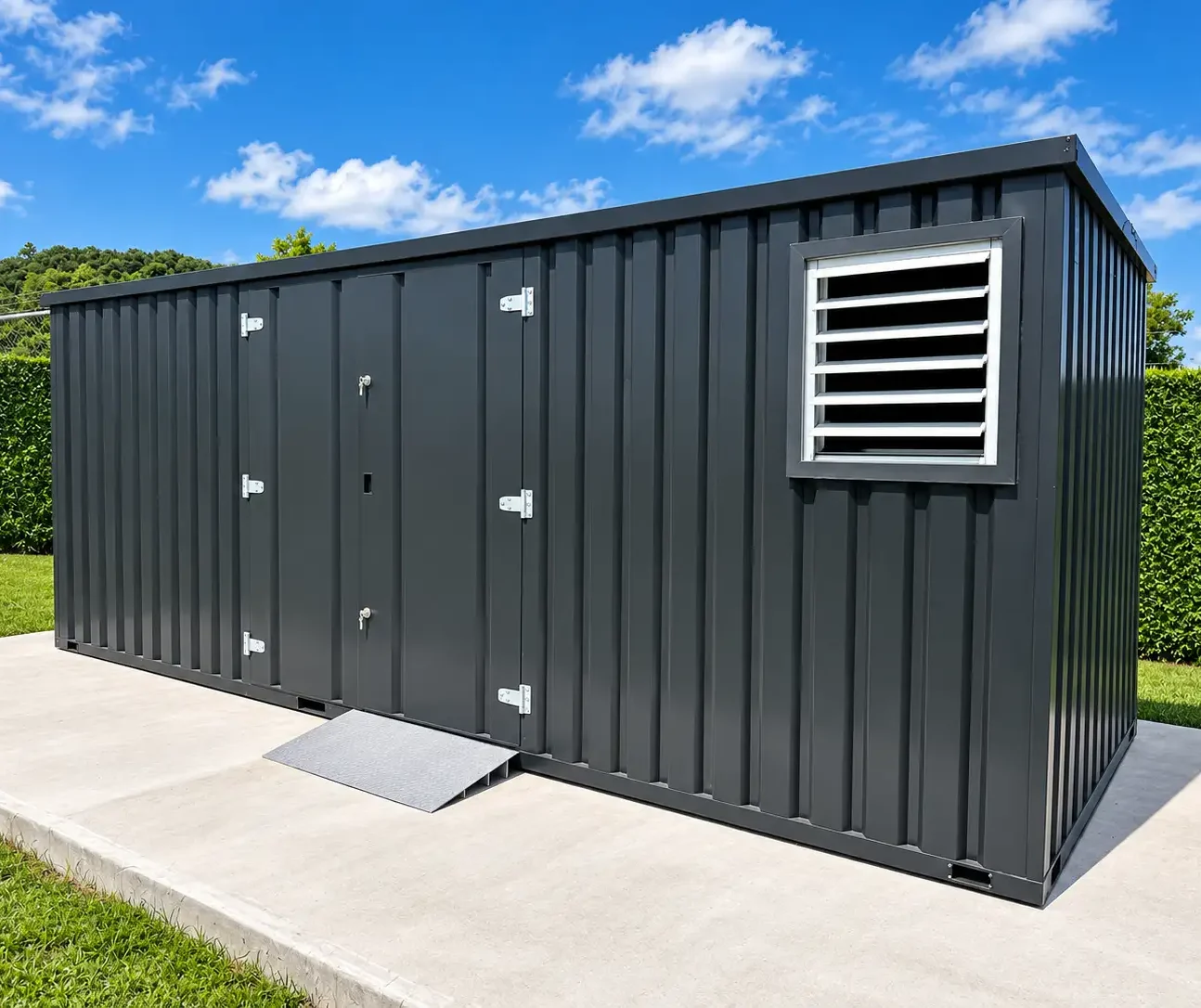
If we know what needs to be stored, the available footprint, and the general project requirements, we can start defining the right combination of units and configurations.
Define unit sizes, quantities, and configuration requirements.
Work through storage needs before finalizing the unit mix.
Match storage capacity and unit footprints to available site space.
Compare shelving, pipe racks, locking options, flooring, insulation, anti-condensation treatment, and other available configurations.
Plan deployment around the specific project, order, and destination.
Build a consistent storage approach for recurring projects and multiple locations.