Flat Pack Metal Storage Containers Built for More Efficient Deployment
We supply secure steel storage in a compact flat-pack format, with seven available lengths and configurable options that help us plan transportation, site access, assembly, and repeat deployment with fewer compromises.
Secure storage should solve an operational problem, not create a logistics problem before it reaches the site.
When we need storage for tools, inventory, materials, equipment, PPE, maintenance supplies, or other commercial uses, the real decision goes beyond the purchase price. Transportation, access, placement, assembly, security, and repeat ordering all affect how well the storage works once it is deployed.
Our
flat pack metal storage containers
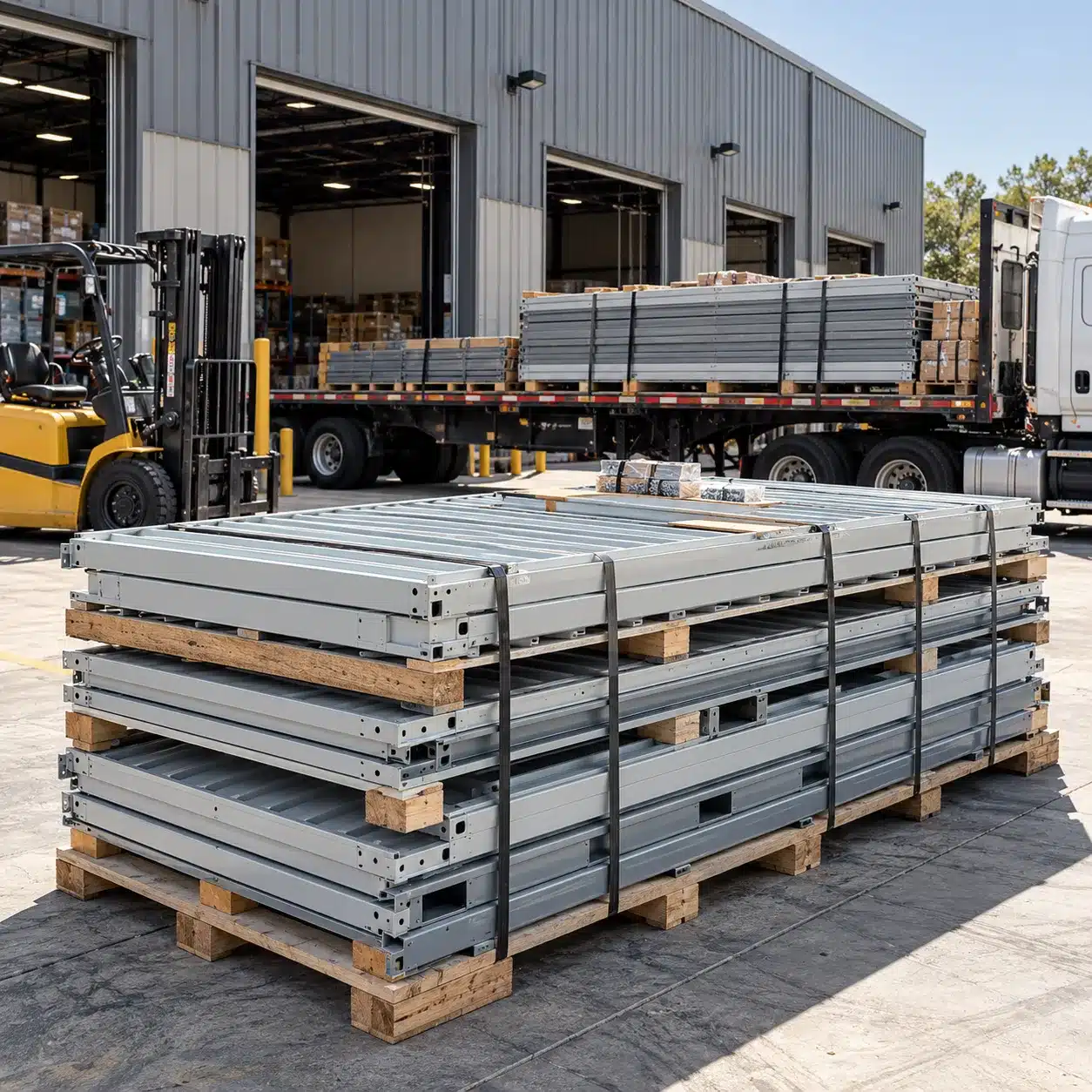
give us a practical way to manage those variables together. We ship the units in a flat-pack format, then assemble them into secure steel storage at the point of use. That format can help us plan around tighter sites, multiple-unit orders, and repeat deployments more effectively than starting with a single large, fully assembled footprint.
With seven standardized lengths and a range of available accessories, we can build a storage specification around the application, then use that specification again when another site needs capacity.
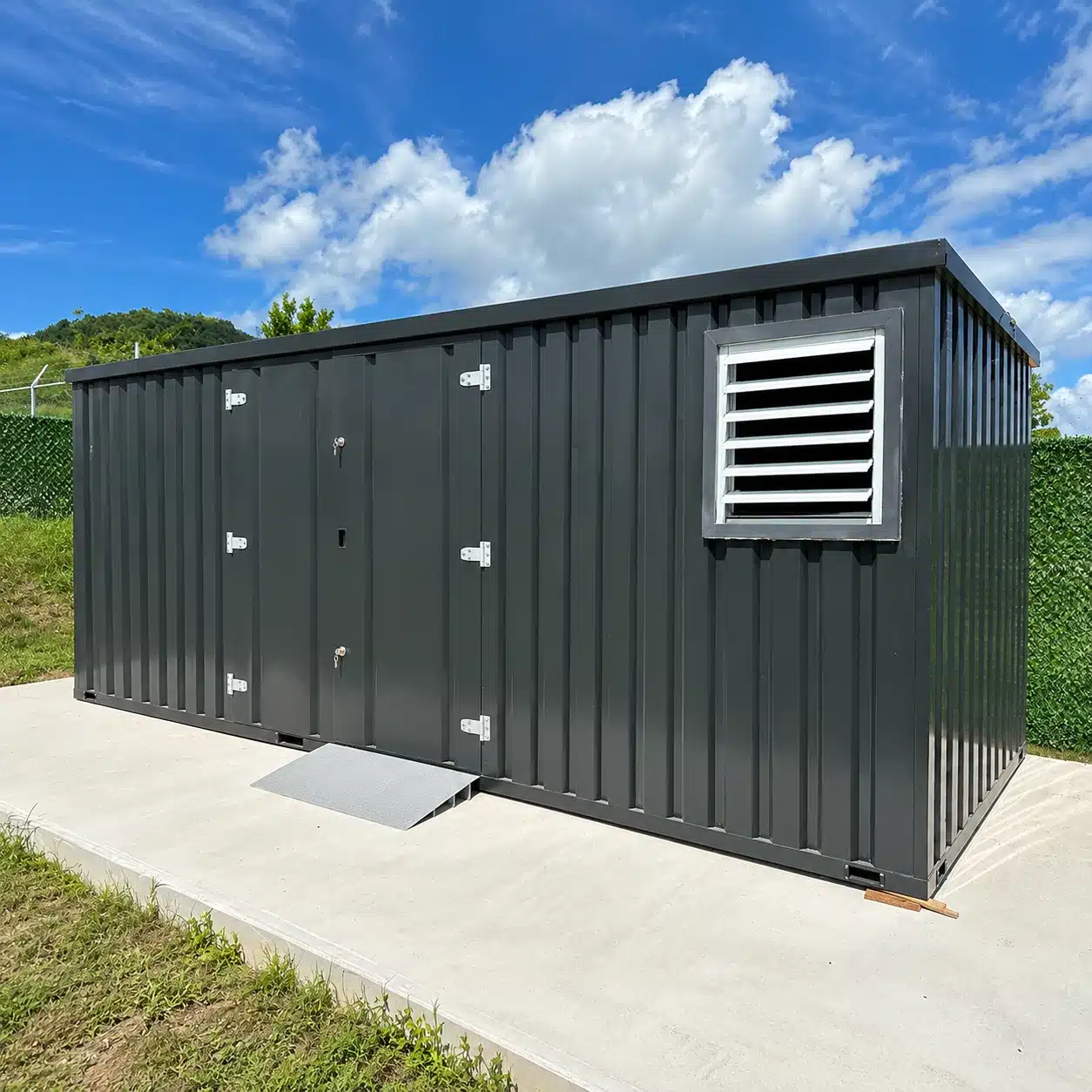
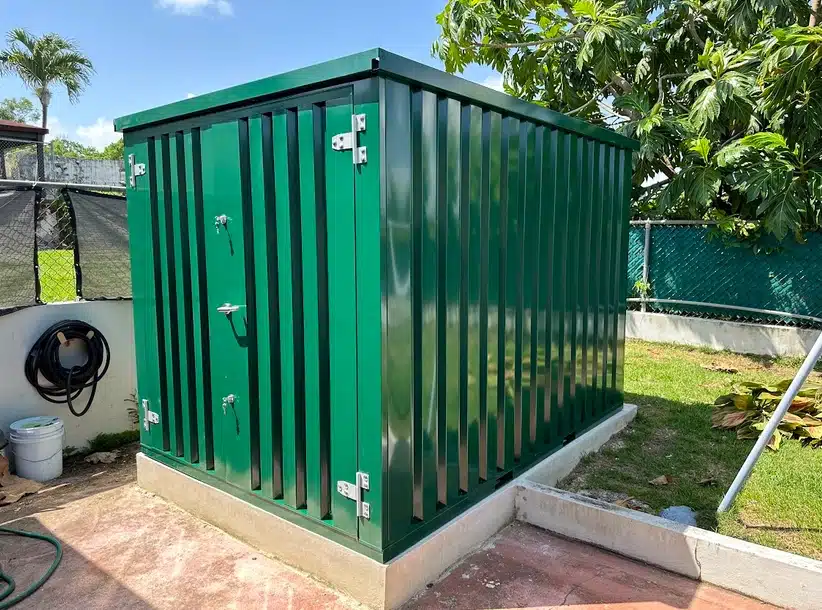
Our core flat pack storage unit lineup is available in 7 sizes from 3.5′ to 19′. All units feature a 7.5′ width, galvanized steel construction, and a powder-coated finish for secure, standardized commercial storage.
The cost of a storage unit is only part of the total deployment.
We also need to account for how the unit will travel, how much space the shipment requires, where the components will be unloaded, how the unit will be assembled, and where it will sit once it is ready for use.
Our flat-pack format gives us more flexibility when those logistics matter. Instead of designing the purchase around one conventional container size, we can select quantities and footprints that reflect the actual storage requirement.
That is particularly useful when we are coordinating several units or planning storage across multiple facilities, projects, or operating locations.
Freight economics vary by destination, quantity, order mix, and deployment plan, so we plan around the actual order rather than a generic percentage-saving claim. That gives us a clearer way to evaluate the complete storage requirement from purchase through placement.
Not every location needs the same amount of storage, and not every site can accommodate the same footprint.
We offer flat pack metal storage containers in 3.5', 5', 7', 10', 13', 16', and 19' lengths. That range gives us several ways to match storage capacity to available space while keeping the product family consistent.
3.5'5'7'10'13'16'19'
A smaller unit may support tools, maintenance supplies, PPE, parts, or a specific department. Larger units can support broader inventory, equipment, or material requirements. Where site conditions allow, we can also plan multiple units together to create a larger organized storage area.
Available door-placement options give us more flexibility when access needs to face a particular direction. Forklift pockets support handling where suitable equipment and site conditions are available.
Before we select a size, we consider what needs to be stored, how frequently it will be accessed, the available footprint, movement around the unit, and the equipment available on site.
Flat pack describes how our units are transported and deployed. It does not mean we have to compromise the purpose of the finished storage unit.
Our flat pack steel storage containers use galvanized/galvalume steel panels with corrugated profiles and protective powder-coated finishes. We also offer secure locking options and flooring choices to support different commercial storage requirements.
That matters when we are comparing flat pack steel containers with other storage formats. Transportation may be part of the advantage, but the finished unit still needs to protect the tools, parts, supplies, inventory, or equipment placed inside it. We can also incorporate insulation and anti-condensation treatment where those options are appropriate for the application.
We keep the specification tied to the actual contents. Some products and materials have manufacturer, regulatory, temperature, humidity, ventilation, separation, or handling requirements. We do not assume a standard enclosed steel unit is suitable for every item. We plan the configuration around the intended use and site conditions.
The right container size is only one part of a useful storage setup.
We can configure our units with interior and exterior shelving, diagonal pipe racks, pipe racks with shelves, flooring choices, linking kits, service windows where applicable, and multiple locking options.
Multi-compartment configurations can also help us separate storage by crew, department, project, inventory class, or access requirement.
That lets us create more than an empty enclosure. We can build storage around the way materials and teams actually need to work.
One operation may need clearly organized maintenance parts. Another may need secure tool storage. Another may need long-material racks, compartmentalized access, or a repeatable combination of shelving and locks.
By selecting those requirements before ordering, we can create a configuration that is easier to specify, purchase, deploy, and reorder.
Plan Delivery, Assembly, and Placement Before the Order Arrives
A flat-pack format works best when delivery, assembly, and placement are treated as one connected process.
We can define unit sizes, quantities, options, intended placement, access requirements, and available handling equipment before delivery.
Our storage units are supplied with the required hardware kit and assembly guidance, with manual and video support available for assembly. Build and delivery requirements vary by unit, order size, destination, and site conditions, so we work from a project-specific plan rather than a fixed timing promise.
That planning helps us resolve practical questions early.
We can determine where the units will be assembled, where they will sit afterward, which direction the doors should face, what access must remain clear, whether the ground or base is suitable, and what equipment will be used for handling.
When several units are involved, we can also plan how they will be positioned, linked, or organized before they reach the site.
We sell our storage units for owned deployment rather than rental.
That can be a strong fit when the storage requirement is ongoing, recurring, or likely to be repeated across locations. Rental may still make sense for a short, isolated need, but ownership gives us another option when storage is intended to remain part of the operation or support a longer-term deployment standard.
Once we know which size and configuration work, we can retain that specification for future requirements.
That can include preferred unit lengths, lock types, shelving packages, flooring, door placement, and other accessories.
Instead of treating each new storage need as a separate sourcing exercise, we can build from a configuration we already understand.
Standardize Flat Pack Steel Containers Across Multiple Sites
Repeatability becomes especially valuable when we are supporting several facilities, projects, dealers, properties, or operating regions.
We can establish preferred flat pack steel container configurations and use them as a common starting point for future orders.
One site may require five units while another needs twenty. One may need shelving, while another needs pipe racks or compartmentalized access. The quantity and final configuration can change without abandoning the core product standard.
That gives our procurement and operations teams a clearer way to manage recurring storage requirements.
Our process stays straightforward:
define the requirement → select the sizes → choose the configuration → plan delivery and assembly → deploy the units → carry the successful specification forward
That allows us to turn individual storage purchases into a more consistent approach across multiple locations.
Flat Pack Metal Storage Containers Across the United States, Canada, and Puerto Rico
We support commercial storage deployments across the United States, Canada, and Puerto Rico.
Whether we are planning a single location or a broader rollout, we can help define the right combination of unit sizes, configurations, accessories, and delivery requirements.
Our standardized product range gives us a consistent starting point, while our available options let us adapt the final setup around the intended use.
That balance helps us provide secure steel storage without turning every new site into a completely different product decision.
If we know what needs to be stored, how much capacity is required, where the units will be placed, and how the storage will be used, we can begin defining the right setup.
01
Build Your Storage Unit BOM
Define unit sizes, quantities, and configuration requirements.