

Large Industrial Storage Containers for Franchise Operations
Standardized large industrial storage containers and kiosk structures for franchise retail, QSR, wireless, and auto service teams that need faster approvals, repeatable specs, and a cleaner rollout system across locations.
Why Standardized Storage Matters for Franchise Rollouts
Franchise calendars run on fixed launch dates, remodel waves, and seasonal activations across multiple markets. This page shows how Flatbox Solutions supports franchise development and field teams with large industrial storage containers and kiosk options that are easier to stage, faster to deploy, and more consistent from site to site.
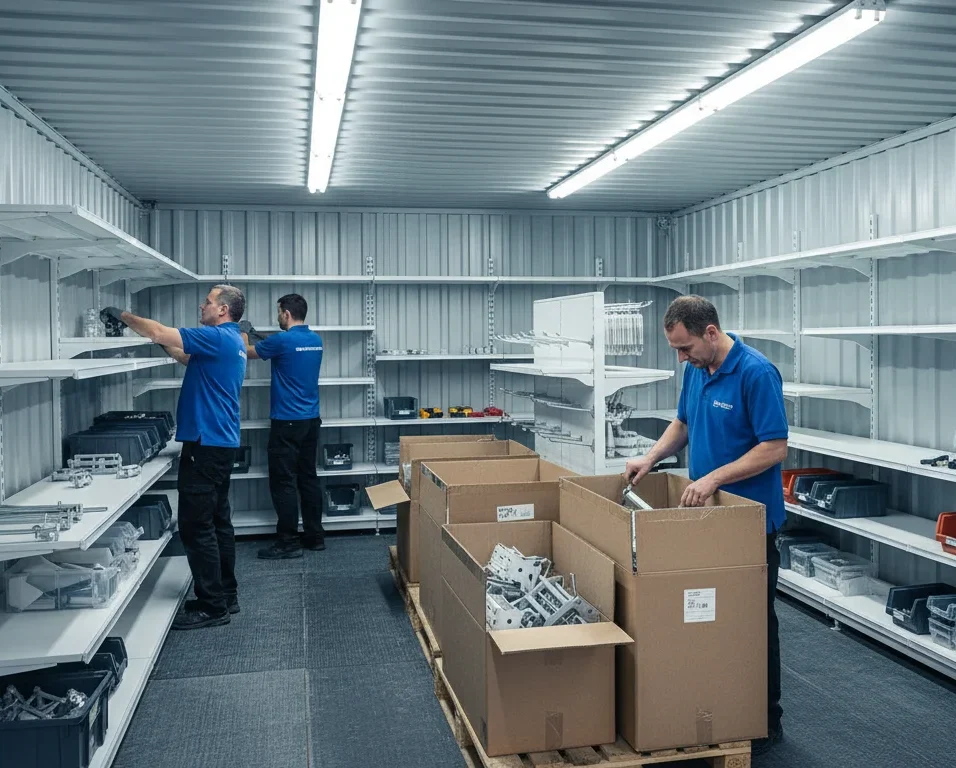
What This Means for Franchise Rollouts
When teams search for large industrial storage containers, they often find shipping containers or generic warehouse storage. That is not the fit here. Flatbox Solutions provides standardized, flat pack steel units built for franchise retail, QSR, wireless, and auto service environments where rollout speed, consistent specs, and brand presentation matter.
Flat-pack logistics
reduce truckloads and fit constrained receiving windows.
Forklift pockets
and marked lift points make placement precise and repeatable.
Powder-coated interior/exterior
keeps the kit looking professional over time
Modular banking
creates tidy rows in standard parking stalls or BOH zones.
Accessory ecosystem
shelving, pipe racks, diamond plate floors, insulation/anti-condensation—tunes each kit to the job.
Whether you need staging storage for remodels, fixtures, and equipment resets or a BOPIS kiosk with adjacent storage, this is a standardized approach built for multi-site franchise operations.
Why Franchise Teams Choose Standardized Rollout Storage
Set-Week Discipline
Get a clear Lead-Time & Delivery Plan with a combined 4–6 week manufacturing and delivery window, organized by region so rollout waves stay on schedule and field teams can plan with confidence.
Footprints That Fit
Use storage and kiosk units that fit standard parking layouts, back-of-house zones, and tighter retail sites with a clean stage → assemble → anchor → load accessories → decal sequence.
Security and Consistency
Standardized steel units, locking hardware, organized interiors, and optional flooring upgrades give operations and loss prevention teams a repeatable setup they can approve once and use across markets.
Brand-Right Presence
Keep rollout storage looking intentional with standard RAL colors, cleaner finishes, and consistent presentation across franchise retail, QSR, wireless, and auto service locations.
From Program Plan to Set Week
1) Choose your rollout jobs
Remodel / refresh staging for fixtures, signage, and smallwares
BOPIS / curbside activation with a curbside pickup kiosk for order handoff
Seasonal overstock near the customer zone or receiving
Warranty / recall campaigns (auto service) with pipe-rack storage
Promo / brand activations where kiosk + storage form a neat pop-up footprint
2) Standardize your program SKUs
Lock your size mix—10′, 13′, 16′, 19′ for large industrial storage containers, plus 7′ or 10′ where space is tight. Confirm RAL color, door orientation/count, lock hardware, shelving/pipe racks, diamond plate upgrades, and insulation/anti-condensation where climate demands it. We memorialize your choices in a Program Spec, so every store or bay receives identical components.
3) Get your dated windows
Share store counts, target set weeks, and unit volumes. We return a Lead-Time & Delivery Plan with a combined 4–6 week manufacturing and delivery window so rollout waves stay organized and site disruption stays lower.
4) Install with a clear playbook
Crews follow the same steps at each location—stage, assemble, anchor, load, decal—supported by ADA/egress offsets, queue diagrams, and safety notes tailored to active sites. Franchisees and GCs don’t need to make it up as they go.
Specifications franchise teams care about
Construction
powder-coated steel in/out; weather-resistant panel system; standardized lock options
Handling
integrated forklift pockets; clearly marked lift points
Sizes
3.5′, 5′, 7′, 10′, 13′, 16′, 19′; kiosk and office formats share the same design language
Options
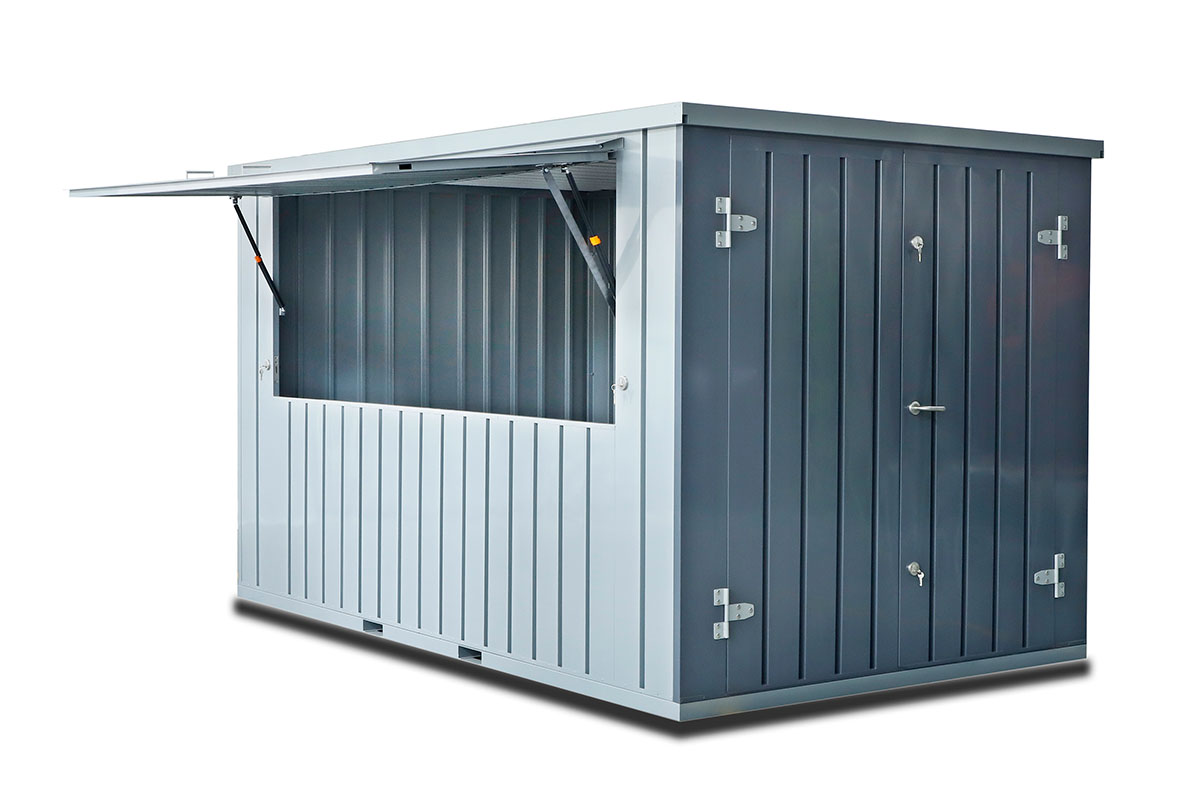
RAL color standards, door orientation/quantity, shelving systems, pipe racks, diamond plate floors, insulation/anti-condensation kits, service window (kiosk)
Layout
bankable modules for stall fit, BOH walls, and drive-thru/curbside zones
Documentation
Specifier Package with CAD, spacing diagrams, anchoring guidance, and O&M notes
Pair Storage With a Curbside Pickup Kiosk
A curbside pickup kiosk gives franchise teams a staffed, weather-ready handoff point for pickup, returns, or customer service. Paired with adjacent large industrial storage containers, the setup keeps staged orders, promo materials, and back-of-house supplies organized without disrupting customer flow.
- Queue diagrams for single-stall and double-stall layouts
- Signage and decal zones for more consistent brand presentation
- Lighting and sightline guidance for clearer daytime and evening handoff
- Drive-thru and back-of-house layout options for tighter sites and shared lots
Because the kiosk and storage units share the same chassis language, finish standards, and hardware options, the footprint feels consistent and easier to repeat across franchise locations.
Example Franchise Rollout Kits
Remodel Staging Kit Large Format
(6) 13′ storage with shelving and lock standard
(2) 16′ storage with diamond plate floors
(2) 10′ storage for odd BOH zones
Placement diagrams: phased layouts (Week 0–1 / 2–3 / 4–5) to avoid lane closures
Use when: stores need secure, movable staging during resets and overnight work.
BOPIS Activation Kit Curbside
(1) curbside pickup kiosk (service window)
(2) 10′ storage with shelving for staged orders
Queue templates for single-stall or double-stall flow; decal zones included
Use when: omnichannel volume requires clear curbside handoffs for set-week promotions.
Auto Service Campaign Kit — Bay & Yard
(3) 16′ storage with pipe racks and lock standard
(2) 10′ storage with shelving for small parts and warranty components
Anti-condensation on 50% of units; diamond plate on high-traffic floors
Use when: you need clean staging for recall parts, tires, or warranty swaps across rooftops.
Seasonal Overstock Kit Mid Footprint
(4) 13′ storage banked in two stalls
(2) 10′ storage near receiving for returns triage
Signage zones and a tidy labeling scheme for quick internal audits
Use when: holiday peaks or promo cycles push BOH beyond capacity.
Access, Flow, and Approvals Across Franchise Locations
Parking lot and back-of-house templates. Standard parking-stall layouts, queue lanes, ADA and egress offsets, and sightline guidance help franchise teams add storage or kiosk capacity without disrupting customer flow.
After-hours placement. Many franchise sites need overnight installs. Flat pack units and a shorter on-site assembly sequence fit tighter installation windows with less disruption to surrounding operations.
Moisture & finish planning
Options for insulation, anti-condensation, and corrosion-aware finishes help franchise programs align units to coastal, desert, snow-belt, and other regional conditions.
Safety and Site Sign-Off
Supporting documents can include anchoring guidance, placement notes, and rollout checklists that help franchise teams coordinate with landlords, contractors, and local site stakeholders.
Role-by-Role Benefits for Franchise Teams
Franchise Development:
A repeatable program spec helps support faster approvals and more consistent rollout execution across owner-operators and markets.
Field and Store Operations:
A footprint that arrives on time, assembles efficiently, and fits cleaner into active store environments.
Omnichannel and Last-Mile:
A BOPIS kiosk and adjacent storage help create a more predictable handoff setup for pickup, returns, and staged orders.
Facilities and Construction:
Phased layouts, anchoring guidance, and clearer install steps help reduce disruption during overnight work and remodel waves.
Loss Prevention:
Standardized lock options, organized interiors, and more intentional placement help improve control and reduce avoidable loss.
Procurement:
Multi-site pricing tied to standardized SKUs helps simplify budgets, reorders, and rollout consistency across locations.
Why Franchise Teams Do Not Use Repurposed Shipping Containers
Franchise rollout teams need storage and kiosk units built for set-week execution, customer-facing environments, and repeatable placement. That is why large industrial storage containers in this program are designed for retail, QSR, wireless, and auto service rollouts rather than freight transport.
- Rollout purpose: Built for remodel staging, seasonal storage, curbside activation, and franchise operations
- Access and usability: Doors, locks, and interiors designed for frequent on-site access and organized daily use
- Modular placement: Banks neatly in parking stalls, back-of-house zones, and tighter retail footprints
- Accessory integration: Shelving, pipe racks, and flooring upgrades fit into a standardized rollout spec
- Receiving and staging: Flat pack delivery supports tighter site access and more controlled rollout staging
- Supporting documents: Placement guidance and rollout documentation help teams standardize installs across locations
Regional Delivery approach
United States
Clustered partials by DMA keep waves moving with minimal dock conflict. Northern markets can front-load to clear weather windows.
Canada
Cross-border documentation and province-clustered routing (Ontario, Alberta, British Columbia) reduce idle time between installs.
Puerto Rico
Transit plans account for port schedules and local staging; deliveries are sequenced to reduce fees and align with after-hours work.
Frequently Asked Questions for Franchise Rollouts
How much crew time should we plan?
Ranges depend on size mix and substrate. The Specifier Package includes typical hour ranges so field leaders can schedule accurately.
Do we need permits for stall-banked units?
Local rules vary by center and municipality. The package includes egress/ADA spacing, anchoring options, and finish specs; share it early with landlord reps and local authorities.
Can we relocate units mid-season or after a campaign?
Yes. Units include forklift pockets and re-anchoring notes; banks can move without damaging surfaces.
What about condensation or long-wave durability?
Add insulation/anti-condensation and use the recommended operating practices (door cycles/venting) by climate. Coastal and snow-belt finish notes are available.
Can we wrap or brand the kiosk and banks?
Yes. Decal zones and color standards are provided so brand teams can apply graphics consistently.
The Guided Quote for Franchise Rollouts
- List markets and counts. Share DMAs, rooftop counts, and target set weeks.
- Select rollout kits. Choose remodel, BOPIS, seasonal, or auto service programs and adjust counts by market.
- Confirm finishes and locks. Approve RAL colors, door orientation, and lock hardware standards.
- Receive pricing and plan. Review itemized SKUs, accessory pricing, regional freight estimates, and a combined 4–6 week manufacturing and delivery window.
- Finalize cadence. Organize rollout waves by DMA and add after-hours placement where needed.
- Kick off. Teams receive dates, placement guides, and install checklists.