

Industrial Storage Containers for Active Sites and Yards
Standardized industrial storage containers for manufacturing, warehouse operations, 3PL sites, and yard teams that need secure storage, cleaner site organization, and a more efficient delivery footprint across locations.
4-6 wk Build
4-6 wk Ship
7 Sizes
3 Regions
Standardize Throughput Across Sites
Industrial operations and 3PLs run on throughput. When volumes spike or projects stack up, yard space, dock lanes, and staging areas get constrained fast.
Flatbox Solutions provides industrial storage containers designed for high-velocity environments—units that arrive compact, assemble quickly, and bank cleanly to keep lanes open and operations moving.
Replace ad hoc storage with a standardized set of program SKUs—sizes, finishes, locks, and accessory kits—so procurement, EHS, and site teams operate from the same playbook across every facility.
When storage is standardized, throughput stays predictable—even at peak.
What “industrial storage containers” actually means
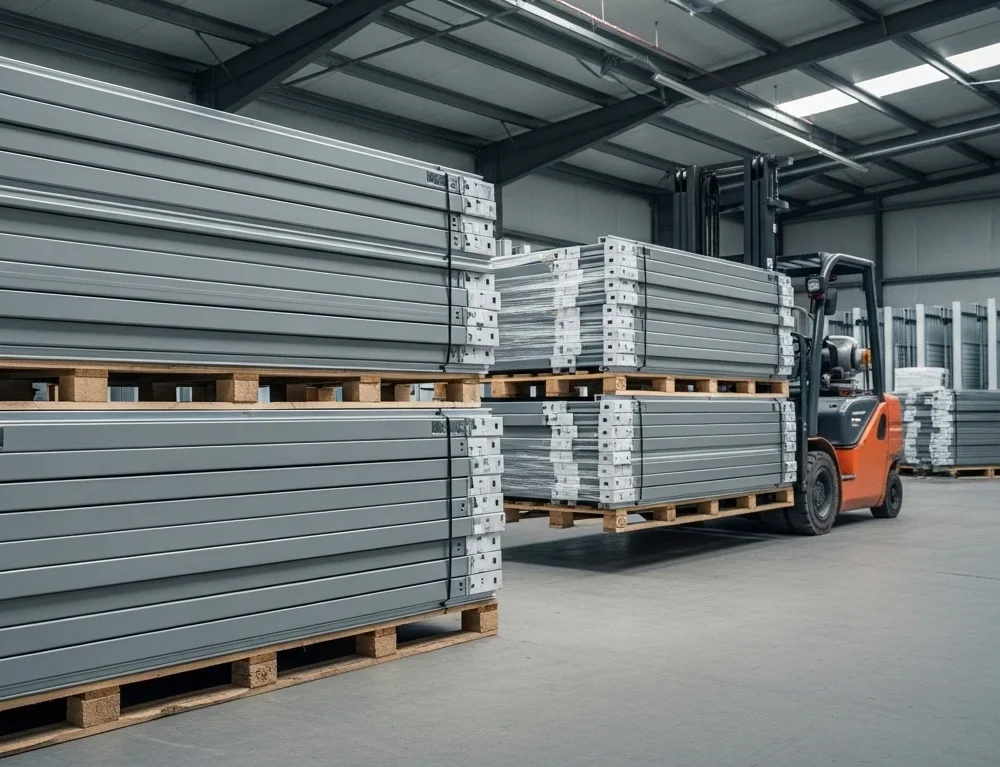
Not repurposed sea cans. Not temporary fixes. Flatbox units are purpose-built steel storage systems designed for plant floors, yards, and distribution environments.
Flat-pack logistics
reduce truckloads and yard chaos.
Forklift pockets
and clear lift points simplify safe placement.
Powder-coated interior/exterior
resists corrosion and looks professional.
Modular banking
creates tidy, repeatable rows along fence lines, dock aprons, or staging pads.
Accessory ecosystem—shelving, pipe racks, diamond plate floors, insulation/anti-condensation kits—tunes each unit to the job.This is the gear you can deploy during a maintenance shutdown, a peak season, or a multi-site retrofit—and then re-bank or relocate when the project moves.
From PO to operational capacity—without disruption
1) Define the jobs to be done
Common industrial/3PL scenarios we support out of the box:
Dockside overflow: buffer packaging, pallets, and returns without blocking lanes.
MRO/tool control: secure storage for parts, tools, and PPE near lines.
Quarantine & QA holds: clean separation for goods awaiting inspection.
Project staging: temporary pick-faces or fixtures during equipment installs.
Yard organization: labeled banks for seasonal programs or regional kitting.
2) Choose sizes and standard options
Our line covers 3.5′, 5′, 7′, 10′, 13′, 16′, 19′. Most industrial buyers standardize around 10′ and 13′ for dock work, add 7′ for tight zones, and use 16′–19′ for large industrial storage containers without creating dead zones.
Lock in your RAL color, door count/orientation, lock hardware, shelving/pipe racks, optional diamond plate flooring, and insulation/anti-condensation kits. We memorialize everything in a Program Spec so reorders stay simple.
3) Get firm production & delivery windows
Submit site counts, target months, and unit volumes. We return a Lead-Time & Delivery Plan with:
- 4-6 Weeks Build
- 4-6 Weeks Ship
- Regionally sequenced deliveries across the U.S., Canada, and Puerto Rico
4) Install with a repeatable playbook
The on-site sequence is straightforward: stage → assemble → anchor → load accessories → label. Our Dock/Yard Layout Templates include stall fit, forklift paths, minimum clearances, and sightline guidance so safety approvals happen quickly.
Operational specs that keep throughput moving
Construction
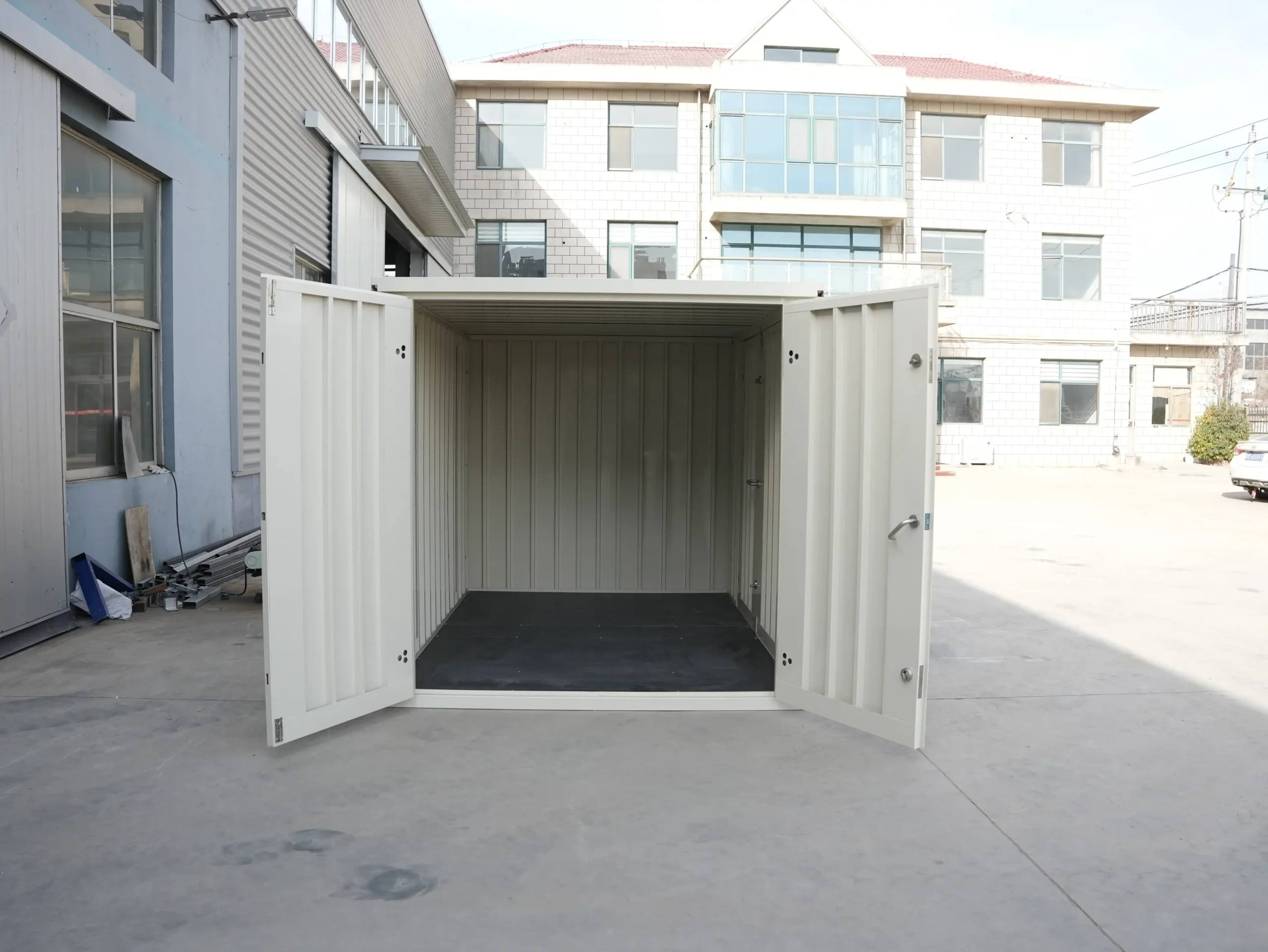
powder-coated steel inside/out; weather-resistant panel system; heavy-duty hinges and standardized lock options
Handling
integrated forklift pockets; marked lift points for precise placement
Sizes: 3.5′–19′ modules
Office/Kiosk formats available for driver check-in or QC stations
Options
RAL color standards, door orientation/quantity, shelving, pipe racks, diamond plate floors, insulation/anti-condensation kits
Layout
bankable modules with aisle templates to preserve forklift flow and dock line-of-sight
Documentation
Specifier Package with CAD, anchoring/stacking guidance, EHS checklist, and O&M notes
Built for real-world industrial constraints
Dock and yard access stays intact. Flat-pack deliveries slot into standard receiving workflows with clear labeling and minimal staging. Units assemble where they’ll operate—no cranes, no blocked lanes, no disruption to live operations.
Safety & compliance, standardized
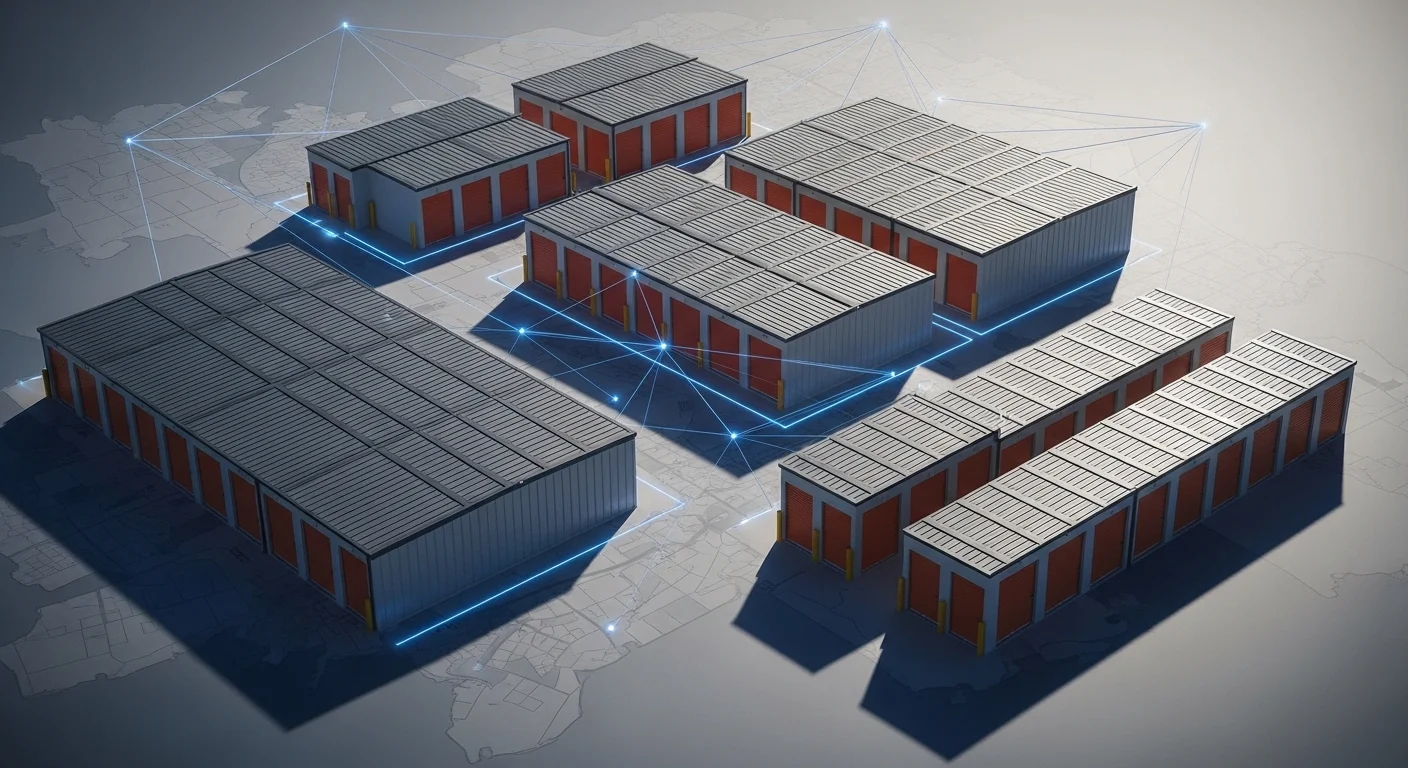
Pre-defined anchoring limits, stacking rules, clearance requirements, and EHS checklists—so sites adopt a proven standard instead of creating their own.
Durability in real conditions
Powder-coated steel, sealed construction, and optional insulation/anti-condensation protect inventory from moisture, temperature swings, and harsh climates.
Right-sized for flow
Layouts mapped to forklift paths, dock doors, and yard movement—so added capacity doesn’t create bottlenecks or dead zones.
Protect throughput, not just storage
Add capacity between shifts or over a weekend with minimal staging and fast assembly—keeping doors open, lanes clear, and operations running.
Proven deployment kits for plants, DCs, and 3PLs
Dock & Returns Buffer — 6 to 12 units
Mix: (4) 10′ and (2) 13′ per 6-unit block
Accessories: shelving in all 10′ units; pipe racks in the 13′ units; diamond plate in high-traffic units
Includes: yard diagram for fence-line banking and forklift approach
Use when: dock doors need breathing room during peak deliveries or reverse-logistics surges.
MRO / Tool Control — 8 units
Mix: (6) 7′ and (2) 10′ near maintenance shops
Accessories: dense shelving, lock upgrade, insulation/anti-condensation in 50% of units
Includes: labeling scheme and sign zones for quick visual audits
Use when: tool loss and first-time fix rates are suffering.
Project & Retrofit Staging — 10 to 20 units
Mix: (8) 10′, (6) 13′, (6) 16′ for large industrial storage containers
Accessories: mixed shelving & pipe racks; diamond plate on floor-traffic units
Includes: phased layout (Week 0–1, 2–3, 4–5) so lanes stay open as equipment arrives
Use when: a line move, mezzanine install, or WMS retrofit demands staged materials.
Driver Check-In / QC Station — 1 Kiosk + 2 Storage
Units: Office/Kiosk with service window + (2) 10′ storage for route totes or QC samples
Includes: placement diagram for safe approach and camera sightlines
Use when: you need a staffed check-in or QC station at the gate or dock.
Pre-built layout templates for faster site deployment
Every deployment includes dock and yard layout templates so your team can plan placement, flow, and safety before units arrive.
- Banking & spacing standards
Single and double-bank layouts, minimum aisle widths, and forklift turning clearances. - Approach & visibility
Camera sightlines, lighting guidance, and bollard placement for safe vehicle and pedestrian flow. - Dock integration
Positioning relative to dock doors, receiving lanes, and pallet jack routes. - Fence line & perimeter layouts
Setbacks, security considerations, and labeled storage zones. - After-hours deployment sequencing
Staged installs to avoid disrupting live operations or peak shifts.
Built for every function across your operation
Operations / Plant Management
Standardized kits arrive on schedule, protect workflow, and eliminate ad hoc fixes—keeping aisles clear and operations predictable.
EHS / Safety
Pre-defined anchoring, stacking, clearances, and signage reduce risk and accelerate site approvals with a consistent standard across facilities.
Maintenance / MRO
Secure, organized storage with shelving reduces tool loss and travel time while improving audit visibility and control.
Logistics
Flat-pack receiving reduces congestion; banked layouts improve yard flow, speed turns, and minimize staging disruption.
Procurement
Program-based SKUs and predictable freight simplify budgeting and reordering—same specs, same finishes, every time.
Why industrial-grade beats repurposed containers
- Built for operations—not shipping
Designed around plant and DC workflows vs. freight transport constraints. - Durable, cleanable finishes
Powder-coated interior/exterior resists corrosion and supports maintenance standards. - True modularity
Units bank cleanly, align consistently, and expand without wasted space. - Integrated accessory system
Shelving, pipe racks, and diamond plate floors are designed to fit—no retrofitting. - Safe, repeatable handling
Forklift pockets and lift points enable precise placement every time. - Approval-ready documentation
Standardized Specifier Package supports faster EHS and site approvals.
Regional delivery built for industrial timelines
United States
Multi-region routing and staggered partials keep docks clear. Northern sites can front-load to beat winter weather.
Canada
Cross-border documentation and clustered deliveries (Ontario, Alberta, BC, etc.) minimize idle time between installs.
Puerto Rico (USA)
Transit plans account for port schedules and local staging; deliveries are sequenced to reduce yard storage fees and align with labor windows.
Key questions from operations, answered
How many crew hours should we plan per unit?
Ranges depend on size and substrate. We include typical hour ranges in the Specifier Package so planners can schedule shifts confidently.
Can we stack units?
Stacking policy is defined in writing; where stacking is not permitted, we specify no-stack and provide anchoring alternatives. If stacking is allowed for specific sizes, we detail limits, anchors, and spacing.
Are these suitable for hazmat or flammable storage?
Base units are for general industrial storage. If you need special configurations, tell us—your Specifier Package will flag compliance needs and any additional options.
Will large formats block forklift flow?
Our Dock/Yard Layout Templates show bank spacing and turning envelopes so industrial size storage containers don’t create choke points.
What about corrosion and condensation?
Options include insulation/anti-condensation and corrosion-aware finish notes for coastal/snow-belt sites.
A faster path from quote to deployment
List your sites and timing
Share plants/DCs, target months, and unit counts by size.
Lock your configuration
Standardize shelving, pipe racks, diamond plate, insulation, plus RAL colors and lock hardware.
Receive a full program quote
Itemized SKUs, accessory pricing, and regional freight—paired with 4–6 Weeks Build + 4–6 Weeks Ship timelines.
Set your delivery cadence
Sequence shipments by site and shift to avoid congestion and downtime.
Deploy with a standard playbook
Teams receive confirmed dates, Dock/Yard Layout Templates, and install checklists for consistent rollout.