

Info Kiosks That Help Passengers Find Answers Faster
Deploy an info kiosk that improves wayfinding, supports self service kiosk for sale use cases, and brings clearer value to self service kiosk cost across busy transportation sites.
4-6 wk Build
4-6 wk Ship
7 Sizes
US · CA · PR
Improve wayfinding, reduce confusion, and support smoother passenger flow with durable kiosk setups built for terminals, ports, stations, and parking operations. Transportation environments move quickly, and passengers rarely have much patience when information is hard to find. A missed turn, a confusing layout, or a crowded service point can slow movement almost immediately. In airports, ports, rail stations, terminals, and parking operations, a lack of clear, easy-to-access information does more than frustrate visitors. It creates pressure on staff, adds congestion to already busy areas, and makes the site feel harder to use.
Read More
An info kiosk should do more than occupy space. It should help people get answers quickly, move with more confidence, and reduce the burden on staffed service points. Flatbox helps transportation authorities and site operators create a more structured kiosk strategy across public-facing environments. Instead of relying entirely on counters, temporary signage, or one-off kiosk formats, organizations can work from a more repeatable kiosk model that supports passenger guidance, customer service, and operational consistency across multiple locations. For transportation hubs, a better kiosk setup is not only about technology. It is about making the site easier to navigate, easier to manage, and easier to scale.
Faster Access to Information Improves Passenger Flow
The first problem most transportation hubs are trying to solve is simple: people need information fast.
Passengers often navigate unfamiliar spaces under time pressure. They may need directions, service details, parking guidance, permit information, queue instructions, or help locating the next step in their journey. When they cannot find that information quickly, they slow down, stop in circulation areas, or turn to already busy counters for help.
A stronger kiosk strategy helps reduce confusion where it starts. When people can get answers faster, movement improves across the rest of the site.
Read More
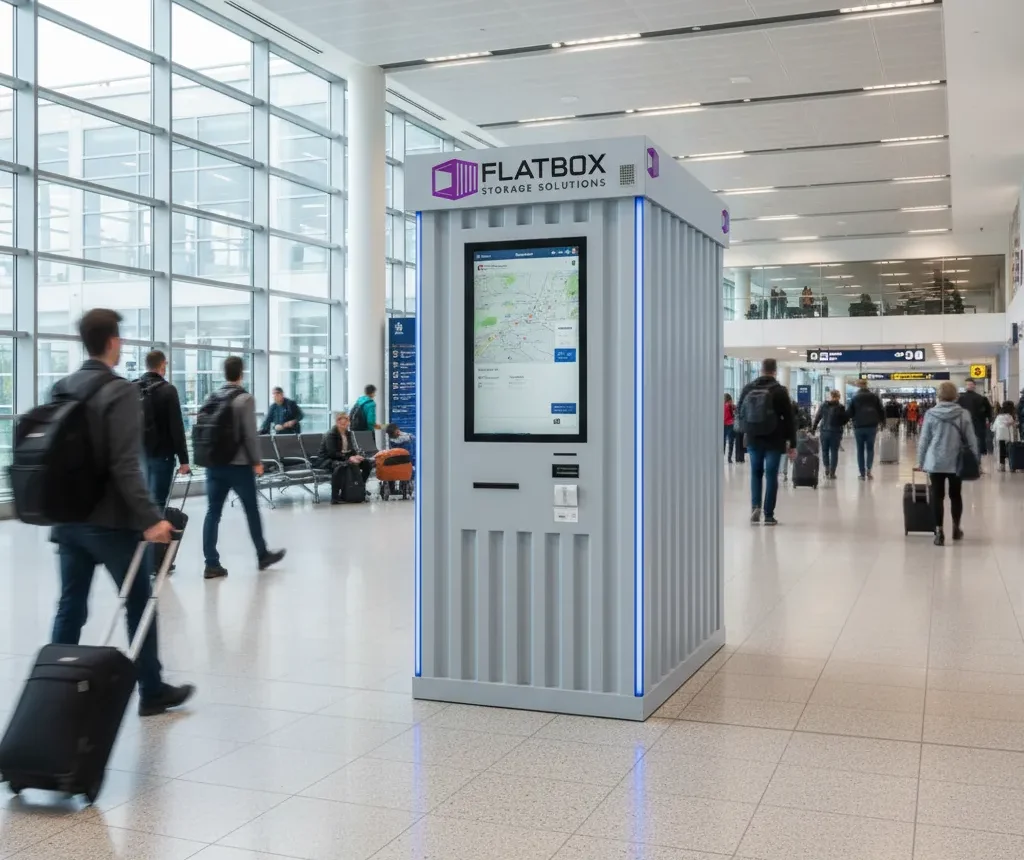
Flatbox supports that need with kiosk-ready units that can be used for:
passenger information points
customer service counters
permit or screening support
parking and access operations
attendant-assisted public service functions
transit or terminal guidance points
That gives operators a more dependable way to improve site clarity without increasing pressure on every staffed service touchpoint.
Less Queue Pressure at Busy Service Points
One of the most visible operational problems
in transportation hubs is congestion at service counters. Staffed counters remain important, but they also become bottlenecks during peak periods. Passengers line up for information, ticketing support, parking guidance, check-in questions, or general help that could often be handled more efficiently through self-service or a kiosk-assisted interaction. That slows service, increases frustration, and makes the site feel harder to operate than it should.
That is why the broader interest in a self service kiosk for sale matters here. Transportation operators are looking for ways to reduce counter dependence and improve throughput without sacrificing service quality. A better kiosk strategy helps distribute demand more effectively, giving passengers another way to access information while allowing staff to focus on more complex service needs.
That can help sites:
reduce line pressure at information points
support faster passenger decisions
improve movement through busy public areas
give staff more capacity for higher-value interactions
create a smoother customer-service experience during peak traffic
The benefit is not just automation. It is a more balanced service environment.
Public-Facing Kiosks Need to Hold Up Under Daily Use
A kiosk may look polished in a concept drawing and still fall short in a live transportation setting.
A kiosk may look polished in a concept drawing and still fall short in a live transportation setting.
Public-facing environments are demanding. Kiosks may be exposed to weather, long hours of use, heavy traffic, repeated interaction, and the wear that comes with daily public contact. If the unit is not durable enough, practical enough, or suited to its environment, the result can be maintenance issues, usability problems, or a site feature that never fully delivers on its purpose.
Flatbox fits that need with kiosk units designed for operational use. The broader product system is built around standardized steel construction, repeatable sizing, and practical configuration options that help organizations deploy kiosk footprints more confidently across sites.
That matters for:
airport curbside or lot operations
parking access and attendant use
terminal information support
station or port customer-service functions
permit or screening points
public-use environments where durability matters as much as appearance
A better kiosk setup should support daily operations more smoothly, not create another asset that needs constant workarounds.
Accessible, Repeatable Deployment Across the Network
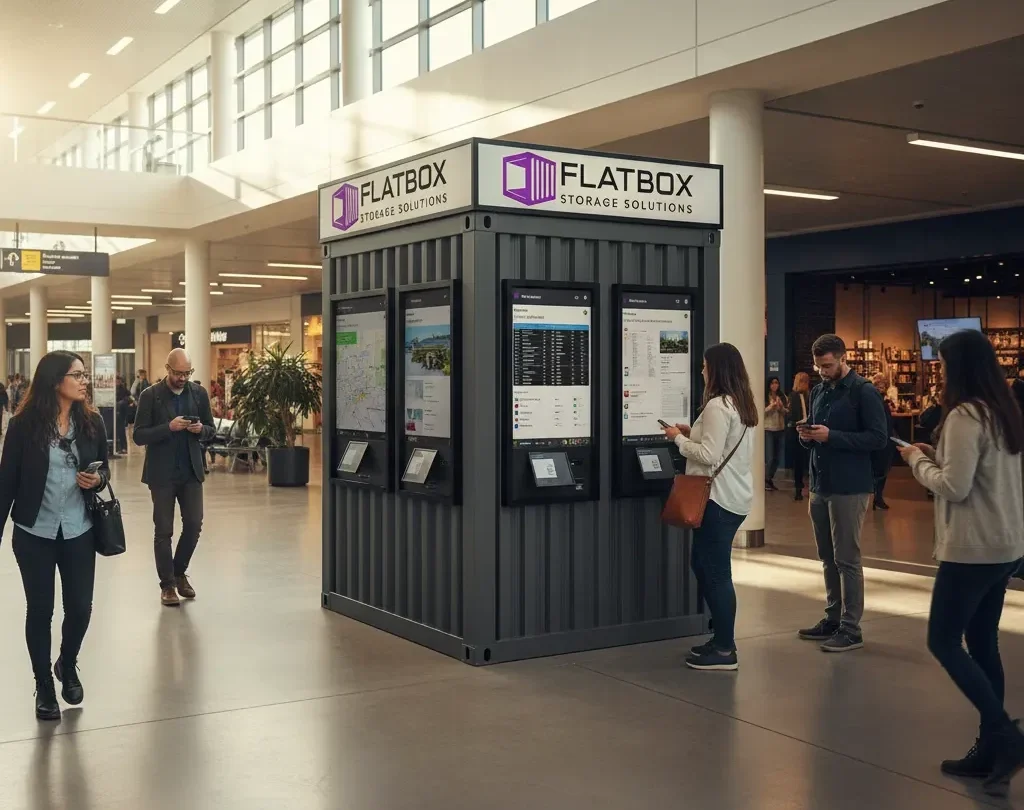
Transportation hubs rarely stop at one kiosk. Once a site sees value in a public information point or service kiosk, the conversation usually shifts toward consistency. How should the next one look? How should it function? Can the same format work across terminals, lots, stations, or parking operations? Will it support accessibility and usability expectations as the network grows?
That is where standardization becomes especially valuable. Flatbox supports a more repeatable kiosk model, making it easier for authorities and operators to establish a working format and use it again with more confidence across other parts of the network.
That is valuable for:
- transportation authorities
- municipal parking operations
- airport or terminal management
- rail and transit operators
- ports and passenger-access sites
- procurement teams managing public-facing infrastructure across several locations
A repeatable approach supports cleaner procurement, cleaner rollout, and a better long-term service standard.
A More Practical View of Self Service Kiosk Cost
For many buyers, cost is part of the evaluation even when it is not the first question asked.
The self service kiosk cost conversation is rarely only about the price of one unit. It is about what the kiosk improves operationally. If a kiosk reduces queue pressure, improves wayfinding, supports better public information flow, and stays easier to repeat across multiple locations, the value extends far beyond the initial purchase.
That is one of Flatbox’s strongest advantages.
The Flatbox model is built around standardized units, practical configuration paths, and a logistics system designed to support multi-site deployment more efficiently. That keeps the cost conversation grounded in repeatability, operational value, and rollout clarity rather than turning it into a one-off design-and-build exercise.
For transportation organizations, that can support:
- easier planning for future kiosk needs
- more consistent specifications across locations
- cleaner coordination between operations and procurement
- less friction when adding service points over time
- a more structured path from kiosk need to deployment
Why Transportation Hubs Choose Flatbox
Transportation operators are usually solving for service pressure, site clarity, and rollout complexity at the same time.
They need:
- information points that help passengers find answers quickly
- service support that reduces line pressure
- durable kiosk units that hold up in daily public use
- a format that is easier to repeat across locations
- a cleaner logistics model for rollout and expansion
Flatbox supports that need with:
- standardized kiosk units for multi-site use
- durable steel construction
- repeatable sizing and practical configuration options
- support for public-facing service and information functions
- a deployment model designed for cleaner rollout across sites
- service coverage across the United States, Canada, and Puerto Rico
That combination makes Flatbox a strong fit for transportation hubs that need passenger-facing infrastructure to work reliably, not simply look presentable.
Info Kiosks That Support Passenger Flow and Site Readiness
The strongest info kiosk strategy is the one that helps the transportation site work better as a whole.
That usually means:
- faster access to directions and information
- reduced pressure on staffed counters
- dependable performance in public-use environments
- practical support when evaluating a self service kiosk for sale
- clearer value around self service kiosk cost
- repeatable deployment across terminals, lots, stations, and service points