

Storage for Equipment Dealers That Keeps Inventory Protected and Yards Organized
Standardize outdoor storage across branches with secure, scalable equipment dealer storage containers built for cleaner inventory control, faster retrieval, and repeatable multi-site deployment.
4-6 wk Build
4-6 wk Ship
7 Sizes
US · CA · PR
Standardized units, practical layouts, and faster deployment help dealers secure tools, parts, and equipment across every location. Equipment dealers need more than extra space. They need storage that supports the way the yard operates day after day. Parts have to stay organized. Tools have to stay protected. Inventory needs to stay accessible without creating clutter, wasted motion, or constant reshuffling. As operations expand, those problems usually become more visible. What works at one branch often becomes harder to manage across the rest of the network.
Read More
Flatbox provides equipment dealer storage containers built for commercial operations that need better control over yard organization, inventory protection, and rollout consistency. Instead of treating storage like a one-time purchase, Flatbox supports a more structured approach with standardized units, practical configuration options, and a flat-pack delivery model that helps reduce freight pressure while making deployment easier across multiple locations.
For dealers managing branch networks, service yards, satellite lots, or growing territories, storage should make the operation easier to run, not harder to control.
Storage That Keeps Dealer Yards Organized and Inventory Easier to Access
Dealer environments move quickly. Parts are constantly moving in and out. Service tools need to stay secure between jobs. High-use inventory needs to be stored in a way that makes retrieval easier, not slower. A generic setup often creates the opposite result. Inventory gets stacked without a clear system. Valuable tools become harder to track. Yards feel more crowded. Teams spend more time working around the storage than benefiting from it.
A more effective storage program starts with units that match the realities of the operation. Flatbox helps dealers build a cleaner storage standard across locations. Units can be selected around yard size, inventory type, and daily workflow while still supporting a consistent purchasing model.
Read More
That gives dealers a more reliable path to growth, with a storage format that can be repeated as needs change.
The result is a setup that supports daily operations, improves site organization, and creates less friction for procurement and expansion.
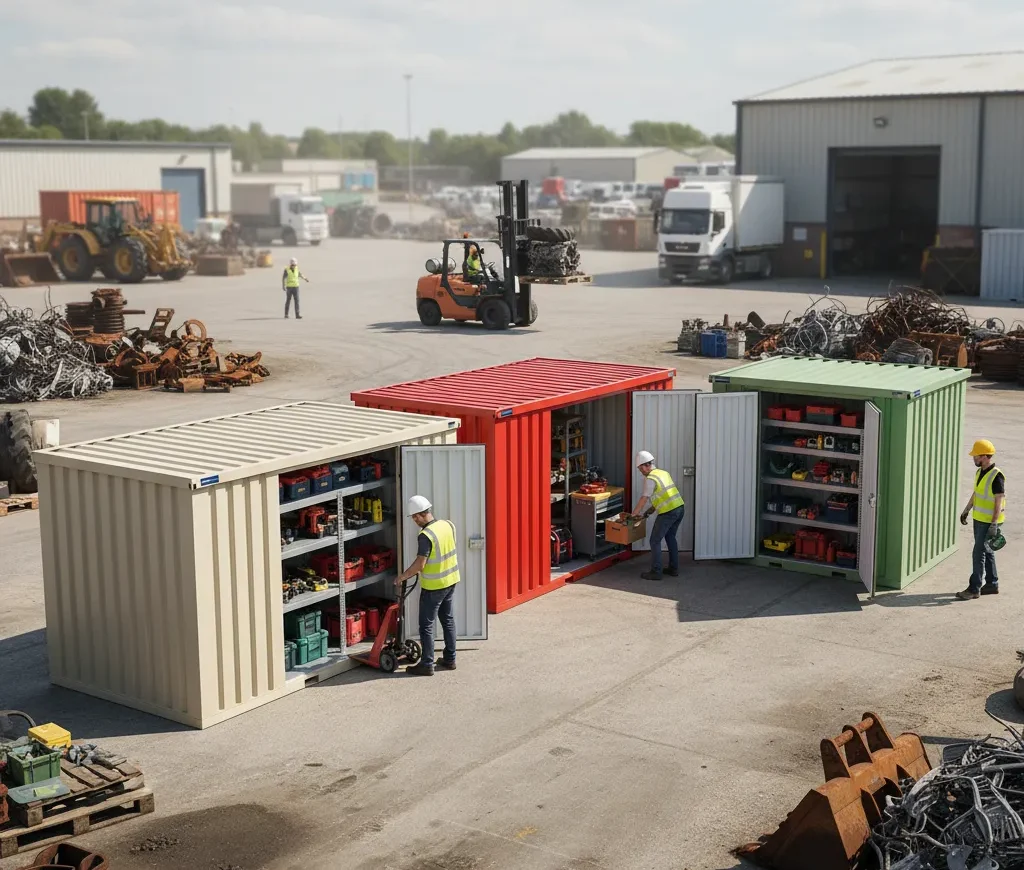
Protect Inventory Without Adding Complexity to the Yard
Inventory protection should not create operational friction
Dealer yards carry high-value tools, service parts, and fast-moving inventory. When those materials are loosely stored or exposed, the result is predictable: damage, inconsistent access control, and slower day-to-day operations.
The goal is not just to secure inventory—but to do it in a way that fits how the yard actually works.
Flatbox provides durable, standardized storage units designed for commercial use, with weather-resistant construction, secure locking, and layouts that are easier to deploy consistently across locations. The result is protected inventory without adding unnecessary complexity to daily operations.
Designed to support real dealer inventory workflows
- hand tools and specialty equipment
- service parts and maintenance inventory
- attachments and accessories
- seasonal and project-based materials
- branch-level overflow inventory
- yard supplies requiring secure, organized storage
A more structured storage setup does more than reduce risk—it improves access, reduces wasted time, and supports a cleaner, more efficient yard overall.
Better Storage Layouts Improve Daily Workflow
In many dealer environments, the issue is not the amount of space available. It is how well that space supports the work.
Poor layout—not lack of space—is what slows most dealer yards down.
When parts are loosely stored, retrieval takes longer. When entry points are poorly placed, loading and unloading becomes inefficient. Without a clear storage standard, teams rely on workarounds that gradually become part of the process.
Flatbox supports a more structured approach with practical configuration options that improve usability without adding unnecessary complexity to the buying or deployment process.
Plan storage around how the yard actually operates:
- side or end door placement for better access flow
- shelving systems for organized parts storage
- pipe rack configurations for long materials
- reinforced flooring for high-use environments
- insulation for sensitive materials
- anti-condensation protection to reduce moisture issues
- secure locking systems for controlled access
- linking kits to scale storage across the yard
Storage should adapt to the operation—without creating inconsistency.
Different yards and use cases require different layouts. The key is choosing configurations that improve fit while maintaining a consistent storage standard across locations.
That balance matters. Flexibility improves usability, but consistency is what makes storage easier to scale, manage, and repeat across every branch.
Freight Efficiency Directly Impacts Dealer Margins
Storage costs extend beyond the unit itself—logistics is where inefficiencies add up.
For dealer groups operating across multiple locations, freight and deployment can quickly become a hidden cost driver. Bulky units are harder to transport. Inconsistent specifications slow down quoting and ordering. Over time, expansion can lead to a mix of unit types that are harder to replace, scale, or standardize.
That complexity compounds across every new branch.
Flatbox is built around a flat-pack model designed to simplify multi-site logistics. A reduced shipping footprint improves freight efficiency, supports delivery into more locations, and makes it easier to scale storage across a growing network.
The result is more predictable deployment, fewer delays tied to transport, and a cleaner path to standardizing storage across every location.
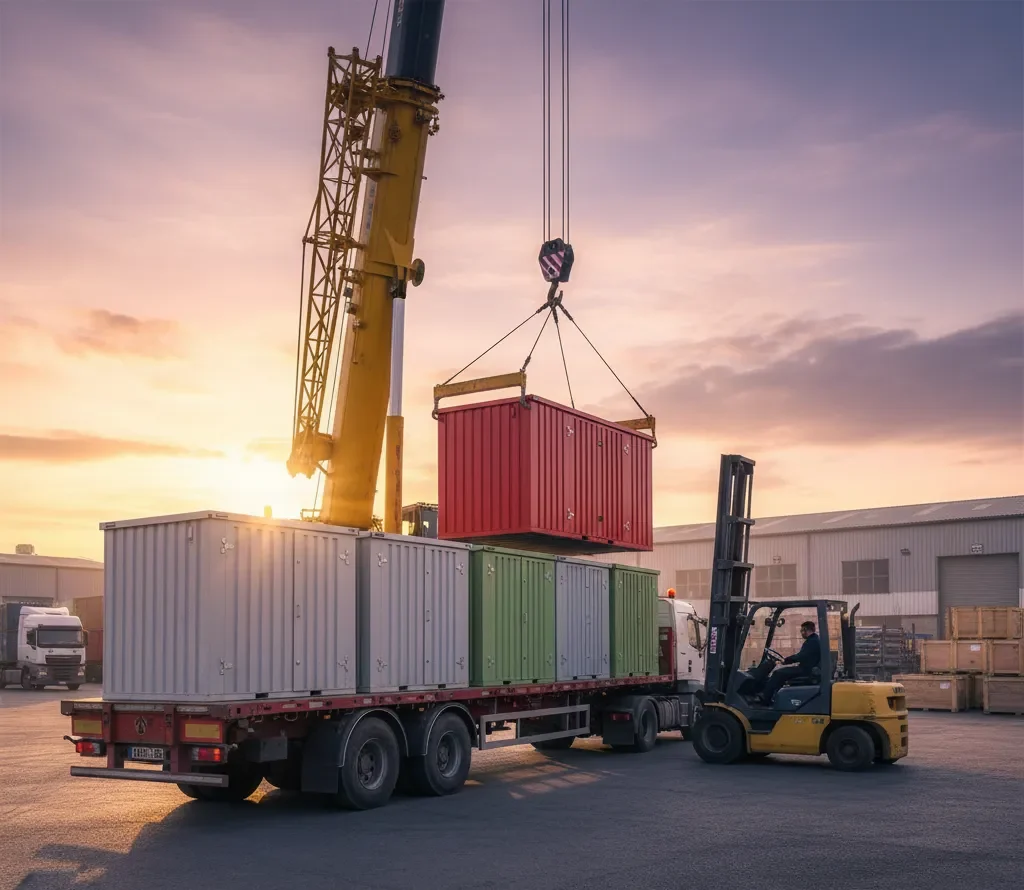
That is one of the clearest advantages of a standardized unit family. Once a format is working, it becomes easier to repeat it with confidence.
A Smarter Model for Multi-Location Growth
Growth often exposes weak storage planning.
A practical setup for one branch can become harder to manage when additional locations need support. Different footprints, different layouts, and different ordering habits create more complexity for procurement and less consistency for operations.
Flatbox supports a more organized model for growth. Dealers can build around a repeatable storage standard that works across locations while still allowing for site-level adjustments where needed. One branch may need a more compact footprint. Another may need linked units or a different access configuration. The broader program still stays grounded in a known product family, known options, and a rollout approach that is easier to manage over time.
That is valuable for:
- growing dealer networks
- independent dealers with multiple yards
- service territories that need satellite storage
- distributors carrying standardized storage SKUs
- procurement teams managing regional storage needs
Small Equipment Dealer Storage Containers for More Focused Locations
Not every location needs the same footprint. Some branches need compact storage that still protects inventory and keeps the yard organized. Some sites operate with tighter space, lower-volume inventory, or a narrower service function. In those cases, small equipment dealer storage containers can provide a practical fit without sacrificing security or usability.
A smaller unit still needs to support organized storage, easier access, and reliable protection. That is why product-family consistency matters. Dealers can match the unit size to the branch while keeping the broader purchasing strategy more unified across the network.
This approach works well for satellite lots, secondary branches, seasonal support sites, and operations that need a practical storage footprint without overbuilding the yard.
Equipment Dealer Storage Containers for Sale That Support Daily Operations
The strongest equipment dealer storage containers for sale are not the ones with the most features. They are the ones that solve operational problems clearly and repeatedly.
That usually means:
- protecting tools and service inventory
- improving organization inside the unit
- matching access to the way the yard operates
- reducing freight and deployment inefficiency
- creating a format that can be repeated across branches
Flatbox is built for that kind of use. The system supports practical storage decisions that help dealer operations stay organized, protect valuable inventory, and expand with less friction.
For equipment and tool distributors, storage should do more than hold inventory. It should support the pace, structure, and growth of the business.
Why Dealers Choose Flatbox
Dealers choosing Flatbox are usually looking for a storage partner that understands operational reality.
They need:
commercial-grade units
practical options without unnecessary complexity
faster, cleaner deployment
a format that can be repeated across locations
support for branch growth without constant re-specifying
Flatbox is a strong fit because the system is built around those priorities. The approach stays structured. The units stay practical. Growth stays easier to manage.
That combination helps dealers protect inventory, organize yards more effectively, and expand with more confidence.