

Flat Pack Container DWG Free Download Built for Clean Approvals
Professional flat pack container technical drawings DWG and 19ft container CAD/Revit models with ADA, fire, and deployment notes — designed for real-world specification and multi-site rollout.
Because a Generic Container DWG Isn’t Enough
You’re trying to move a project forward.
Maybe you’re preparing a permit set. Maybe you’re coordinating with a GC. Maybe you’re building out a multi-site rollout and need something that integrates cleanly into your drawings without creating a cascade of revisions.
Most generic “flat pack container DWG free download” results solve only one narrow problem: they provide basic dimensions. What they rarely provide is clarity.
They don’t reflect configurable door placements.
They don’t reference anchoring.
They don’t address ADA or circulation considerations.
They don’t help with fire or safety conversations.
They don’t align with a standardized product that can actually be deployed at scale.
Flat Box built its Specifier Package to remove that friction.
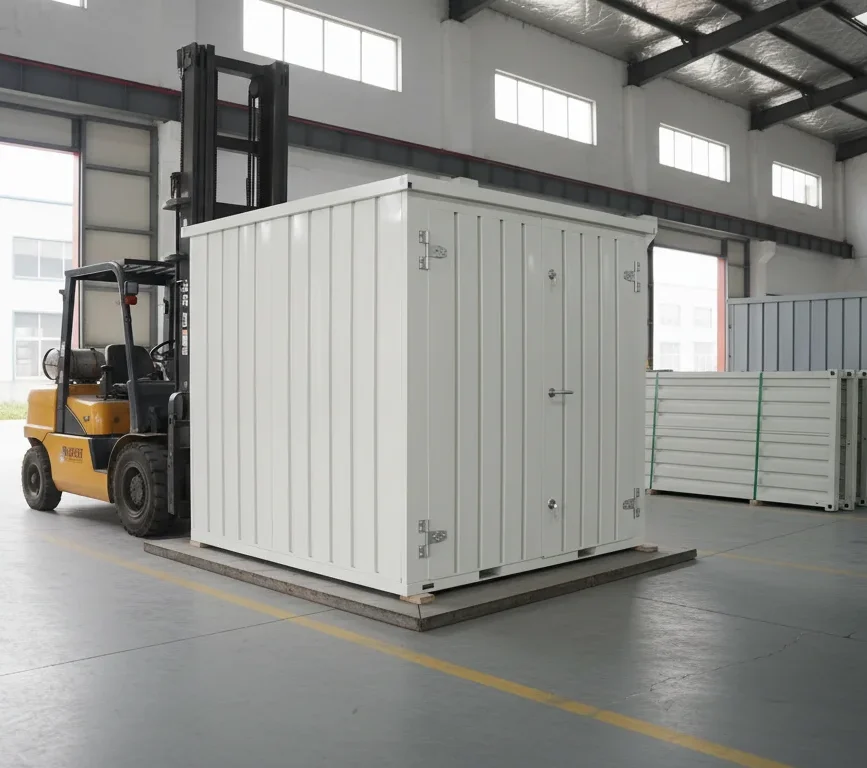
More Than a 19ft Container DWG
When architects and engineers search for a 19ft flat pack container DWG free download, they often receive drawings based on standard ISO shipping containers — designed for freight, not for commercial deployment.
Flat Box units are different.
They are engineered as flat-pack, standardized systems built for multi-site organizations. That distinction matters. The drawings you integrate into your plans should reflect the product that will actually arrive on site.
Our Specifier Package includes:
2D CAD (.DWG) Files
Plan, elevation, and section views
Accurate dimensional layouts
Door placement options
Forklift pocket locations
Clean layer organization for seamless integration
These are professional-grade shipping container technical drawings DWG files, structured for use within commercial design workflows.
Revit (.RVT) BIM Models
For teams working within BIM environments, the package includes Revit models to support:
Architectural coordination
Site planning
Clash detection
Multi-unit layout alignment
The goal is not complexity. It is efficient.
You should not have to rebuild a container model from scratch just to align it with your project documentation.
Standard Details and Specification Notes
Beyond geometry, the Specifier Package provides context.
Documentation includes reference notes covering:
Material specifications
Powder-coated galvanized / galvalume steel panels
Insulation and anti-condensation options
Flooring upgrades
Secure locking system configurations
Anchoring reference guidance
This helps transform a simple drawing into something usable during procurement, coordination, and review discussions.
ADA and Egress Considerations
For kiosk and office configurations, concise ADA and circulation notes are included to support early-stage layout decisions.
These notes are designed to streamline review conversations — not replace code consultation — but they reduce uncertainty during the planning process.
Fire and Safety Reference Language
Many free container CAD files provide no context at all for safety discussions. Flatbox documentation includes structured reference language to assist with:
Municipal review
Facilities approval
Risk management coordination
Franchise compliance standards
Clarity early in the process prevents complications later.
Designed for Specifiers Working Under Pressure
The reality of most container deployments is simple: timelines are tight.
Whether the project involves:
A self-storage expansion
A contractor jobsite storage bank
A franchise kiosk rollout
A municipal equipment depot
A campus operations facility
There is rarely time to iterate endlessly on documentation.
The Flatbox Specifier Package is built to provide clean, structured resources that integrate into your workflow quickly. The intention is not to overwhelm you with unnecessary technical density. It is to provide what is required to move confidently through coordination and approval.
Because delays are rarely caused by a lack of drawings.
They are caused by unclear drawings.
Consistency Across Multi-Site Rollouts
Many organizations deploy container infrastructure across multiple locations.
In those environments, the greatest risk is inconsistency.
If one site uses a slightly different configuration, or if the documentation does not align with standardized SKUs, every subsequent deployment becomes more complicated. Approvals slow down. Procurement becomes inconsistent. Field coordination suffers.
Flatbox units are built around repeatable configurations. The Specifier Package reflects that discipline.
Once a configuration is reviewed and approved, it can be replicated across sites with clarity and predictability.
That is what makes infrastructure scalable.
From Download to Deployment
The Specifier Package is structured to fit within a straightforward workflow:
- Request and download documentation
- Integrate CAD or Revit models into your project set
- Coordinate configuration with procurement
- Align with GC and site planning requirements
- Submit for review
- Deploy standardized units
Because the documentation is aligned with actual manufacturing standards, there is no disconnect between what is drawn and what is delivered.
Built for Commercial Deployment in the U.S., Canada, and Puerto Rico
Each region presents unique review considerations.
The Specifier Package is structured to support early-stage planning conversations across:
Municipal jurisdictions
Healthcare systems
Educational campuses
Transportation hubs
Utilities and infrastructure projects
Franchise networks
Flatbox does not position itself as a commodity container seller. It operates as a logistics and deployment system built for organizations that require predictability. The documentation reflects that positioning.
Professional Documentation, Not Commodity CAD Blocks
There are many places online to find a shipping container DWG free download. What is far less common is a documentation package that connects:
Drawings
Configuration options
Compliance considerations
Procurement alignment
Multi-site repeatability
Flatbox developed its Specifier Package specifically to support architects, engineers, general contractors, and enterprise procurement teams who require clarity — not just geometry.
This is about deployment confidence.
Who the Specifier Package Is Built For
The documentation is structured for:
Architects and designers
Engineers
General contractors
Facilities and operations teams
Procurement directors
Franchise development groups
If your role involves moving projects from concept to execution, you need documentation that reflects how the product will actually function in the field.
That is the purpose of this package.
Request the Specifier Package
To ensure version control and accurate distribution, the Specifier Package is provided directly to project teams.
When requesting the package, you may be asked for:
Firm name
Project type
Role (Specifier, Procurement, GC, Facilities)
Region of deployment
This allows us to provide documentation aligned with your use case. Because clean approvals begin with clean documentation.
Built for Scale. Built for Confidence.
Container drawings are easy to find. Deployment-ready documentation is not. Flat Box provides structured CAD and Revit resources aligned with standardized SKUs, real-world deployment patterns, and compliance conversations.
When projects are under review and timelines matter, clarity becomes your most valuable asset. This Specifier Package exists to provide it.