

Flat-Pack Storage Containers Built for Multi-Site Rollout Across Canada
Across Canada, Storage Problems Usually Start with Logistics
Across Canada, storage challenges are rarely about available space. They are usually about freight, coordination, and rollout complexity.
Shipping costs rise across provinces. Traditional welded containers are expensive to move inland. Delivery windows tighten during construction site storage containers season. And once operations span multiple locations, inconsistency becomes a drag on procurement and deployment.
Flatbox provides flat-pack storage containers engineered for Canadian rollout—helping reduce freight pressure, simplify deployment planning, and give facilities and procurement teams a more predictable path from quote to placement.
This is storage infrastructure built for scale across Canada.
Built for Canadian deployment
Reduce freight burden, simplify multi-site rollout, and create a more repeatable storage standard across provinces.
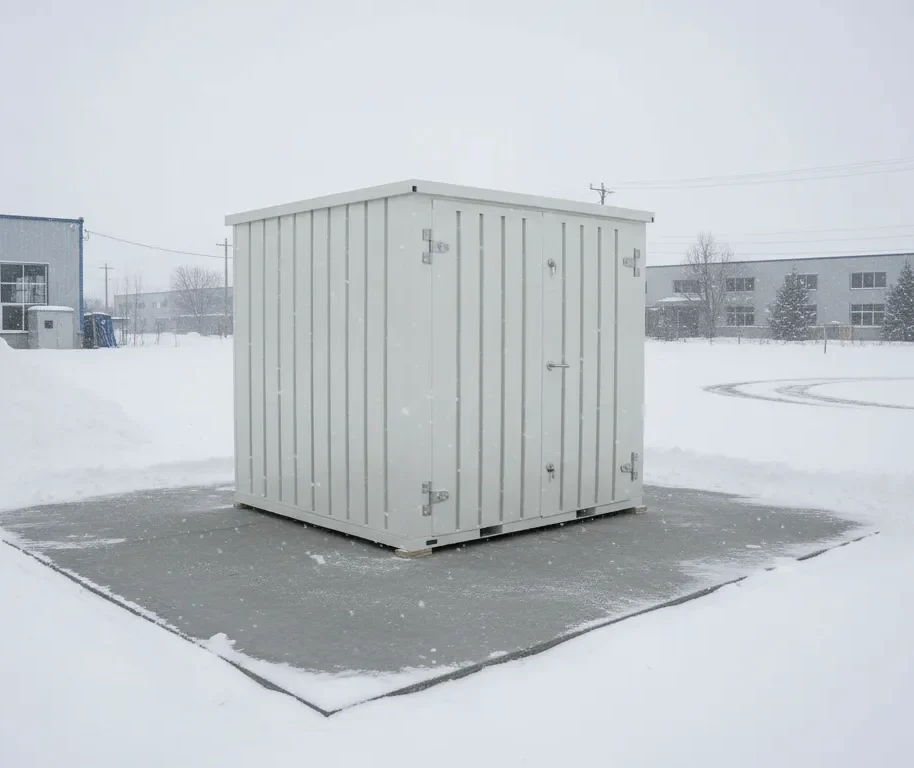
A Smarter Way to Deploy Storage in Canada
Traditional containers were designed for global shipping lanes — not inland distribution across Alberta, Ontario, Quebec, British Columbia, and beyond.
A flat pack container changes the equation.
By shipping in compact, modular form, Flatbox dramatically reduces freight footprint. More units move per load. Inland delivery becomes more efficient. Multi-site rollouts become manageable.
For organizations deploying storage across multiple provinces, this difference compounds quickly. Lower freight volume means clearer budgets. Predictable delivery windows mean fewer operational surprises.
When logistics improve, everything downstream becomes easier.
Built for Canadian Conditions
Canadian buyers rightfully ask a simple question:
Will it hold up?
Flatbox flat pack steel storage containers are constructed from galvanized and galvalume steel panels with a corrugated profile for structural strength. Each unit features a powder-coated finish inside and out for corrosion resistance — a critical factor in coastal environments, high humidity zones, and freeze-thaw cycles.
For colder regions and temperature-sensitive applications, optional insulation and anti-condensation upgrades provide additional protection against moisture buildup and seasonal stress.
Whether positioned in urban Toronto, industrial Alberta, or coastal Atlantic Canada, these units are engineered to remain weatherproof, secure, and serviceable year after year.
Durability is not an upgrade. It is the baseline.
Faster Assembly. Less Disruption.
In many Canadian markets, access to cranes and heavy equipment adds cost and scheduling complexity. Flat pack storage containers are designed for efficient assembly with forklift access and a complete hardware kit included.
This allows:
Reduced reliance on specialty equipment
More flexible site placement
Faster readiness once delivered
For contractors, municipalities, and industrial operators, the ability to receive, assemble, and deploy without excessive coordination keeps projects on schedule.
Speed here is functional — not rushed. It is about reducing friction.
Standardized Sizes for Repeatable Deployment
Scaling storage across provinces requires more than availability. It requires consistency.
Flatbox storage units are available in standardized lengths including:
3.5’, 5’, 7’, 10’, 13’, 16’, and 19’
This disciplined sizing structure allows procurement teams to standardize footprints across facilities. A 13’ unit in Ontario matches the 13’ unit deployed in British Columbia. Multi-compartment 19’ configurations support higher density storage with individually locked bays.
Repeatable configurations mean:
- Simplified forecasting
- Cleaner BOM development
- Easier site planning
- Reduced specification friction
Flat pack containers should not create variability. They should remove it.
Built for Multi-Site Storage Rollouts Across Canada
Flatbox is not structured for one-off purchases or local resale.
We support organizations standardizing storage across multiple locations—where consistency, repeatability, and logistics control matter more than a single unit.
Across Canada, that typically includes:
- Contractors and construction groups managing active job sites
- Industrial and manufacturing operations coordinating materials across facilities
- Property management portfolios standardizing site support
- Self-storage operators expanding or optimizing locations
- Equipment and tool distributors managing branch inventory
- Municipal and public works departments supporting field operations
- Educational institutions managing campus infrastructure
- Utilities and telecom teams operating across wide service areas
The focus is not just adding storage—it is building a repeatable storage standard that works across provinces, teams, and deployment scenarios.
Freight Efficiency That Protects Your Margins
Across Canada’s vast geography, freight cost can rival or exceed container cost when using traditional welded units.
Flat pack shipping changes that math. By reducing transport volume, organizations can:
Move more units per truck
Reduce long-distance inland freight expense
Improve site-level cost control
Support national rollouts without ballooning logistics budgets
The benefit is not theoretical. It shows up in total cost per site. Flat pack storage containers protect margins by design.
Clear Specifications. Cleaner Procurement.
Canadian procurement teams need clarity. Flatbox supports deployment with:
Standardized SKUs
Defined configuration options
CAD and specifier packages
Clear lead time guidance
Coordinated delivery planning
Rather than navigating inconsistent listings or vague product descriptions, buyers receive structured documentation and defined options at order.
This reduces risk and increases confidence — particularly in public sector or institutional purchasing environments.
Flat pack container decisions should feel obvious, not uncertain.
Configurable Storage That Matches Operational Needs
Beyond single-unit storage, Flatbox supports multi-compartment flat-pack configurations designed for more structured use cases:
- Expanding self-storage capacity without permanent builds
- Creating organized storage banks across properties
- Separating tools, parts, or materials by department
- Supporting municipal, educational, or shared-use environments
These configurations help teams move from basic storage to organized, repeatable systems that scale across locations.
Configurable options include:
- Side or end door placement based on site layout
- Upgraded secure locking systems
- Durable flooring options for heavier-use environments
- Insulation and anti-condensation protection for climate variation
- Linking kits for grouping multiple units into larger storage layouts
These options allow storage to align with how work actually happens on-site—not just how much space is needed.
Canadian-Based Support. National Deployment Coverage.
Flatbox supports Canadian buyers with coordinated, in-country logistics—helping reduce friction across procurement and deployment.
With Canadian distribution and in-country logistics, teams gain better visibility into delivery timelines, clearer coordination, and fewer unknowns when planning across provinces.
For organizations managing multiple locations, this matters. Cross-border delays, import uncertainty, and inconsistent timelines can slow down rollout and complicate planning.
A more localized approach helps create predictable, repeatable deployment across Canada.
Deployment should not feel like navigating customs complexity.
It should feel structured, coordinated, and clear.
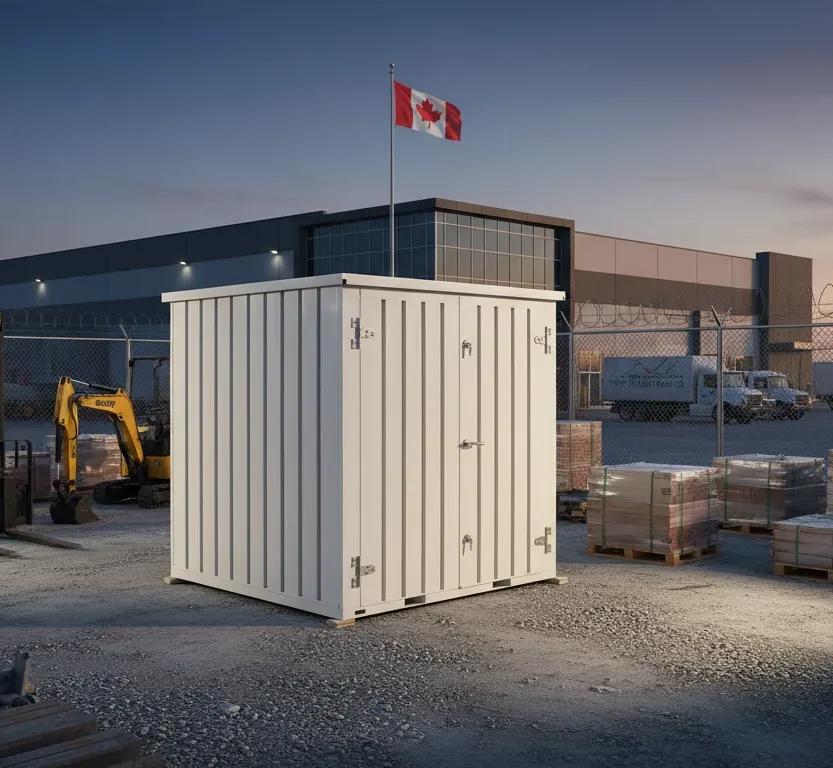
Built for Scale Across Provinces
The strongest shift in modern container procurement is away from “what is available” and toward “what can scale.”
Flat pack storage containers from Flatbox are designed to scale:
Across provinces
Across verticals
Across repeat deployment cycles
Across multi-year capital plans
Standardization supports long-term infrastructure planning. Instead of reinventing the spec each time, buyers deploy the same proven footprint — again and again. That consistency becomes an operational advantage.
Flat Pack Storage Containers vs Traditional Containers
When evaluating flat pack container solutions in Canada, buyers typically compare against conventional welded units.
Traditional Containers:
Bulky to ship
Higher freight cost inland
Often require heavier equipment to position
Less efficient for multi-unit rollout
Flat Pack Steel Storage Containers:
Compact transport footprint
Freight efficiency by design
Tool-friendly assembly
Standardized, repeatable SKUs
For single-unit buyers, the difference may appear incremental. For organizations deploying across multiple sites, the difference compounds.
Accessories and Interior Optimization
Storage is not just enclosure — it is organization. Flat Box supports Canadian deployments with accessory options including:
Exterior shelving systems
Diagonal pipe racks
Combination pipe rack and shelf systems
Secure locking upgrades
These enhancements improve workflow, reduce search time, and protect stored materials from weather and ground exposure. For industrial operators and contractors, organized storage reduces downtime and loss.
A Predictable Path From Quote to Deployment
The buyer journey in Canada should feel structured:
Define configuration and site needs
Confirm lead time
Coordinate delivery
Assemble and deploy
Standardize for the next rollout
Flatbox is designed to support this exact process.
The goal is not excitement.
The goal is certainty.
Flat-Pack Storage Built for Canadian Operations
Flat-pack storage containers are not an alternative—they are a logistics advantage for organizations operating across Canada.
For teams managing cost pressure, tight timelines, and multi-site expansion, the value comes from control—over freight, deployment, and repeatability.
Flatbox supports a more structured approach to storage:
- Reduce freight inefficiencies across provinces
- Deploy faster with simplified delivery and setup
- Standardize storage across multiple locations with confidence
This is not just about adding units.
It is about building a repeatable storage system that scales with your operations.