

Storage Container Maintenance Checklist and Warranty Guide
Built for Scale Across the United States, Canada, and Puerto Rico
Flat-pack container infrastructure is built for long-term use—but long-term performance depends on consistent upkeep.
For facilities teams, procurement departments, and multi-site operators, asset reliability comes down to two things: structured maintenance and clear warranty coverage.
If you are looking for a storage container maintenance checklist, reviewing storage container warranty coverage, or preparing a warranty claim for a storage container, this guide gives your team a practical reference that can be applied across locations.
Flatbox units are built for scale.
Your maintenance process should be too.
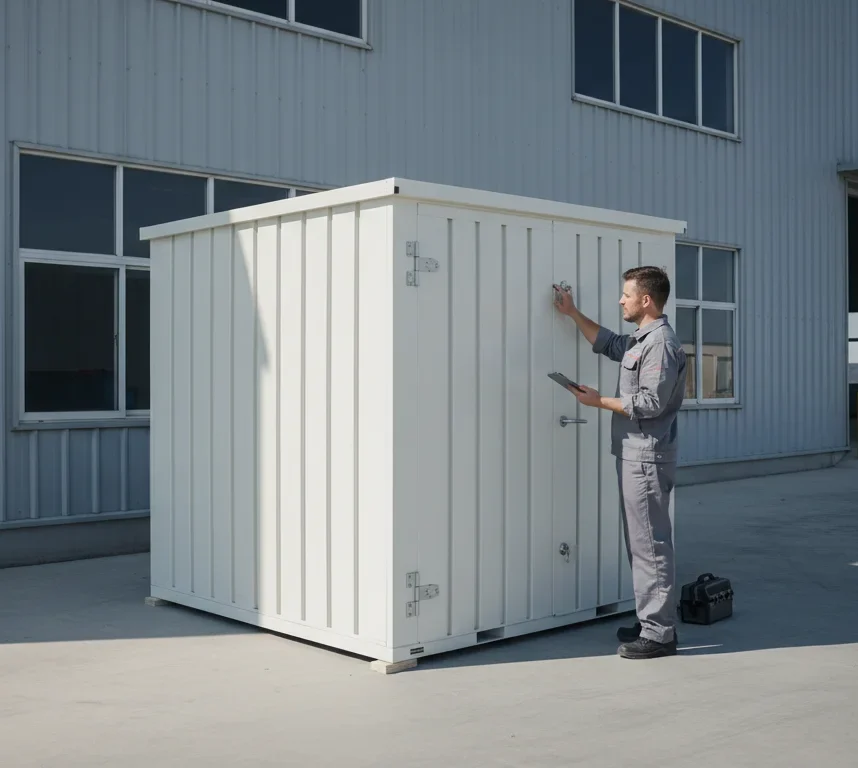
Why Maintenance Matters in Multi-Site Deployments
Most operational issues don’t come from structural failure. They come from small oversights:
A unit slightly out of level.
Drainage that changed after seasonal weather.
Door hardware that wasn’t inspected after heavy use.
Surface corrosion is left untreated in coastal environments.
When standardized units are deployed across multiple sites, small inconsistencies compound.
A structured maintenance checklist protects:
Asset lifespan
Operational uptime
Warranty eligibility
Budget predictability
Multi-site consistency
This isn’t about over-maintaining. It’s about maintaining it intentionally.
Storage Container Maintenance Checklist
Monthly Visual Check (5–10 Minutes Per Unit)
These checks require no tools and can be completed during routine site walks.
Confirm the unit remains level and stable.
Inspect exterior panels for visible dents or impact damage.
Check door alignment and smooth opening/closing.
Verify locking system function.
Confirm no standing water is collecting around the base.
Ensure the roof area is clear of debris.
These quick inspections prevent minor adjustments from becoming structural stress points.
Quarterly Inspection (Recommended for Active Sites)
More thorough review recommended for high-traffic or operationally critical units.
Inspect all panel seams and corners for early rust formation.
Examine door seals for cracking or compression fatigue.
Check hinge pins and locking hardware for wear.
Inspect flooring for moisture intrusion or damage.
Confirm drainage around the pad remains functional.
Verify anchoring remains secure where applicable.
Quarterly review is especially important in:
Coastal or humid climates (e.g., Puerto Rico, Gulf Coast).
Snow belt regions with freeze/thaw cycles.
Annual Preventative Maintenance
Once per year, conduct a structured review.
Clean exterior panels with mild detergent.
Touch up exposed steel areas with appropriate protective coating.
Reconfirm level placement and base stability.
Inspect underside (if accessible) for moisture exposure.
Review anchoring integrity.
Document condition for internal records.
For multi-site portfolios, documenting annual inspections helps preserve warranty protection and strengthens asset lifecycle tracking.
Climate Considerations by Region
Flatbox units are built for durability—but maintenance priorities shift based on regional environmental conditions.
United States
From desert heat to snow-heavy regions, environmental shifts affect expansion, contraction, and drainage patterns. Seasonal inspection is recommended in extreme climates.
Canada
Freeze/thaw cycles and snow accumulation require attention to:
- Pad drainage
- Roof debris removal
- Door swing clearance
Puerto Rico (USA)
High humidity and salt exposure require:
- Surface inspection for corrosion
- Consistent drainage management
- Attention to hardware condition
Maintenance isn’t complicated — it’s contextual.
Storage Container Warranty Overview
A storage container warranty should provide clarity, not confusion.
Flatbox units are built using galvanized/galvalume steel panels with powder-coated finishes, stainless locking systems, and engineered hardware. Warranty coverage is designed to protect structural integrity under normal operational use.
While warranty specifics are defined at time of purchase, coverage generally addresses:
- Structural integrity of steel panels and frame
- Manufacturing defects in materials
- Door and locking hardware performance under normal use
- Weather resistance under proper installation conditions
Warranty applies when units are:
- Properly installed on stable, level bases
- Maintained according to reasonable inspection practices
- Used for intended storage, kiosk, or office functions
Warranty duration and specific coverage details are provided at purchase and may vary by model or deployment program.
What Typically Is Not Covered
Professional-grade warranty policies across the industry typically exclude:
- Cosmetic wear and minor surface abrasions
- Damage caused by improper installation or unstable ground conditions
- Unauthorized modifications or structural alterations
- Environmental damage from flooding or chemical exposure
- Impact damage from vehicles or heavy equipment
- Normal wear and tear over time
The goal of clarity is not limitation — it is alignment. Warranty protects manufacturing integrity, not misuse.
How to File a Warranty Claim for a Storage Container
When a warrantable issue appears, a clear claim process helps your team move faster and reduce avoidable downtime.
Step 1: Document the Condition
Take clear photos of the affected area and the full unit context. Record the site location and the date the issue was identified.
Step 2: Gather Purchase Information
Have your order number or invoice reference ready, along with the unit size, configuration, and installation date.
Step 3: Contact Flatbox Support
Submit the claim through your designated support channel. Include a written description of the issue, supporting photos, and site contact details.
Step 4: Review & Resolution
Our team reviews whether the issue falls under warranty coverage or relates to installation, site, or environmental conditions. If covered, repair or replacement guidance will be issued. Timely reporting matters, as delayed claims may affect eligibility.
Preserving Warranty Coverage
The most common reason warranty protection becomes harder to process is not the issue itself—it is incomplete documentation and inconsistent upkeep.
To help preserve coverage:
- Install units on level, stable bases
- Avoid unauthorized modifications
- Perform routine inspections
- Address minor rust or hardware issues early
- Maintain drainage around the base
- Keep basic inspection and maintenance records
These steps are not burdensome. They are part of a disciplined asset management process that supports long-term performance and clearer warranty review.
Built for Scale. Maintained for Confidence.
Flatbox Solutions supports organizations deploying standardized container infrastructure across the United States, Canada, and Puerto Rico.
Our buyers are not purchasing a single unit. They are building repeatable infrastructure systems backed by a 2-Year Warranty and structured for long-term upkeep across multiple locations.
They are deploying:
Multi-site storage banks
Franchise kiosk systems
Field office infrastructure
Institutional storage programs
Frequently Asked Questions
How often should a storage container be inspected?
A monthly visual check and quarterly structured review are recommended for active sites. Annual preventative maintenance supports long-term performance.
Does storage container warranty cover rust?
Surface corrosion caused by environmental exposure is typically considered maintenance-related. Manufacturing defects in materials are evaluated under warranty terms.
What voids a storage container warranty?
Common causes include improper installation, structural modification, impact damage, or failure to maintain reasonable inspection standards.
Is documentation required for warranty claims?
Yes. Photos, purchase reference, and description of issue help accelerate review.
Can units be relocated without voiding warranty?
Relocation is common in scalable deployments. Units should be handled according to installation guidelines to preserve structural integrity.